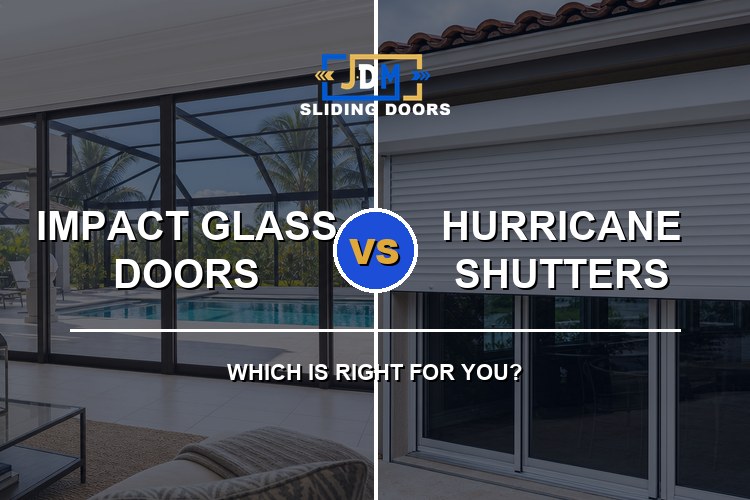
Short answer: For most South Florida homes, impact-rated sliding glass doors give the strongest everyday protection because they work around the clock (no one has to deploy them before a storm) and they keep the door’s light, view, and security all year. Hurricane shutters (accordion, roll-down, or removable panels) are the better choice when your sliding door is newer and you want storm protection without replacing it. In the matchup of impact glass doors vs hurricane shutters, impact glass wins on convenience, daily living, and always-on security; shutters win on protecting a door you don’t want to replace. Either way, in Miami-Dade and Broward the product must carry a Miami-Dade Notice of Acceptance and be installed under a permit to count as code-compliant.
We’re JDM Sliding Doors, based in Fort Lauderdale, and we install, repair, and replace sliding glass doors across South Florida every day, so this comparison reflects what actually holds up in this climate, not generic advice. Below is a fair, side-by-side look at impact-rated sliding glass doors versus hurricane shutters for homeowners in Miami-Dade, Broward, and Palm Beach: what each option is, how Florida’s coastal building code treats it, how they differ in daily living, and how they age in salt air and humidity. We won’t quote prices (those depend entirely on your home), but you’ll leave knowing which fits your house and how soon to act.
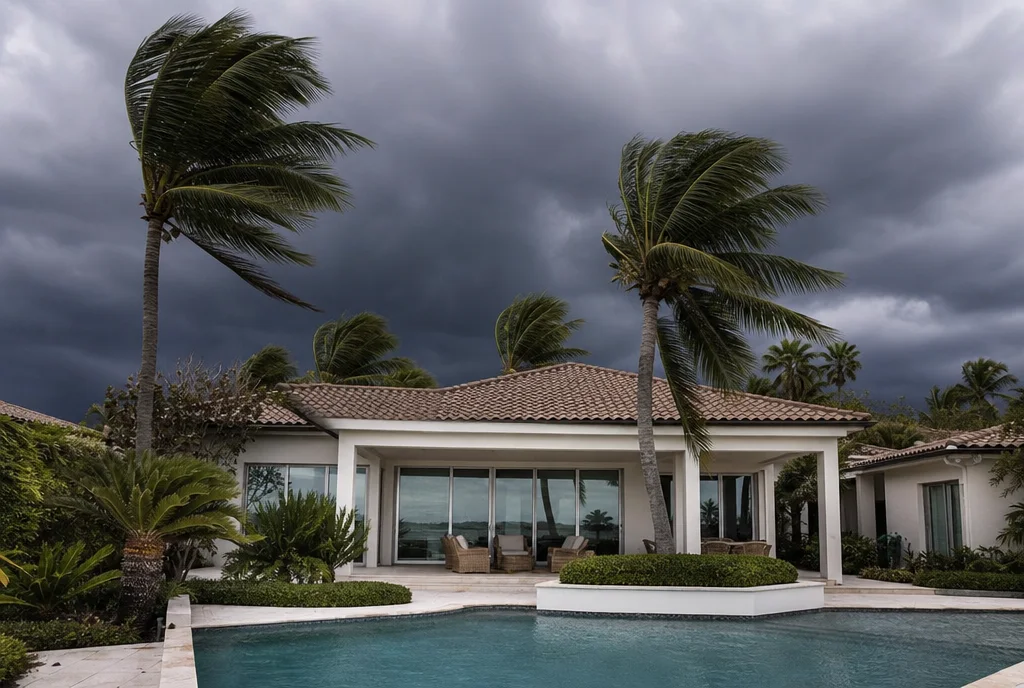
Why now? According to NOAA, the 2026 Atlantic hurricane season began June 1 and runs through November 30, with a below-normal outlook of roughly 8 to 14 named storms as an El Niño develops. NOAA stresses, though, that it only takes one landfall to ruin a year. Early summer, before the August-to-October peak, is the window to upgrade hurricane protection on your sliding glass doors while there’s still time to permit and install the work properly.
Key Takeaways
- Impact-rated sliding glass doors protect 24/7 with no action from you: best for seasonal homes, rentals, travelers, and anyone replacing an aging door anyway.
- Hurricane shutters (accordion, roll-down, removable panels) protect only when deployed, but add storm protection to a good door without replacing it.
- In Miami-Dade and Broward (the High-Velocity Hurricane Zone), every impact door and shutter must carry a Miami-Dade Notice of Acceptance (NOA) and be installed under a permit; the product and the installation both have to meet code.
- Impact glass wins on daily light, views, convenience, all-day security, and noise reduction; shutters win on cost-to-add and protecting newer doors.
- No door or shutter can be guaranteed to survive a specific storm, but a properly chosen, NOA-approved, professionally installed product dramatically improves the odds.
- Installation and anchoring are licensed, permitted work, not a DIY job. Get a written, itemized estimate and confirm the NOA and permit before you buy.
What Each Option Actually Is, and How It Protects a Sliding Glass Door
Both impact glass and hurricane shutters do the same core job: keep wind-borne debris from breaking the glass and keep storm pressure outside the building envelope. They just go about it very differently.
Impact-rated sliding glass doors look almost identical to a normal sliding door, but the glass is laminated: two panes of glass bonded to a tough, clear plastic interlayer, much like a car windshield. When something hits it hard, the glass may crack, but the interlayer holds the pieces together so the opening stays sealed. The frame is heavier-duty aluminum, and it’s anchored to the structure to handle storm loads. The protection is built in and permanent; there’s nothing to put up or take down.
Hurricane shutters are a separate barrier you place over the existing door. The main residential types are:
- Accordion shutters: hinged, folding panels that live in a housing beside the door and pull across on a track, then lock in the middle. They’re a permanent fixture you deploy by hand before a storm.
- Roll-down shutters: slatted shutters that store in a box above the opening and roll down to cover it, operated by a crank or motor. They’re the most convenient to deploy and the most discreet when open.
- Removable storm panels: corrugated aluminum or clear polycarbonate panels that bolt into pre-installed tracks before a storm and come down afterward. They cost the least to install but take the most labor and storage, and you have to handle them every time.
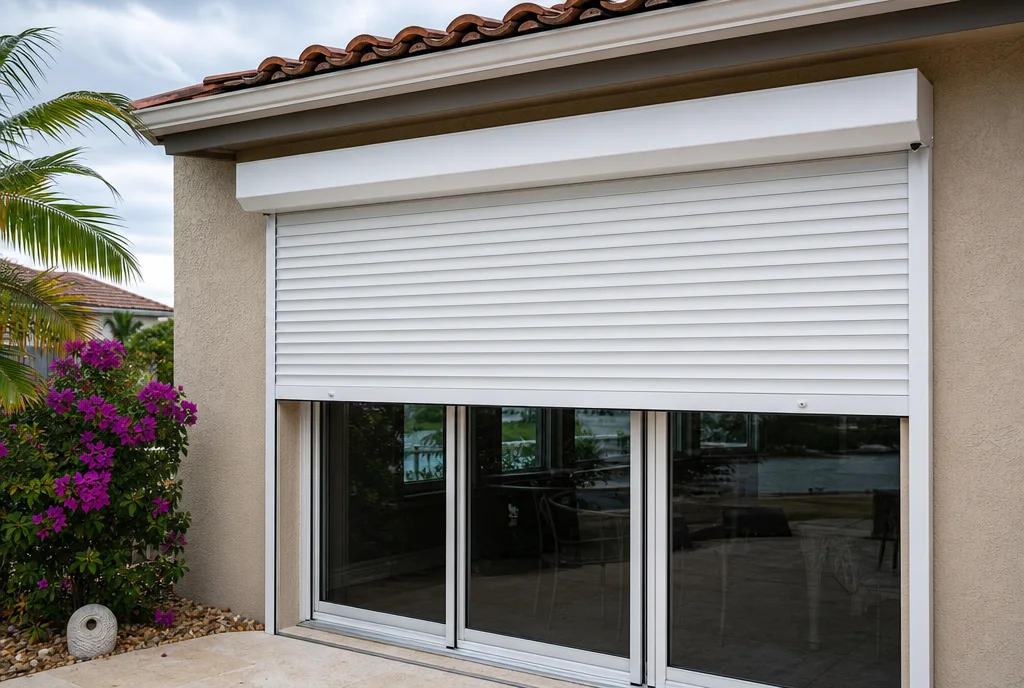
The key difference: impact glass protects the moment it’s installed, all the time, with zero action from you. Shutters only protect when they’re closed, which means someone has to be home and able to deploy them before the wind arrives. For a primary residence where you’re always around, that may be fine. For a seasonal home, a rental, or anyone who travels during the summer, it’s a real limitation.
How Florida’s HVHZ Code and Product Approval Apply in Miami-Dade and Broward
South Florida has the strictest building code for storms in the country, and it shapes this whole decision. Miami-Dade and Broward counties sit inside what the Florida Building Code calls the High-Velocity Hurricane Zone (HVHZ): the two counties where products must be designed for the highest wind speeds in the state (around 170 to 175 mph for typical homes). Palm Beach County is just outside the HVHZ, but it still enforces stringent wind-borne-debris requirements, so the practical takeaway is the same across South Florida: any storm protection you add to a sliding glass door has to be a tested, approved product, and it has to be permitted.
Here’s what that means in plain terms. In the HVHZ, every impact door and every shutter has to carry a Notice of Acceptance (NOA), a Miami-Dade County document proving the exact product passed the required impact and pressure tests. The big one is the “large missile” test: a lab fires a roughly nine-pound piece of lumber at the product to simulate flying debris, then cycles it through thousands of pressure swings to mimic a storm. Products also have to meet a design-pressure (DP) rating: basically, how much wind force the door or shutter can take without failing, matched to your home’s wind zone.
A few things follow from this that are worth knowing before you spend a dollar:
- The product and the installation both have to be code-compliant. An NOA-approved impact door installed without the right anchors into the right structure is not protected; the approval only counts when it’s installed exactly as the NOA specifies. The same is true for shutters.
- You need a permit. There is no legal “permit-free” swap for an impact door or a shutter system in Miami-Dade or Broward. The permit and inspection are what confirm the work actually meets code.
- Keep your paperwork. The NOA documents and a signed-off permit are what your insurer will want to see for a wind-mitigation credit, and what a future buyer’s inspector will look for.
One note on the code itself: Florida updates its building code every three years, and the next edition (the 9th) takes effect December 31, 2026. As of this 2026 hurricane season, the current code is what governs your project, so don’t let anyone sell you on a “new requirement” that isn’t actually in effect yet. Ask which code edition and which NOA your specific product is approved under.
Because anchoring an impact door or a shutter system to meet HVHZ code is genuinely technical work (and because a mistake voids the whole protection), this is a job for a licensed contractor pulling a permit, not a weekend project. We’d never hand you step-by-step installation instructions, and you shouldn’t trust anyone who does.
Impact Glass Doors vs. Hurricane Shutters in Daily Life: Light, Looks, Convenience, Security, and Noise
Day to day, impact glass is the easier option to live with: it keeps the door’s full light, views, and security all year and needs no action from you, while shutters block light when closed and have to be deployed before each storm. Storm protection is the headline, but you live with these doors most of the year when there’s no storm, and that’s where impact glass and hurricane shutters feel very different.
Light and views. Impact-rated sliding doors are just glass: the laminated interlayer is clear, so on a normal day you get the same open, bright, uninterrupted view you’d expect from a big slider. Shutters, when closed, block the light and the view entirely; when open, accordion and panel systems sit stacked at the edges of the opening, and even tidy roll-down housings put a box above the door. If the indoor-outdoor feel of your sliding door is part of why you love your home, impact glass keeps it; shutters interrupt it.
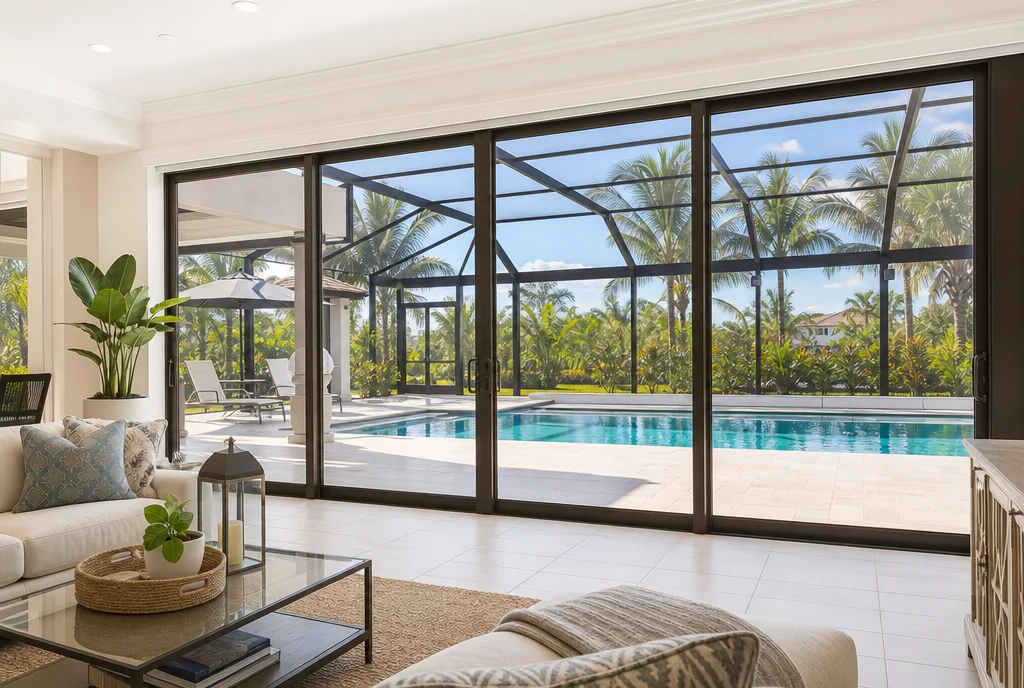
Convenience. This is the clearest win for impact glass. There’s nothing to deploy; protection is always on, whether you’re home, at work, or out of town when a storm spins up. Shutters all require someone to close them before the wind: roll-downs are easiest (a motor or crank), accordions take a few minutes per opening, and removable panels are the most work, since they have to be carried out, bolted up, and later taken down and stored.
Security and everyday safety. Both options make a sliding door much harder to break into than ordinary glass, a real benefit on ground-floor doors. Impact glass resists a break-in attempt around the clock because it’s always in place. Closed-and-locked shutters are a strong deterrent too, but only while they’re down, which most people only do for storms or while away. Impact glass also adds a quieter daily safety margin: it’s far less likely to shatter into dangerous shards if someone or something hits it.
Noise. Laminated impact glass noticeably dampens outside noise (traffic, lawn equipment, a neighbor’s pool party) every day, not just during storms. Shutters don’t do anything for noise when they’re open, which is nearly always.
Durability and Maintenance in Salt Air and Humidity
South Florida’s coastal climate is hard on anything mechanical. Salt drift, high humidity, and intense sun work on hardware year-round, and the two options age differently.
Impact sliding doors have very few moving parts exposed to a storm-protection role; the glass and frame just sit there doing their job. The maintenance that matters is the same as for any quality slider: keep the bottom track clean so the rollers glide, and rinse salt off the track and frame periodically, especially if you’re within a few miles of the water. Quality impact doors use corrosion-resistant frames and stainless hardware made for this environment; cheaper ones can pit and stiffen faster, which is one reason the product approval and brand matter.
Hurricane shutters have more hardware to maintain because deploying them is mechanical. Accordion tracks and wheels, roll-down motors and slats, and panel bolts and tracks all live outside in salt air. They need periodic attention so they actually work when you need them: a stuck accordion or a seized roll-down motor the night before a storm is exactly the failure you don’t want. Light, low-risk upkeep you can do yourself includes rinsing salt off tracks and slats with fresh water and lubricating moving hardware with a product the manufacturer recommends. Keep it to that: anything involving the motor, the spring, or working at height is a job for a professional, and when in doubt, hire one. Test your shutters well before storm season, not during a warning.
A fair point in the shutters’ favor: a removable panel or a sturdy accordion has very little to break, and a good roll-down can last many years with basic care. The trade-off is that the burden is on you: you’re the one who has to keep them working and deploy them on time.
One thing neither option does: no door or shutter can be guaranteed to survive a specific storm. The honest promise is that a properly chosen, NOA-approved, correctly installed product dramatically improves the odds your sliding glass door (and the house behind it) comes through intact. Anyone promising more than that is overselling.
Which Is Right for You?
There’s no single winner; the right call depends on your home, how you live, and how soon you need protection.
Lean toward impact-rated sliding glass doors if:
- Your existing slider is older, leaks air or water, or is due for replacement anyway: combining a sliding glass door replacement with impact glass solves two problems at once.
- The home is a seasonal residence, a rental, or you travel during hurricane season and can’t count on being there to deploy shutters.
- You don’t want to give up the light, view, and open feel of your sliding door, and you value always-on protection, daily noise reduction, and break-in resistance.
Lean toward hurricane shutters if:
- Your sliding doors are newer and in good shape, and you want to add storm protection without replacing them.
- You’re protecting many large openings at once and want to stage the work, or you want a single system that also shades and secures the home when you’re away.
- You’re reliably home during storm season and don’t mind deploying protection before a warning; roll-downs especially make that nearly effortless.
Many South Florida homes end up with a sensible mix: impact glass on the big, hard-to-cover sliding doors and main living spaces, with shutters on secondary windows. If your slider is already struggling (sticking, leaking, or off its track), fixing that is the first step regardless of which protection you choose; a sliding door repair often reveals whether replacement with impact glass is the smarter move. And if you’re weighing this against impact windows for the rest of the house, our breakdown of impact windows vs. shutters as a long-term investment digs into that side.
Whatever you choose, the move that protects you is the same: get a written, itemized estimate, confirm the product’s Notice of Acceptance and that the installer pulls a permit, and don’t wait until a storm is named to start. Our team handles impact window and door installation across South Florida, with code-compliant, permitted work and the paperwork your insurer will ask for.
Frequently Asked Questions
Are impact glass doors better than hurricane shutters?
For most South Florida homes we work on, impact-rated sliding glass doors are the better all-around choice: they protect around the clock, keep the door’s light and view, and add security with no action from you. That said, I tell homeowners that shutters are the smarter pick when your sliding door is newer and you just want storm protection without replacing it, or when you’re covering many openings and need to stage the work over time. It really comes down to the condition of your existing door.
Do impact doors and hurricane shutters need a permit in Miami-Dade or Broward?
Yes, every time. In Miami-Dade and Broward, Florida’s High-Velocity Hurricane Zone, there is no legal “permit-free” install for an impact door or shutter system, and we never treat one as optional. Both the product and the installation have to meet code, confirmed by a permit and inspection, and the product must carry a current Miami-Dade Notice of Acceptance. In my experience that permit is also what protects you later with your insurer and any future buyer.
What is a Notice of Acceptance (NOA)?
A Notice of Acceptance (NOA) is the Miami-Dade County document proving an exact product passed the required impact and pressure tests, including the “large missile” test that fires a roughly nine-pound piece of lumber at it. On every job we make sure the door or shutter we install matches its NOA exactly, because that’s the only way the approval counts. Hold onto that paperwork: your insurer will want it for a wind-mitigation credit, and a future buyer’s inspector will look for it.
Can I install hurricane shutters or impact doors myself?
No, and this is one I feel strongly about: installing and anchoring impact doors or shutters to meet code is licensed, permitted work, and a single anchoring mistake can void the protection entirely. What I do encourage homeowners to handle is the light upkeep, like rinsing salt off the tracks and lubricating shutter hardware with the product the manufacturer recommends. Anything involving the anchors, motors, or structural attachment is a job for a licensed pro, and when in doubt, call one.
Will impact glass or hurricane shutters survive a Category 5 hurricane?
I’ll always give you the honest answer: no product can be guaranteed to survive a specific storm, and anyone promising that is overselling. What I can tell you from the field is that a properly chosen, NOA-approved, professionally installed impact door or shutter dramatically improves the odds your sliding glass door, and the house behind it, comes through intact. That’s the realistic promise, and it’s a big one.
Ready to protect your sliding glass doors before the season peaks? Get a Free Estimate and we’ll assess your specific doors, your home’s wind zone, and the option that fits best.