Before you buy a new lock, check one thing: whether the lock is broken at all.
A sliding door lock that will not catch feels like a broken lock. The latch does not throw, or it throws and does not hold, and the obvious conclusion is that the mechanism has failed. Often it has. But a meaningful share of the time the lock is in perfect working order and the door has simply drifted out of position, so the latch and the keeper no longer meet.
That distinction is the difference between a free adjustment and buying hardware you did not need, and it is the first thing our techs check on a sliding glass door lock repair call.
By the end of this guide you will know: how to tell an alignment problem from a genuinely failed lock, the five-minute check that settles it, how to fix each one, and what a professional repair actually costs.
The first thing to check
From the field, Yuval, JDM elite technician: “About 10 to 20 percent of the time, a lock that will not catch is not actually broken. The door has shifted out of alignment, so the lock and the keeper no longer line up. In those cases we adjust and realign the door and the lock works again, no new parts needed. We always check alignment before we talk about replacing anything.”
Roughly one in five lock calls, then, is a door that moved rather than a lock that failed. It is worth two minutes of your time before you spend anything.
The five-minute test. Slide the door closed and look at where the latch meets the keeper, the metal plate it hooks into on the frame. Are they level with each other? Now lift the door slightly by the handle and try the lock again. If the latch suddenly catches when you take the door’s weight off the rollers, you do not have a lock problem. You have a door that has sagged, and the lock is the symptom.
When the lock really has failed
If alignment checks out, the mechanism itself is the likely culprit.
From the field, Yuval, JDM elite technician: “The rest of the time, the lock mechanism itself has worn out and simply stops working, the latch will not throw or hold anymore. That is a very common problem and a straightforward fix: we replace the lock with the correct one for your door. The key is matching the right lock, which is not one-size-fits-all.”
That last point catches people out. Sliding door locks are not a standard part. Bore spacing, backset, faceplate length, and the hook style all vary between manufacturers and between model years from the same manufacturer. A lock that looks identical on the shelf will often not fit.
Types of sliding door lock mechanisms
Knowing which type you have makes everything else easier.
- Mortise lock. The most common on modern sliding doors. A rectangular housing recessed into the door edge, with a hook or latch that throws into the keeper. Usually the part that wears out.
- Surface-mounted latch. Bolted onto the face of the door rather than recessed. Common on older and lighter doors.
- Foot bolt. A pin at the bottom of the door that drops into a hole in the track. Often a secondary lock rather than the primary.
- Multi-point lock. Engages at two or three points along the door edge. Found on higher-end and impact-rated doors. More secure, more expensive to replace, and far more sensitive to alignment.
Multi-point systems deserve a note. Because they engage at several points at once, even small amounts of sag stop them working. If you have a multi-point lock that has become stiff or will only engage at one point, alignment is the first suspect, not the hardware.
Why your sliding door lock is not working
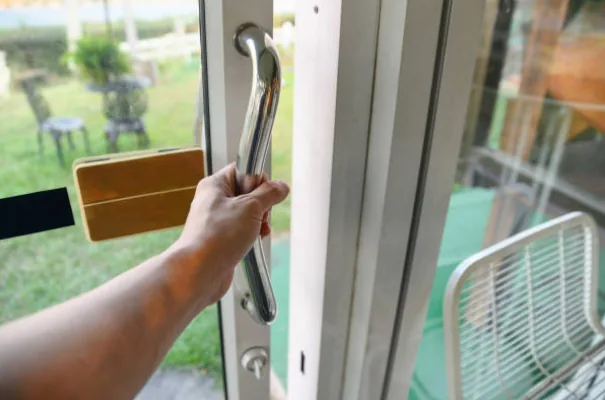
1. The door has sagged out of alignment
Worn rollers let the door settle. As it drops, the latch drops with it and stops meeting the keeper. This is the one in five case Yuval describes, and it is fixed by adjusting the rollers to bring the door back up to level, not by touching the lock.
The tell: the lock works if you lift the door slightly while turning it.
2. The lock mechanism has worn out
Internal springs weaken and the hook or latch stops throwing fully or stops holding under load. This is the most common genuine failure.
The tell: the handle moves freely with no resistance, or the latch throws but pushes back in under light pressure.
3. The latch or keeper is dirty or obstructed
Grit, old lubricant, and paint overspray build up in the keeper slot. The latch tries to enter and cannot seat.
The tell: the lock engages partially, or engages with force, and there is visible debris in the keeper.
4. The handle has failed, not the lock
The handle and the lock are separate parts. A stripped spindle or loose set screw means the handle spins without driving the mechanism at all.
The tell: the handle turns much further than it used to, or spins freely with no resistance. If that is your symptom, our sliding door handle services page covers the repair.
5. Corrosion
Hardware exposed to weather over years seizes. Salt-air environments accelerate it considerably, which matters for homes near open water.
The tell: the mechanism moves stiffly through its whole travel rather than failing at one point.
6. The wrong lock was installed
If the lock was replaced before and never worked quite right, it may simply be the wrong part. This is common after a DIY replacement, because the parts look interchangeable and are not.
The tell: it has never worked properly since it was last replaced.
How to fix a sliding door lock, step by step
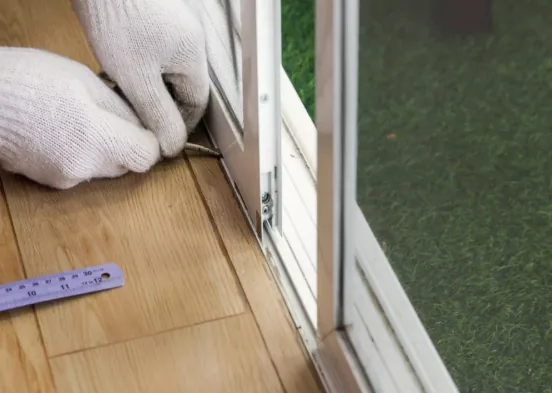
Step 1: Check alignment first. Close the door, lift slightly by the handle, and try the lock. If it catches, skip to step 2. If nothing changes, jump to step 4. This one test decides everything that follows.
Step 2: Adjust the rollers. Find the adjustment screws at the bottom edge of the door, usually behind small plastic caps at each end. Turning them raises or lowers that corner. Make quarter-turn adjustments, testing the lock between each. Raise the latch side until the latch lines up with the keeper.
Step 3: Check the keeper. If the door is now level and the latch still misses slightly, loosen the keeper’s screws, shift it to meet the latch, and retighten. Most keepers have slotted holes for exactly this.
Step 4: Clean the latch and keeper. Vacuum the track and the keeper slot. Clean the latch with a cloth. Apply a silicone lubricant, never an oil-based product, which attracts dust and makes things worse within weeks.
Step 5: Test the mechanism directly. With the door open, operate the lock by hand and watch the latch. If it does not throw fully or springs back weakly, the mechanism has worn out and needs replacing.
Step 6: Tighten the handle. Check the set screw and the spindle. A loose handle is often mistaken for a broken lock and is usually a two-minute fix.
If the door itself keeps coming out of position, the rollers are the underlying problem. Our guide on sliding doors that jump off the track covers that repair.
How to replace a sliding door lock
If the mechanism has failed, replacement is straightforward as long as you get the right part.
- Remove the handle by taking out the screws on the interior side.
- Remove the lock by taking out the two screws holding the faceplate to the door edge, then sliding the housing out.
- Measure everything before ordering. Faceplate length and width, backset, the distance between the mounting screws, and the spacing from the spindle hole to the key cylinder if there is one. Photograph the old lock next to a tape measure.
- Match the part. Bring the old unit to a supplier rather than ordering from a picture. Brand-specific hardware, particularly on Pella and Andersen doors, is often only available through the manufacturer.
- Install and test before reattaching the handle, so you can watch the latch throw.
The measuring step is where most DIY replacements go wrong. A lock that is a few millimeters off will mount but never align properly with the keeper.
Sliding door lock repair cost
These are national averages reported by home services cost trackers, not quotes. Your area, your hardware, and how far the damage has gone will move the number.
| Job | Typical professional cost |
|---|---|
| Cleaning, lubrication, minor adjustment | $75 to $150 |
| Roller adjustment and door realignment | $100 to $200 |
| Handle repair or replacement | $100 to $250 |
| Lock mechanism replacement | $150 to $300 |
| Track repair | $75 to $300 |
Lock-related repairs generally land between $100 and $300, with full lock replacement running $150 to $300 depending on complexity. The hardware itself is typically $54 to $134 or more for a lock and handle set. Sliding door repair across all job types averages $200 to $800, with most repairs falling between $150 and $600.
Labor is the main variable. Rates run roughly $60 to $150 an hour in metro areas and $50 to $80 an hour in rural ones.
Multi-point locks and brand-specific hardware sit above these ranges, sometimes well above, because the parts are manufacturer-only and often have to be ordered rather than pulled from a van.
Worth noting where the alignment cases Yuval describes land: at the cheap end. That is the whole reason to check alignment before assuming the worst.
Why a broken lock is worth fixing now
A sliding door is the most common forced entry point on a house after the front door, and a latch that only half engages provides very little resistance.
There is also a cost argument. Forcing a misaligned lock repeatedly damages the latch, the keeper, and eventually the door panel edge. An adjustment left alone long enough becomes a lock replacement, and a lock replacement left alone long enough becomes a door repair.
When to call a professional
Call if:
- Adjustment did not bring the latch and keeper into line
- The lock is a multi-point system
- The door is impact-rated or hurricane-rated, where the lock is part of the rating
- You cannot identify or source the correct replacement part
- The door is heavy glass and adjusting it safely needs two people
Frequently asked questions
My sliding door lock will not catch. Is the lock broken?
Not always. About 10 to 20 percent of the time the lock is fine and the door has drifted out of alignment, so the latch no longer lines up with the keeper. We check alignment first and adjust it. If the mechanism itself is worn out, we replace it with the correct lock for your door.
My sliding glass door is not locking. Where do I start?
Start with the alignment test above, because a sliding glass door not locking is the same symptom whether the lock failed or the door dropped, and the test separates them in ten seconds. Only when the door locks no better lifted than resting is the lock mechanism itself the fault.
What usually goes wrong with a sliding door lock?
The most common failure is the internal mechanism wearing out so the latch will not throw or hold. Before replacing anything, we confirm it is not simply an alignment issue, which accounts for 10 to 20 percent of lock calls. If it is the mechanism, we swap in the right lock and test it.
How do I know if it’s alignment or the lock?
Close the door and lift it slightly by the handle while turning the lock. If the latch catches when you take the weight off the rollers, it is alignment. If nothing changes, it is the mechanism.
Can I replace a sliding door lock myself?
Yes, if you match the part correctly. Remove the old lock first and measure the faceplate, backset, and screw spacing, then source an exact match rather than something that looks similar. Sliding door locks are not standardized, and a near-match will mount but never align properly.
How much does it cost to fix a sliding door lock?
National averages put lock-related sliding door repairs at $100 to $300, with a full lock mechanism replacement running $150 to $300. Simple cleaning or realignment sits at the low end, around $75 to $150. Multi-point systems cost more because the hardware is manufacturer-specific.
My sliding glass door won’t lock at all any more. Is it the lock or the door?
Test it with the door lifted. Take the weight of the panel on the handle, hold it up half an inch, and try the lock again. If it catches while lifted, the lock is fine and the door has dropped on worn rollers, which is the repair you actually need. If the sliding glass door won’t lock either way, the lock mechanism itself has failed.
My latch is stuck in the locked position. What now?
Do not force it. Lift the door slightly to relieve pressure on the latch and try again, since binding under the door’s weight is the usual cause. If it stays stuck, the mechanism has likely failed internally and the lock will need to come out.
Should I repair or replace the lock?
Repair or adjust when the mechanism still operates and the issue is alignment, dirt, or a loose handle. Replace when the latch will not throw or hold, which means the internal springs have gone.
Get the alignment checked before you buy parts
If your sliding door lock will not catch, it is worth finding out which problem you actually have before spending money on hardware.
About one in five of the lock calls we run turns out to be a door that needs adjusting, not a lock that needs replacing. We check that first, every time. If the mechanism has genuinely failed, we match the correct lock for your door rather than a close approximation.
Book a sliding door lock repair or ask about lock replacement, and we will tell you which one you need. You can also contact us with a photo of your lock and we will help identify it.