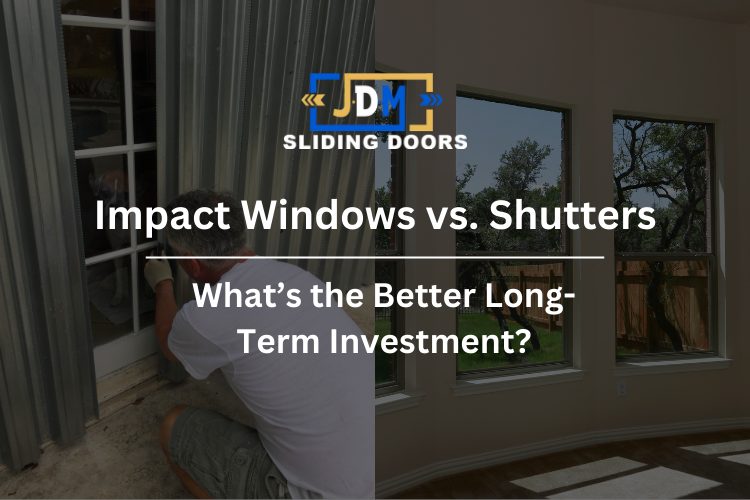
South Florida is one of the most beautiful places to live in the United States — but it also comes with unique challenges. Hurricane season, intense heat, and rising insurance costs make it essential to invest in your home’s protection. Impact windows are one of the best upgrades you can make.
Here’s why thousands of South Florida homeowners are making the switch.
This is the #1 reason homeowners invest in impact windows. South Florida sits in the most hurricane-prone region in the U.S. Impact windows are built with laminated glass and a PVB (polyvinyl butyral) interlayer that holds the glass together even when shattered.
Unlike plywood or shutters, impact windows provide 24/7 protection — no scrambling to board up your home when a storm warning hits.
According to the National Hurricane Center, South Florida has a 48% chance of being affected by a hurricane in any given year.
Florida homeowners insurance has skyrocketed in recent years. Impact windows can reduce your wind mitigation premium by 25-45% depending on your carrier and coverage.
Many insurers offer a “Opening Protection” discount when all openings are protected with impact-rated products.
Source: Florida Office of Insurance Regulation, 2025 Wind Mitigation Reports
South Florida gets an average of 248 sunny days per year. That constant UV exposure fades furniture, flooring, artwork, and fabrics. Impact windows with Low-E coatings block up to 99% of UV radiation while still letting natural light in.
Your interior stays bright without the sun damage — saving you thousands in replacement costs for faded furnishings.
Impact windows provide a significant thermal barrier. The laminated glass and insulated frames reduce heat transfer, meaning your AC doesn’t have to work as hard in South Florida’s brutal heat.
Homeowners report 15-25% reductions in energy bills after installing impact windows.
Based on average 2,000 sq. ft. home in Broward County. Source: U.S. Department of Energy
Live near a busy road, airport, or construction zone? Impact windows dramatically reduce outside noise. The laminated glass acts as a sound dampener, cutting exterior noise by 30-40% compared to standard single-pane windows.
This is a huge quality-of-life improvement, especially in dense areas like Miami, Fort Lauderdale, and Boca Raton.
The same laminated glass that stops hurricane debris also stops burglars. Impact windows are extremely difficult to break through — even with tools. Unlike standard glass that shatters into easy entry points, impact glass holds together when struck.
According to the FBI’s Uniform Crime Report, 23% of home burglaries involve entry through a window. Impact windows virtually eliminate this vulnerability.
Most break-in attempts through impact windows are abandoned within 30 seconds because the interlayer prevents the glass from giving way, even after multiple strikes. Standard windows can be breached in under 5 seconds.
Impact windows are one of the highest-ROI home improvements in South Florida. They typically add $10,000-$30,000 in resale value depending on the size of the home.
Buyers in South Florida actively seek out homes with impact windows because it means lower insurance, no shutter hassle, and peace of mind during storm season.
| Feature | Impact Windows | Standard Windows + Shutters |
|---|---|---|
| 24/7 Storm Protection | ✓ | ✗ |
| Insurance Discounts | ✓ | ✓ (less) |
| UV Protection | ✓ | ✗ |
| Energy Efficiency | ✓ | ✗ |
| Noise Reduction | ✓ | ✗ |
| Burglar Resistance | ✓ | ✗ |
| No Prep Before Storm | ✓ | ✗ |
| Adds Resale Value | ✓ | Minimal |
| Avg. Cost (whole home) | $15,000 - $40,000 | $3,000 - $8,000 |
Every South Floridian knows the drill — a hurricane warning hits and you spend hours putting up shutters in the sweltering heat. With impact windows, your home is always ready. No boarding up, no heavy panels, no storage issues.
This is especially important for:
- Elderly homeowners who can’t handle heavy shutters
- Snowbirds who aren’t home during hurricane season
- Condo associations that require uniform appearance
Florida Building Code (FBC) requires that all new construction and major renovations in the High-Velocity Hurricane Zone (HVHZ) — which includes Miami-Dade and Broward counties — use impact-rated products or equivalent protection.
Impact windows that carry the Miami-Dade NOA (Notice of Acceptance) meet the strictest standards in the country. If you’re renovating or building, impact windows help you stay code-compliant.
While the upfront cost is higher than standard windows, the long-term savings are substantial:
- Insurance savings: $1,500 - $2,800/year
- Energy savings: $600 - $1,200/year
- Shutter replacement avoided: $2,000 - $5,000 every 10 years
- Furniture/flooring UV damage avoided: $1,000+ per year
Over a 10-year period, impact windows can save you $25,000 - $50,000 — often more than the cost of installation.
“Impact windows were the best investment we made in our Fort Lauderdale home. Our insurance dropped by $2,100 a year, our electric bill went down, and we never have to worry about boarding up again.” — Maria R., Fort Lauderdale homeowner
The Bottom Line
If you live in South Florida, impact windows aren’t just a luxury — they’re a necessity. Between hurricane protection, insurance savings, energy efficiency, and increased home value, they pay for themselves multiple times over.
The best time to install impact windows is before hurricane season — but every day you wait is another day your home is vulnerable.
Sources & References
- National Hurricane Center (NOAA) — Hurricane Statistics & Climatology, nhc.noaa.gov
- Florida Office of Insurance Regulation — Wind Mitigation Discount Reports, 2025
- U.S. Department of Energy — Energy-Efficient Windows Guide, energy.gov
- FBI Uniform Crime Report — Burglary Statistics, ucr.fbi.gov
- Florida Building Commission — Florida Building Code 7th Edition (2020), floridabuilding.org
- Miami-Dade County — Product Approval & NOA Database, miamidade.gov
- Insurance Information Institute — Florida Homeowners Insurance Facts, iii.org