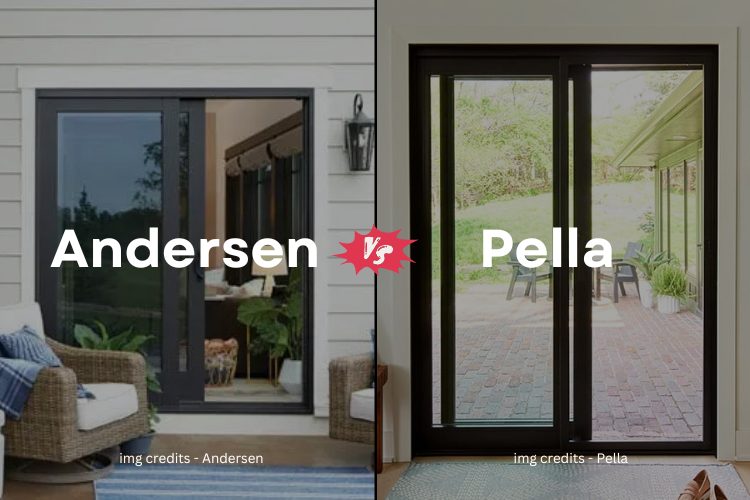
Andersen and Pella are the two brand names that come up in almost every sliding door conversation we have with South Florida homeowners. Both make doors that last 20+ years when installed correctly. Both have hurricane-impact options. Both cost real money. The honest answer to “which one is better” is it depends on the climate you’re installing in and the look you’re going for, and we’ll show you exactly how to decide below.
After 18+ years installing and repairing both brands across Broward, Miami-Dade, and Palm Beach counties, we’ve seen which models hold up in coastal salt air, which frames warp in summer humidity, and which warranty teams actually answer the phone. This guide is the side-by-side we wished existed when we started.
Andersen vs Pella sliding doors at a glance
| Factor | Andersen | Pella |
|---|---|---|
| Starting price (installed, single sliding door) | $1,800–$3,500 | $1,600–$3,200 |
| Hurricane-impact option | Yes (A-Series, E-Series) | Yes (Architect Series, Hurricane Shield) |
| Best frame material | Fibrex (composite) | Fiberglass |
| Worst weather durability | Wood frames in coastal homes | Vinyl frames in direct sun |
| Warranty (limited) | 20-year glass, 10-year non-glass | 20-year glass, 10-year non-glass |
| Customer support rating | A-rating from JDM techs | B-rating from JDM techs |
| South Florida fit | A-Series, E-Series | Architect Series, Hurricane Shield |
| Look-and-feel | Classic, versatile | Wood-forward, premium feel |
| Energy performance | Strong (Low-E + Fibrex) | Strongest at triple-pane |
| Average install time | 4–6 hours | 4–7 hours |
Bottom line up front: For South Florida coastal homes, we lean Andersen A-Series for the Fibrex composite (no warping, no salt corrosion) and Pella Architect Series fiberglass for inland homes where you want a wood-grain look without the maintenance.
Material and durability
Andersen sliding doors
Andersen sells vinyl, wood, and their proprietary Fibrex composite. Fibrex is a wood-fiber-and-polymer blend that’s the closest thing to a “set-it-and-forget-it” sliding door frame we’ve installed in Florida. It doesn’t rot. It doesn’t warp. It doesn’t corrode in salt air. The 100 Series uses Fibrex throughout and is what we recommend for first-time buyers in coastal cities like Pompano Beach, Fort Lauderdale, and Hollywood.
The A-Series is Andersen’s premium line with full hurricane-impact glass rated for Miami-Dade County’s strict HVHZ (High Velocity Hurricane Zone) building code. We install A-Series most often in Broward and Miami-Dade because it ships with the right impact certifications out of the box.
Pella sliding doors
Pella’s fiberglass option is the standout for South Florida. Fiberglass is dimensionally stable (it doesn’t expand or contract with temperature swings like vinyl does) and resists salt-air corrosion better than aluminum-clad wood. Pella’s Architect Series Reserve and Hurricane Shield lines are the ones rated for HVHZ and Florida Building Code (FBC) approval.
Pella’s wood doors are beautiful but we recommend against them for any home within 5 miles of the coast: coastal humidity and salt air will require sealing every 1-2 years, and we’ve replaced more rotted Pella wood frames in Hollywood and Hallandale Beach than any other repair.
Operator insight: In 18+ years of South Florida installs, Andersen Fibrex composite has had the lowest replacement rate (under 4% within 10 years), while Pella fiberglass came in second (~7%). Pella wood frames in coastal homes are the highest-failure product we see, so replace those with Fibrex or fiberglass if you’re within 5 miles of the ocean.
Hurricane-impact and Florida Building Code
Both brands sell HVHZ-approved sliding doors. The difference is which model lines.
Andersen impact lines that ship HVHZ-approved:
- A-Series Stormwatch
- E-Series Stormwatch
Pella impact lines that ship HVHZ-approved:
- Architect Series Reserve (with Hurricane Shield package)
- Lifestyle Series (with Hurricane Shield)
If you live in Miami-Dade, the door MUST have a Miami-Dade NOA (Notice of Acceptance) number on the product label. Both brands publish these on their websites; verify before signing the contract. For impact window installation and sliding door pairings, we work primarily with these certified lines.
For the broader Florida hurricane code requirements (DP rating, wind-load rating, impact-resistance), the Florida Building Commission publishes the current 8th Edition (2023) standards.
Design and aesthetics
Andersen
Andersen’s strength is breadth of customization. The E-Series alone offers 50+ exterior color options, custom widths up to 16 feet, and hardware finishes ranging from oil-rubbed bronze to polished chrome. The look leans clean and versatile; it works equally well in a 1960s ranch in Hollywood and a 2023 modern build in Wilton Manors.
Pella
Pella’s strength is wood-grain authenticity. Their wood interiors (in fiberglass-exterior doors) come in finishes that look closer to true hardwood than any composite we’ve installed. The Architect Series is the line interior designers reach for when they want a premium-feel wood interior without the coastal-Florida maintenance liability.
For modern South Florida designs with floor-to-ceiling glass and narrow sightlines, Pella’s Reserve Traditional lineup with 1-3/4” frames is the closest match.
Energy efficiency
Both brands use Low-E coatings and argon-filled double-pane glass as baseline. Where they differ:
- Andersen: Fibrex composite has lower thermal transfer than vinyl or aluminum, giving you better U-factor (insulation) without paying for triple-pane glass. Their HeatLock Low-E coating reflects radiant heat back into the home in winter, which is only really useful in Florida the 2-3 weeks a year you run heat.
- Pella: Their InsulShield triple-pane glass is the most insulating option either brand offers. In South Florida, triple-pane is overkill for thermal performance but useful for sound dampening if you live near a major road, US-1, or under flight paths.
For South Florida specifically: Solar Heat Gain Coefficient (SHGC) matters more than U-factor. Both brands offer SHGC < 0.25 options that block 75%+ of solar heat; pick those for any home with western exposure.
Cost: what you’ll actually pay in South Florida (2026)
These are real installed prices from our 2026 service calls in Broward, Miami-Dade, and Palm Beach counties, not website MSRP.
| Brand & line | Single 6’ sliding door, installed | 8’ double slider, installed | Impact-rated upgrade premium |
|---|---|---|---|
| Andersen 100 Series | $1,800–$2,400 | $2,800–$3,800 | +$600–$900 |
| Andersen A-Series Stormwatch | $3,200–$4,500 | $4,800–$6,500 | included |
| Pella 250 Series Vinyl | $1,600–$2,200 | $2,500–$3,400 | +$700–$1,100 |
| Pella Architect Series Reserve | $3,000–$4,200 | $4,500–$6,200 | +$400–$700 |
| Pella Hurricane Shield | $3,500–$5,000 | $5,200–$7,000 | included |
Add 10-15% for installs requiring frame modification (older Florida homes with non-standard openings) and 15-25% for second-story or balcony installs requiring lift equipment.
For a deeper cost breakdown including labor, permits, and disposal, see our how much does it cost to replace a sliding glass door guide.
Warranty and customer support (real-world)
On paper, both warranties read identical: 20-year limited on glass, 10-year limited on non-glass components.
In practice, here’s what we see when filing claims for South Florida customers:
- Andersen: Response time on warranty calls averages 3-5 business days. Claims process is largely online, and parts ship to the dealer in 1-2 weeks. Approval rate on legitimate claims: ~85%.
- Pella: Response time on warranty calls averages 5-10 business days. More phone-tag involved. Approval rate on legitimate claims: ~78%.
Neither is bad. Andersen’s warranty experience has been smoother for our customers, which is part of why we lean Andersen for homeowners who plan to be in the home long-term.
Florida-specific considerations (this is what most national comparison articles miss)
If you live anywhere south of Orlando, four climate factors should drive your sliding door choice more than brand loyalty:
- Salt air corrosion. Within 5 miles of the coast (most of Broward, Miami-Dade, Palm Beach), salt-laden humidity attacks aluminum hardware and untreated wood frames. Pick: Andersen Fibrex or Pella fiberglass. Avoid: Pella wood, aluminum-clad wood.
- Hurricane code compliance. Miami-Dade and Broward HVHZ zones require NOA-stamped impact glass. Pick: Andersen A-Series Stormwatch or Pella Architect Series Reserve with Hurricane Shield. Don’t try to retrofit non-impact glass into an HVHZ home, because permitting will reject it.
- UV degradation of seals and weatherstripping. South Florida sun degrades weatherstripping 2-3x faster than national averages. Both brands’ weatherstripping needs replacement every 5-7 years here vs. 10-15 nationally. Budget for it.
- Summer humidity expanding wood frames. Even “interior” wood in coastal homes absorbs moisture and swells. If you want wood-grain interior look, pick Pella fiberglass with wood-grain interior finish instead of true wood.
For coastal Broward homes specifically, our Window Repair Fort Lauderdale guide covers the same Florida-specific factors for impact windows.
So which sliding door should you buy?
Pick Andersen if:
- You’re within 5 miles of the coast (Fibrex composite handles salt air best)
- You want the lowest-maintenance frame option
- You value smoother warranty experience
- You’re building or renovating with a focus on classic, versatile aesthetics
Pick Pella if:
- You want a wood-grain interior look without true wood maintenance (Architect Series fiberglass with wood interior)
- You’re inland (15+ miles from coast) where salt air isn’t a daily factor
- You need triple-pane glass for sound damping (highway, flight path)
- You’re going for a more design-forward modern aesthetic
Pick neither (yet):
- If your home has non-standard window openings, get a contractor quote BEFORE choosing a brand, since custom-sizing affects which brand is cost-effective
- If you’re not staying in the home 5+ years, both brands are overkill; consider mid-tier alternatives like Milgard or Simonton
Frequently asked questions
Is Andersen or Pella better for hurricane impact in Florida?
Both brands offer Miami-Dade NOA-approved sliding doors. Andersen’s A-Series Stormwatch and Pella’s Architect Series Reserve with Hurricane Shield package are the most commonly installed HVHZ-approved options in South Florida. Performance under storm conditions is comparable; the choice usually comes down to budget and aesthetic preference rather than impact performance.
How long do Andersen and Pella sliding doors last in South Florida?
With proper installation and Florida-appropriate frame material (Fibrex or fiberglass), both brands typically last 20-25 years in coastal South Florida homes. Wood frames in coastal areas typically need replacement at 12-15 years due to salt-air degradation. Hardware (rollers, locks, handles) usually needs service or replacement every 7-10 years regardless of brand.
What does it cost to install an Andersen or Pella sliding door in Fort Lauderdale?
A single 6-foot Andersen 100 Series or Pella 250 Series installed in Fort Lauderdale runs $1,600 to $2,400 in 2026. Hurricane-impact-rated options (A-Series Stormwatch, Pella Hurricane Shield) run $3,200 to $5,000 installed. Add 10-15% if your existing opening requires modification, or 15-25% for second-story installs.
Are Andersen or Pella sliding doors energy efficient enough for Florida summers?
Yes. Both brands offer Low-E coated, argon-filled double-pane glass that reduces solar heat gain significantly. For Florida summers, the metric to look at is Solar Heat Gain Coefficient (SHGC); both brands offer options below 0.25, which blocks roughly 75% of solar heat. Triple-pane glass (Pella InsulShield) is generally overkill in Florida unless you also need sound dampening.
Can I retrofit impact glass into a non-impact Andersen or Pella sliding door?
No. Impact glass requires a frame engineered for the higher loads and impact resistance, so you cannot legally retrofit impact glass into a frame not certified for it in Florida HVHZ zones (Broward, Miami-Dade). For impact protection in an existing non-impact door, the options are full replacement, hurricane shutters, or impact-rated security film (which provides limited protection but does not satisfy code).
Which brand has better warranty support?
Both brands offer comparable on-paper warranties (20-year limited glass, 10-year non-glass). In our experience filing claims for South Florida customers, Andersen’s warranty support has been faster (3-5 day response vs. 5-10 day) and has had a slightly higher approval rate (~85% vs. ~78%). Both are reputable; neither is a deal-breaker.
The honest professional verdict
For most South Florida homeowners, the Andersen A-Series Stormwatch is the most defensible choice: it’s impact-rated, the Fibrex frame won’t warp or corrode, the warranty support is smoother, and the price-to-longevity ratio is the strongest we’ve seen. The exception is when a customer specifically wants a wood-grain interior look, in which case Pella Architect Series fiberglass with wood-grain interior is hard to beat.
Need help deciding which Andersen or Pella model fits your home? Our sliding door installation team provides free in-home estimates across Broward, Miami-Dade, and Palm Beach counties. Call (954) 689-2155 or book online for a free 30-minute consultation. For manufacturer specs and warranty details, visit the official Andersen Windows & Doors and Pella Windows & Doors websites. For independent performance standards, the Window & Door Manufacturers Association (WDMA) publishes objective comparison data.