Your pocket door is stuck, and somewhere in the back of your mind is the question that actually matters: is someone going to have to tear open my wall to fix this?
That fear is why a lot of people live with a broken pocket door for years. They slide it half open, squeeze through, and tell themselves they will deal with it later. The repair feels like it comes with drywall dust, a patch job, and a paint touch-up that never quite matches.
Most of the time, it does not.
By the end of this guide you will know: whether your wall has to be opened at all, which pocket door problems you can fix yourself in under an hour, how to get a door back on its track without pulling the trim off, and the point where a stuck door stops being a DIY job.
The short answer on opening the wall
Most pocket doors can be repaired without cutting into the drywall. The hardware that fails sits inside the wall cavity, which is why so many companies reach for a saw. But reaching that hardware in place is a matter of having the right tools and knowing the technique, not a matter of removing the wall.
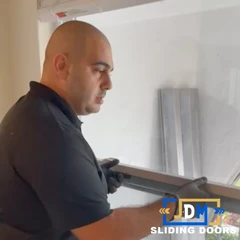
From the field, Yuval, JDM elite technician: “Most companies cut open your wall to reach a pocket door, because the hardware the door hangs from sits inside the wall cavity, but we do not. At JDM we use a special technique and custom tools, made just for us by a welder, to repair almost every pocket door with the wall left untouched. In practice that is more than 97 percent of the pocket doors we see. We are one of the few companies in America that still knows how to do this.”
So if a contractor tells you the wall has to come open before they have even looked at the door, that is worth a second opinion.
Quick diagnosis: match your symptom to the fix
Start here. Find the symptom that matches your door and jump to that section.
| Symptom | Most likely cause | Can you DIY it? |
|---|---|---|
| Sticks or drags when sliding | Dirty track, worn rollers | Yes, start with cleaning |
| Feels gritty but still moves | Debris in the track | Yes, easy |
| Jumped off the track | Worn roller hooks or bent track | Sometimes, see below |
| Won’t stay fully open or closed | Track not level | Yes, adjustment only |
| Rubs the frame at top or bottom | Door hanging out of level | Yes, adjustment only |
| Stuck inside the wall, won’t come out | Hanger failure in the cavity | No, call a pro |
| Drags only in humid months | Wood door swelling seasonally | Depends, see below |
| Comes off the track repeatedly | Worn hangers or sagging track | No, call a pro |
The pattern worth noticing: almost everything in the “yes” column is cleaning, lubrication, or a small adjustment. Almost everything in the “no” column involves the hangers the door hangs from, which live inside the wall.
How pocket doors work
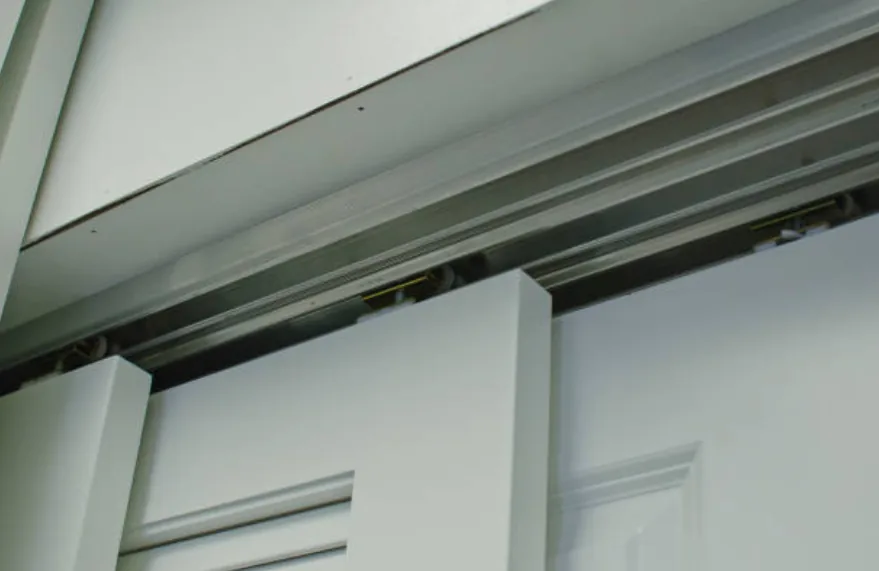
A pocket door slides into a hollow cavity built inside the wall, called the pocket. The door does not sit on the floor. It hangs from hangers that ride along a track mounted at the top of the pocket frame. A small guide at the bottom keeps the door from swinging, but it carries no weight.
That hanging design is the whole story. All the weight, all the wear, and all the parts that fail are at the top, inside the wall, out of sight.
Problems start when:
- The track bends, sags, or collects debris
- The hangers wear out, loosen, or slip off the track
- The door swells or shifts out of alignment
- Debris builds up in the pocket cavity and blocks travel
From the field, Yuval, JDM elite technician: “A pocket door is harder to repair than people expect because the part that fails, the hangers and track the door rides on, is hidden inside the wall. You cannot just look at it the way you can with a sliding door. Doing it without opening the wall takes the right tools and real experience, which is exactly why so few companies offer it.”
This is also why a pocket door is a genuinely different repair from a sliding door repair, where you can see every moving part.
Tools you’ll need
For the DIY fixes in this guide:
- Screwdrivers, both Phillips and flat head
- Pliers
- Adjustable wrench
- Level
- Silicone spray lubricant, not oil based
- Vacuum with a crevice tool, or compressed air
- Flashlight to inspect the pocket cavity
One note on lubricant. Use silicone, never WD-40 or anything oil based. Oil attracts dust, and inside a wall cavity that dust has nowhere to go. You will fix the door for two weeks and make it worse for the next two years.
How to fix a pocket door that’s sticking
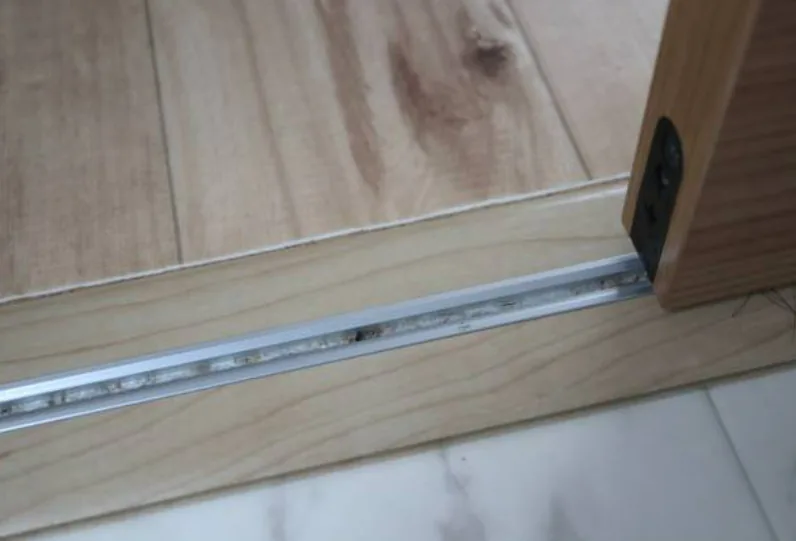
A sticking door drags, needs force, or feels gritty. This is the most common complaint and usually the easiest fix.
Step 1: Clean the track. Dust, hair, and pet fur build up over years. Vacuum the top track with a crevice tool, then clean the bottom guide. Wipe with a damp cloth to lift stuck-on grime.
Step 2: Lubricate. Spray silicone along the full length of the track and onto the hangers. Slide the door back and forth several times to spread it.
Step 3: Look for obstructions. Shine a flashlight into the pocket. You are looking for drywall screws driven into the cavity during a past renovation, paint drips, or debris that fell in during construction. A single screw tip poking into the pocket will catch the door every pass.
Step 4: Check the hangers. If cleaning and lubricating did not fix it, the hangers are likely worn. That is where DIY ends for most people, because the hangers are inside the wall. Our service page walks through how a pocket door is reset on its hangers and what a jumped wheel takes to put right.
Cleaning the track every three to six months prevents most sticking before it starts.
How to fix a pocket door off track
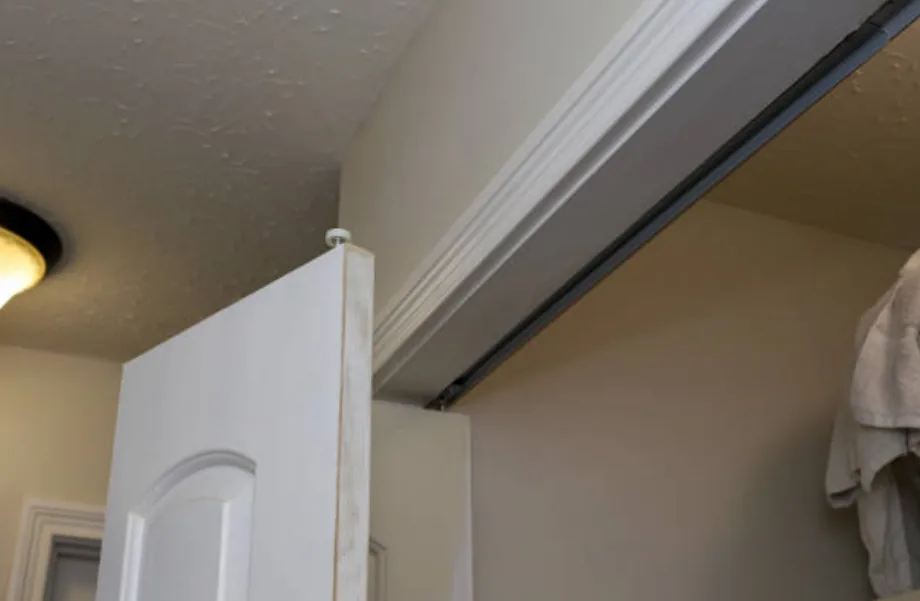
A door that has jumped its track tilts, jams, or wedges partway into the wall. Knowing how to put a pocket door back on track yourself is often the whole repair, because the hanger has come off the rail rather than broken.
Step 1: Find your access point. Many pocket doors have an access gap at the top of the doorway. Look up into the opening with a flashlight. If you can see the track and the hangers, you can likely work from there.
Step 2: Lift the door. Grip it firmly and lift straight up. Most hangers hook onto the track, so lifting disengages them. Get a helper for a solid-core door, which can be heavy and awkward.
Step 3: Re-seat the hangers. With the door lifted, guide the hangers back onto the rail. You should feel them seat. Lower slowly and test.
Step 4: Check the track with a level. If the track sags or sits out of level, the door will jump again no matter how many times you re-seat it. This is the step people skip, and it is why the problem keeps coming back.
Step 5: Test fully. Slide it all the way open and closed several times. Any binding or tilting means the hangers or track need real attention.
How to fix a pocket door off track without removing the frame
This is the most searched version of the question, so here is the honest answer.
- Most modern pocket doors have an access opening at the top of the doorway. You can reach the hanger brackets and re-seat the door without touching the frame or the drywall.
- Older doors, roughly pre-1990s, sometimes need the top trim piece pried off. That is a trim removal, not a wall repair, and it goes back on with finish nails.
- Damaged track inside the cavity is the case that stops most homeowners and most contractors. It does not automatically mean opening the wall, but it does mean specialized tools.
If the door needs to come out of the pocket entirely, that is the point to call somebody, because the trim and the split jamb come off first and the hardware is not visible until they do.
How to adjust a pocket door
If the door hangs crooked, rubs the frame, or drifts open on its own, it needs adjustment rather than repair.
Most hangers have a threaded adjustment bolt that raises or lowers that corner of the door. Find the access gap at the top of the opening, locate the bolt on each hanger, and turn it in small increments. A quarter turn moves more than you expect.
Adjust one side at a time and test between turns. Check with a level against the door edge, not the frame, since the frame itself may not be plumb in an older house.
If the door drifts open or closed on its own, the track is not level. Adjusting the hangers will not fix that, and you will chase it forever until the track itself is leveled.
How to replace pocket door rollers and hangers
Worn hangers are the single most common reason a pocket door fails for good. The nylon wheels flatten, the bearings seize, or the hook that holds the door bends open.
The replacement itself is not complicated. Getting to it is. The hangers sit inside the wall at the top of the pocket, and on most doors you cannot simply lift the slab out without first dealing with trim, the door stop, and sometimes the jamb.
This is the point where the two paths separate. A pro with the right tools reaches the hangers in place. Without those tools, the common approach is to open the wall.
From the field, Yuval, JDM elite technician: “Pocket doors hang from hangers on a track inside the wall, and over time those wear or slip off. Because the hardware is hidden in the wall cavity, it is a harder repair than a standard sliding door. Our custom tools let us reach and fix it without cutting the wall open.”
Pocket door track repair
A bent or sagging track causes repeat failures. The door goes back on, works for a month, and jumps again.
Minor sagging can sometimes be corrected by tightening or shimming the mounting brackets, if you can reach them through the access gap. Look for screws that have worked loose over the years, which is common in homes where the door gets heavy daily use.
A genuinely bent track needs to be straightened or replaced, and that is professional work. Forcing a door onto a deformed track destroys a new set of hangers quickly, so replacing hangers without addressing the track is money spent twice.
Humidity and seasonal sticking
If your door slides fine in winter and drags in summer, the door itself is moving, not the hardware.
Wood absorbs moisture and expands. A solid wood pocket door in a humid climate can gain enough width across the slab to start rubbing inside the pocket. It is one of the more common seasonal complaints in Florida homes.
The important thing to know is that swelling does not mean the door is finished. In most cases the fix is adjustment, easing the edge, or sealing the door edges so they stop taking on moisture. Replacement is the last option, not the first, and no one should be quoting you a new door before they have seen how the existing one behaves through a full slide.
Interior humidity control helps more than people expect. A door that lives in a bathroom or a laundry room takes far more moisture than one in a hallway.
What pocket door repair costs
These are national averages from home services cost trackers, not quotes. Access is the biggest variable, since a door whose hardware can be reached through the head jamb costs far less than one where it cannot.
| Job | Typical professional cost |
|---|---|
| Re-seating a door that jumped the track | $75 to $200 |
| Adjustment and realignment | $75 to $200 |
| Hanger or roller replacement | $250 to $450 |
| Track repair or replacement | $200 to $400 |
Fixing a pocket door that has come off track runs $75 to $200 for a straightforward case. Once hangers or track have to be replaced, expect $250 to $450 or more depending on how accessible the hardware is. General door repair labor runs roughly $30 to $120 an hour depending on your area.
Parts themselves are cheap. Track sells for around $10 and rollers run $9 to $209 each depending on the door’s weight and system. Almost everything you pay for is access and labor, which is exactly why the question of whether the wall has to come open matters so much to the final bill.
Add drywall repair, patching, and repainting to any quote that involves opening the wall, and factor in that the patch rarely matches the surrounding paint without redoing the whole wall.
When to stop and call a pro
Stop if:
- The door is stuck inside the wall and will not come out
- It keeps coming off the track after you re-seat it
- You can see the track is bent or the hangers are broken
- The door is solid core or glass panel and too heavy to lift safely
- Someone has already been in the wall and the repair did not hold
That last one matters more than it sounds. A previous repair that failed usually means the underlying cause, almost always the track or the hangers, was never addressed.
And if a company’s first move is to quote you for drywall repair, ask them directly whether they can do the job without opening the wall. The answer tells you a lot about what tools they carry.
Preventative maintenance
Two habits prevent most pocket door failures:
- Vacuum and lubricate the track every three to six months. Silicone only.
- Stop yanking a door that resists. Force is what turns a worn hanger into a bent track. When a pocket door starts to drag, that is the cheap moment to deal with it.
Check the level of the door once a year. A door that has started to hang crooked is telling you a hanger is wearing before it fails outright.
Frequently asked questions
Do you have to cut open my wall to fix a pocket door?
Almost never. Using a special technique and custom tools made just for JDM, we repair more than 97 percent of pocket doors without opening the wall. We are one of the few companies in America that still does it this way, so you keep your wall and your drywall intact.
Why is my pocket door off track or stuck?
Pocket doors hang from hangers on a track inside the wall, and over time those wear or slip off. Because the hardware is hidden in the wall cavity, it is a harder repair than a standard sliding door. Our custom tools let us reach and fix it without cutting the wall open.
Can a pocket door be repaired, or does it have to be replaced?
In the large majority of cases it can be repaired, and repaired without opening the wall. The hardware inside the cavity is what usually needs attention, and specialized tools and technique let us service it in place instead of tearing into drywall.
How do I fix a pocket door off track without removing the trim?
Look for the access gap at the top of the door opening. On most doors built since the 1990s you can reach the hangers through it, lift the door to disengage them, and re-seat them on the rail without touching the trim. Older doors sometimes need the top trim piece removed, which is a finish carpentry job, not drywall work.
Why does my pocket door keep coming off the track?
Because the track is out of level or the hangers are worn. Re-seating the door treats the symptom. If it jumps again within a few weeks, the track or the hangers are the actual problem and they need to be serviced.
How do I stop this happening again?
Vacuum and lubricate the track twice a year with a silicone spray, and act on the early signs rather than forcing a door that resists. Our pocket door maintenance guide covers the full routine.
My pocket door won’t stay open. Why does it roll shut on its own?
The track is not level. A pocket door hangs from wheels on a head track, and if that track slopes even slightly toward the pocket, gravity does the rest and the door rolls itself open or shut every time you let go. Raise the low hanger with its adjustment nut until the door stays where you put it. If both hangers are already at the top of their travel, the track itself was hung out of level and needs re-setting.
My pocket door won’t stay closed. What holds it shut?
A pocket door has no latch bolt holding it against a frame the way a hinged door does, so what keeps it closed is either a spring catch in the edge of the door or a magnet in the jamb. When one stops working the door drifts back open. Check the catch first, because it is a five dollar part. If the catch is fine, the door is not reaching the jamb squarely, which is the same alignment fix as above.
Why does my pocket door stick only in summer?
The door is absorbing humidity and swelling. This is common with solid wood doors in humid climates. It usually calls for adjustment or sealing the door edges rather than replacement.
Can I fix a pocket door myself?
Cleaning, lubricating, adjusting the hangers, and re-seating a door that has come off its track are all reasonable DIY jobs if you can reach the hardware through the access gap. Anything involving worn hangers, a bent track, or a door stuck inside the wall needs a technician with tools built for the job.
Get it fixed without the drywall dust
If your pocket door is stuck, jumping the track, or has already been “fixed” once and failed again, the hardware inside the wall is what needs attention.
JDM repairs more than 97 percent of pocket doors with the wall left intact, using custom tools made for our technicians. No saw, no patch, no repaint. Book a pocket door repair and we will tell you straight whether yours is one of the rare ones that needs more.
We also handle sliding door repair, commercial door services, and sliding door replacement across our service areas.