Worn sliding door rollers show up as six clear signs: a grinding or scraping sound, a door that drags, an uneven gap along the frame, having to lift the panel to make it move, visible flat spots on the wheels, and a door that keeps popping off its track. If your slider grinds or drags, worn rollers are the most likely cause, and a sliding door roller replacement is usually the fix. Catching it early matters, because worn rollers chew up the aluminum track underneath and turn a small parts job into a much bigger one. We repair sliding doors across Miami-Dade, Broward, and Palm Beach, and here is how to read the signs on your own door.
JDM Sliding Doors is a licensed sliding, pocket, screen, and barn door repair company based in Fort Lauderdale, serving homes and businesses across South Florida.
6 signs your sliding door rollers are worn out
Rollers are the small wheel carriages at the bottom of the panel that carry the full weight of the glass along the track. When they wear down, the door tells you in a few consistent ways. Here are the six signs we see most on real jobs.
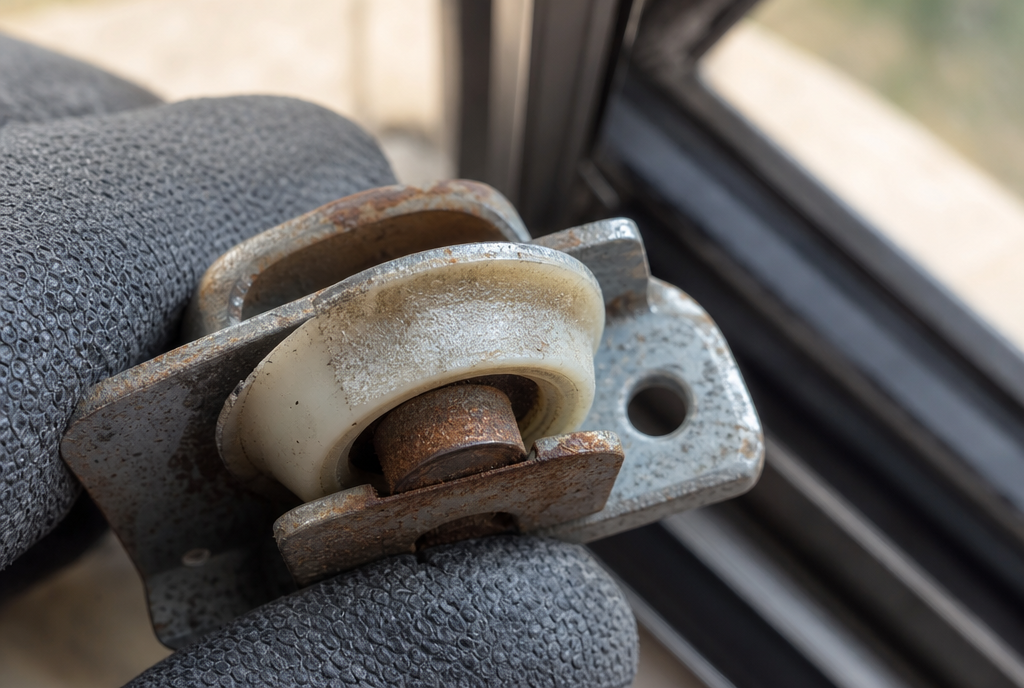
- Grinding or scraping. A healthy slider is nearly silent. A metal grinding or gritty scraping sound means the wheels have flattened or seized and the roller housing is dragging on the track.
- The door drags or feels heavy. If you have to lean into the door to move it, the rollers are no longer rolling. They are sliding, which takes far more force and wears the track fast.
- An uneven gap along the frame. Look at the gap between the top of the panel and the frame. If it is wider on one side, the door has dropped on a worn or collapsed roller and is sitting crooked.
- You have to lift the door to move it. Lifting the handle slightly and feeling the door glide is the classic worn-roller tell. When the wheels lose height, the panel drops and binds until you take the weight off it.
- Visible flat spots or cracks on the wheels. With the panel removed, worn rollers show flat edges, cracked nylon, or a wheel that no longer spins freely by hand. Removing the panel is a job for a pro, so this is usually confirmed during service.
- The door jumps off its track. A slider that keeps derailing has rollers worn low enough to clear the track lip. Our guide on sliding doors that jump off the track walks through what causes this and why it points back to the rollers.
One or two of these signs usually means the rollers are on their way out. Three or more means they are done.
Why Florida heat and salt air wear rollers faster
South Florida is hard on rollers for reasons that have nothing to do with how carefully you use the door, which is why coastal doors often need attention years sooner than the same door would inland.
Summer heat is a real factor. Aluminum tracks and frames expand as temperatures climb, so the clearance a worn roller was barely getting by on in spring can disappear by mid-July, and the door starts to bind. NOAA’s Climate Prediction Center favored above-normal summer temperatures across Florida in its 2026 outlook, so a door that dragged a little in April can get noticeably worse in peak heat.
Salt air is the other factor. Near the coast, salt corrodes the steel axle pins and bearings inside the roller housing, so the wheels stiffen or seize even when the nylon looks fine, and blown sand acts like sandpaper on the wheels. This is straight mechanical wear, not humidity fogging your glass, and it is why we fit corrosion-resistant rollers on coastal homes so the repair lasts.
Tandem rollers vs single rollers: which your door likely has
Most modern sliding glass doors use tandem rollers, which are two wheels per carriage instead of one. Tandem rollers spread the weight of the panel across more contact points, so they carry heavier glass, wear more evenly, and last longer. Single rollers, one wheel per carriage, show up on lighter panels, older doors, and many screen and closet sliders.

| Tandem rollers | Single rollers | |
|---|---|---|
| Wheels per carriage | Two | One |
| Load it handles | Heavier glass panels | Lighter panels and screens |
| Wear pattern | Spreads load, wears evenly | Concentrated load, wears faster |
| Common on | Modern patio sliders | Older or lighter doors, screens |
| Best for | Heavy, everyday-use doors | Light-duty and budget doors |
Which is right for you comes down to the panel. A full-size glass patio slider you use every day belongs on tandem rollers, usually what it was built for. Dropping a heavy door onto single rollers to save a few dollars is a common mistake we end up fixing, because the one wheel takes the full load and fails early. When in doubt, match what the manufacturer specified for that panel, and a technician can confirm the type when the panel comes out.
Sliding door roller replacement cost and what drives the price
A sliding door roller replacement in South Florida is usually a modest parts cost with labor as the larger part of the bill, and it lands well below the cost of replacing the whole door. The rollers themselves typically run from around $10 to $40 each depending on brand and material, but the price you pay for a completed job is driven mostly by labor and what the technician finds once the panel is out. Treat any figure here as a general estimate that varies by door, brand, and market, not a quote.
A few things move the price:
- Number of panels. A two-panel door with one moving panel is simpler than a multi-panel or pocketing system.
- Roller type. Tandem and steel-bearing rollers cost more than basic single nylon wheels, and they last longer.
- Track condition. If worn rollers already scored the aluminum track, the track may need straightening or replacement. Our guide on damaged sliding door tracks, repair or replace covers that call.
- Panel weight and access. Heavy glass, tight patios, and second-floor doors take more labor to lift and reset safely.
- Coastal corrosion. Rusted screws and seized parts add time, and corrosion-resistant replacements cost a bit more up front.
Because the range is wide, always get a written, itemized quote before work starts so you can see parts and labor separately. If the glass itself is failing rather than the rollers, our glass replacement price calculator and our post on what it costs to replace a sliding glass door give you a sense of that separate decision.
DIY roller check vs when to call a pro
You can safely diagnose worn rollers yourself without taking anything apart. The check is look, listen, and clean only. Removing the panel and swapping the rollers is not a DIY job, because a sliding glass panel is heavy, can shatter, and can hurt you if it drops.
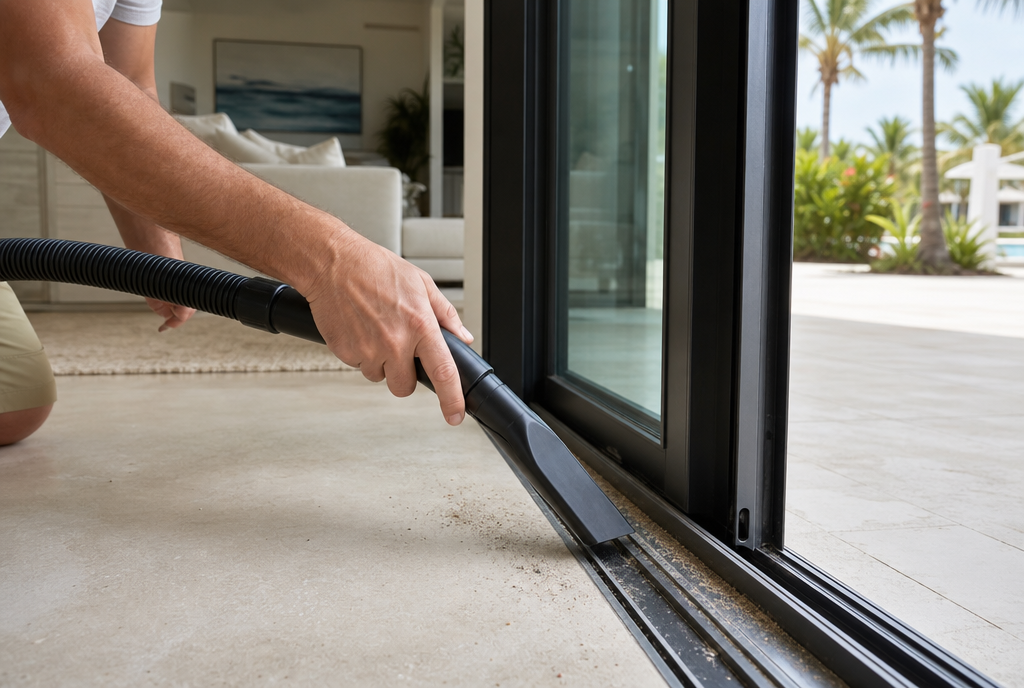
Safe checks you can do:
- Clean the track. Vacuum the bottom channel and wipe out sand and grit. If the door glides better afterward, dirty track was part of the problem. Our track cleaning and lubricating tips show the right way to do it.
- Listen and feel. Slide the door slowly and note grinding, dragging, or a spot where it catches.
- Check the gap. Look at the gap along the top of the panel for the uneven, dropped look described above.
- Gentle lift test. With a light hand, lift the handle slightly and see if the door moves easier. This is a feel-only check, not an attempt to raise or remove the panel.
When the checks point to worn rollers, that is the point to bring in a licensed technician. Pulling a heavy glass panel, fitting the correct rollers, and resetting the door to the right height under tension is professional work. If you want to see exactly what that involves, our companion guide on how to replace sliding glass door rollers and when to call a pro lays out the full process. When in doubt, hire a professional rather than risk the glass or the track.
Key takeaways
- Six signs point to worn sliding door rollers: grinding, dragging, an uneven frame gap, having to lift the door to move it, flat spots on the wheels, and a door that jumps off its track.
- South Florida heat expands the track and salt air corrodes roller bearings, so coastal doors wear out sooner and often bind worse in summer.
- Most modern patio doors use tandem rollers, which carry heavier glass and last longer than single rollers; match the roller type to the panel.
- Roller parts are inexpensive, but labor and any track damage drive the real cost, so get a written, itemized quote and act early before worn rollers ruin the track.
Frequently asked questions
What are the signs sliding door rollers are worn out?
The main signs are grinding or scraping noises, a door that drags or feels heavy, an uneven gap along the frame, having to lift the panel to move it, visible flat spots on the wheels, and a door that keeps coming off its track. One sign often means the rollers are wearing; several at once means they need replacing.
How much does sliding glass door roller replacement cost?
Roller parts usually run about $10 to $40 each, and the finished job cost depends mostly on labor, the number of panels, and whether the track was damaged. Any online figure is a general estimate, so get a written, itemized quote for your specific door.
Can I do a sliding glass door wheel replacement myself?
You can safely clean the track, listen for grinding, and check the frame gap, but removing the heavy glass panel and swapping the rollers is a professional job. The panels are heavy, can break, and can injure you if they drop, so leave the wheel replacement to a licensed technician.
Tandem rollers vs single rollers: which is better?
Tandem rollers use two wheels per carriage and are better for heavy, everyday patio doors because they spread the load and last longer. Single rollers suit lighter panels and screens, and putting single rollers under a heavy door usually leads to early failure.
Why is my sliding door hard to open in summer?
In South Florida heat, aluminum tracks and frames expand, so a door with already worn rollers loses its last bit of clearance and starts to bind or seize. Salt-corroded bearings and grit in the track make it worse, and it often signals the rollers are due for replacement.
Get your sliding door rolling smoothly again
If your slider grinds, drags, or has dropped out of square, worn rollers are the likely cause, and the longer you wait the more the track pays for it. JDM Sliding Doors diagnoses and replaces sliding door rollers, tracks, and panels across Miami-Dade, Broward, and Palm Beach, with same-day service when we have capacity in your area. Schedule a free repair estimate and we will get your door rolling the way it should.