Your sliding glass door will not lock. The latch turns and nothing catches, or it only locks if you shove the panel sideways first, and now the door that opens onto your patio is the one door in the house you cannot secure.
Nine times out of ten the lock is fine. The latch and the catch it drops into have stopped lining up, which is a door problem rather than a hardware problem, and the thing that moved them is usually under the door rather than in it. Two of the checks are safe to do yourself in five minutes.
By the end you will know the common causes, the checks you can safely do yourself, why an unlocked slider matters in storm season, and when to hand it to a licensed pro.
We are JDM Sliding Doors, a family-owned company in Fort Lauderdale (Florida license CGC1536404), and we handle sliding door lock repair across Miami-Dade, Broward and Palm Beach.
Key takeaways
- The top reason a sliding glass door won’t lock is alignment: the latch and the keeper have drifted apart, usually because the door dropped on worn rollers.
- South Florida salt air corrodes lock and roller hardware faster than inland, so coastal sliders fail sooner.
- Safe to do yourself: clear the track, vacuum debris, and a visual alignment check. Leave roller adjustment, panel removal, and lock replacement to a pro.
- A door that won’t lock is both a break-in risk and a storm gap, because a slider that can’t latch can’t seal against wind-driven rain.
- Any price online is an estimate that swings with the door and the job, so get a written, itemized quote.
Why a sliding glass door won’t lock: the common causes
Short answer: A sliding glass door usually won’t lock because the latch and its catch (the “keeper,” or strike) no longer line up. That happens when the door sags on worn rollers, grit or salt-air corrosion builds up in the track, the lock wears out, or heat and humidity swell the frame. Clearing the track and a quick alignment look are safe to try. The lock, the rollers, and the heavy glass panel are best left to a licensed pro.
A slider won’t lock when the moving latch can’t seat fully into the keeper on the frame. Five things cause that, and most are mechanical.
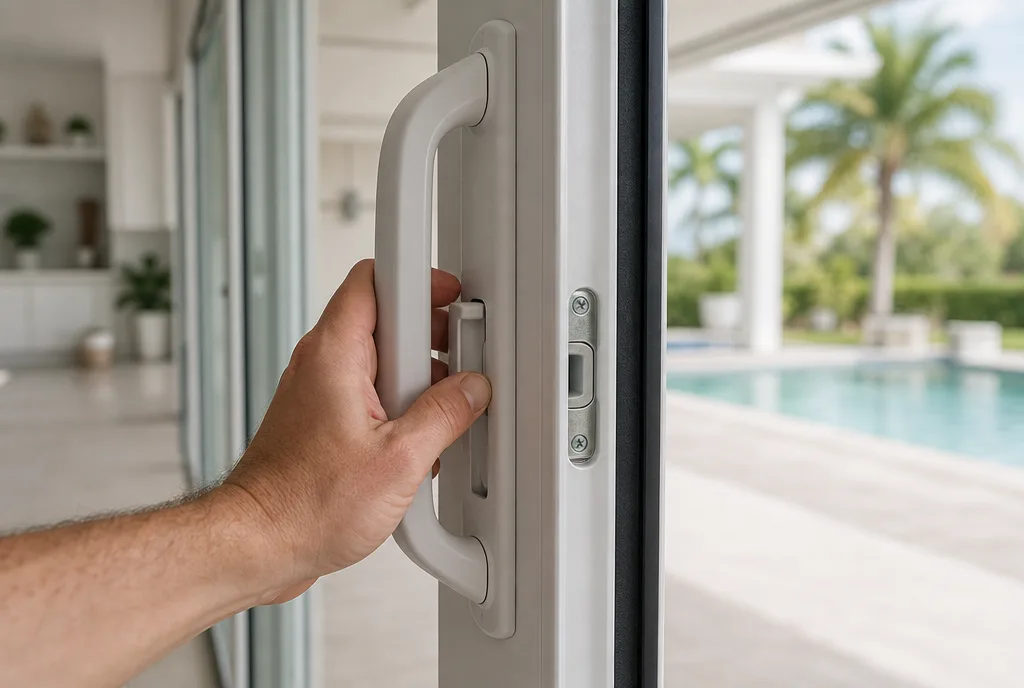
A misaligned latch or keeper. The most common cause. The latch (the hook or bolt that moves when you turn the handle) has to land squarely in the keeper, the slotted metal catch on the frame. Shift either a couple of millimeters and the latch hits metal instead of the slot. Tell-tale sign: it locks only when you lift or push the panel slightly.
A worn or broken mortise lock. The mortise lock is the lock body recessed inside the edge of the door (it sits in a pocket cut into the door). Its small springs lose tension and the hook wears down over the years, so the handle turns but the latch no longer snaps out. A handle that spins freely with no “catch” usually means worn internals.
A sagging door or worn rollers. Sliding doors ride on rollers at the bottom. As rollers wear or seize, the heavy glass panel drops and pulls the latch below the keeper, so a door that drags when sliding and a door that won’t latch often share this root cause. We cover that side in our guide on a sliding door that will not slide easily.
Debris or corrosion in the track
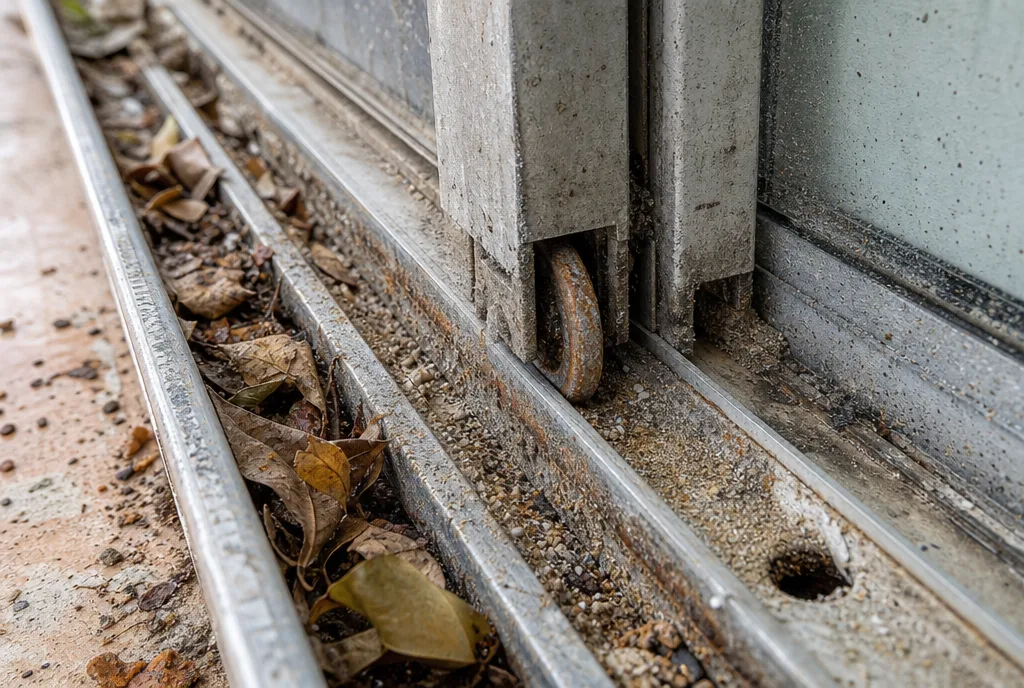
Sand, grit, and dead leaves pack into the bottom track and stop the door from closing the last fraction of an inch it needs to lock. Coastal South Florida adds a second problem: salt air corrodes the latch, keeper, and rollers, leaving rust and chalky buildup that jams moving parts. A latch that worked last year can seize after a humid, salty summer.
Swelling from heat and humidity. Frames and surrounding materials expand in heat and high humidity, so a door that locks easily in winter can bind in July when the gaps tighten. If your lock is seasonal, swelling is the likely culprit.
Quick, safe checks a homeowner can do
Before calling anyone, three low-risk checks fix a surprising share of “won’t latch” problems. None involves removing the panel or opening the lock.
- Clear and clean the track. Vacuum and wipe the bottom track so the door can close all the way. Use a manufacturer-recommended silicone-based lubricant if it suits your door, and skip oily sprays that attract grit. Keep fingers clear of the rollers and don’t force a stuck panel.
- Check the strike alignment. Close the door and look at where the latch meets the keeper, plus the gap between door and frame. An uneven gap top to bottom usually means the door has dropped. This is a look-only check; don’t drill or move the keeper yourself.
- Test the latch. With the door open, turn the handle and watch the latch move out and back. If it moves cleanly open but won’t catch when closed, you have an alignment problem, not a broken lock.
If these don’t solve it, stop here. The next steps involve heavy glass and security hardware.
Why a door that won’t lock is a security and hurricane-season risk
A sliding door that won’t lock is two problems at once: an easy way in and a weak spot in a storm. Sliding glass doors are a known break-in target because they face the backyard and sit out of sight, and one that won’t latch gives almost no resistance. Once the latch is working again, how to secure a sliding glass door covers what to add behind it.
The storm side matters just as much. The 2026 Atlantic hurricane season runs June 1 through November 30 (NOAA). A latch pulls the panel tight against the weatherstripping so the door seals, so a door that can’t latch can’t seal, letting wind-driven rain in and leaving the panel freer to rattle in high wind. In a High-Velocity Hurricane Zone (HVHZ), the stricter building-code area covering Miami-Dade and Broward, a lock that won’t engage undercuts what your doors are built to do. For upgrades, our best locks for sliding glass doors guide compares options, and our sliding door hurricane protection guide covers storm prep.
Signs the lock or rollers need professional repair
If the basics didn’t fix it, these signs point to repair or replacement rather than another DIY pass:
| Symptom | Likely cause | Typical path |
|---|---|---|
| Latch catches only when you lift the door | Sagging door, worn rollers | Pro roller and alignment service |
| Handle spins, latch won’t snap out | Worn or broken mortise lock | Lock repair or replacement |
| Door drags and won’t latch | Worn rollers, dirty track | Track cleaning plus roller service |
| Rust or chalky crust on hardware | Salt-air corrosion | Replace with corrosion-resistant parts |
| Locks in winter, sticks in summer | Heat and humidity swelling | Pro alignment and adjustment |
These are general patterns, not a diagnosis for your exact door. A technician confirms the cause before recommending parts.
How a pro fixes it and what it involves
A professional repair starts with diagnosis, not parts. The technician checks alignment, tests the latch open and closed, inspects the rollers and track, looks for corrosion or frame damage, then fixes the real cause.
From there the work usually means realigning or replacing the keeper, adjusting or replacing worn rollers to bring a sagging panel back to height, or swapping a worn mortise lock for the correct part for your door. On coastal homes a good tech fits corrosion-resistant hardware so the fix lasts in salt air. Some of this means lifting the heavy glass panel out of the track, which is why it isn’t a DIY job: the panels are heavy, the glass can break, and a security lock set even slightly off won’t protect your home.
On cost, lock and roller work covers a wide range depending on the door and how much has to come apart, so any figure online is an estimate, not a quote. Get a written, itemized quote for your door.
Because the lock is security-critical and the panels are heavy glass, the lock, rollers, and panel are best left to a licensed pro. If your checks didn’t solve it, that’s the point to call. Schedule a free repair estimate with JDM Sliding Doors, or see our sliding door lock repair service. If the slider is old or the frame is damaged, our sliding door replacement page lays out that option. Want the full DIY walkthrough? See our companion post on why your sliding door lock doesn’t work and how to fix it.
Frequently asked questions
Why won’t my sliding glass door lock all of a sudden?
Usually the door dropped slightly on worn rollers, or grit and corrosion built up in the track, so the latch no longer lines up with the keeper. Clear the track first; if it only locks when you lift the panel, the rollers and alignment need a pro.
Why won’t my sliding door latch even though it closes?
The door can shut while the latch still misses the keeper because the panel sagged or the strike shifted. A visual alignment check usually shows the latch landing above or below the slot.
Can I fix a sliding door lock myself?
You can safely clean the track, clear debris, and do a visual alignment check. Replacing the lock, adjusting rollers, or removing the heavy glass panel should go to a pro.
Does salt air really wreck sliding door locks in South Florida?
Yes. Salt air corrodes latches, keepers, and rollers faster than inland, leaving rust and chalky buildup that jams the moving parts, so coastal homes often need corrosion-resistant hardware.
Is a sliding door that won’t lock a hurricane risk?
It can be. The latch pulls the panel tight against the weatherstripping, so a door that won’t latch won’t seal against wind-driven rain. With the 2026 Atlantic hurricane season running June 1 through November 30 (NOAA), a working lock is part of basic storm prep.
Get your slider locking again
If your sliding glass door won’t lock, don’t leave it as a security and storm gap through hurricane season. A latch that will never seat, even after alignment and new hardware, is one of the signals covered in our guide on when to repair or replace a sliding patio door. JDM Sliding Doors diagnoses and repairs sliding door locks, rollers, and tracks across Miami-Dade, Broward, and Palm Beach. Schedule a free repair estimate and we’ll get your door locking and sealing the way it should.