
Taking a pocket door off means lifting the door panel up off the roller hangers at the top and easing it out of the wall pocket, and on most doors you have to pry off the door stop trim first just to reach those hangers. That is the honest answer to how to remove a pocket door, and it is also why it is not a quick job: you are handling a heavy slab and prying finish trim off a finished wall. Before you go that far, know that most “stuck” pocket doors never need to come out at all. If your door is only sticking, dragging, or jumping, start with our pocket door troubleshooting guide for the full symptom list, because the fix is often far simpler than removal.
Safety note, read this first: anything past the simple look-and-clean checks below, including taking the door out of the pocket, should be handled by a licensed professional. Pulling a pocket door means prying trim off a finished wall and controlling a heavy panel by hand, which is exactly where a jamb cracks, drywall tears, the track bends, or the door drops on someone. If a check below does not fix your door, stop and call a pro.
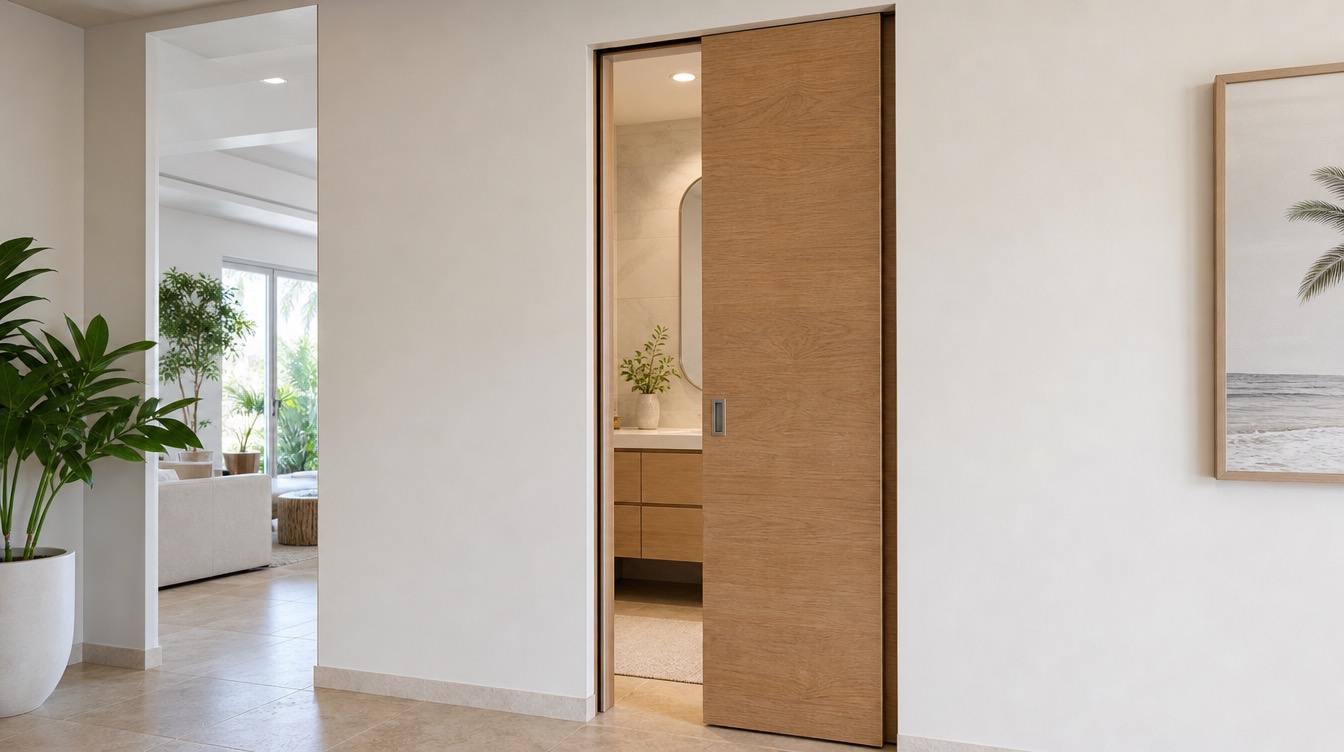
JDM Sliding Doors repairs pocket, sliding, barn, and screen doors across South Florida, from Miami-Dade and Broward up through Palm Beach County, so the steps below are what we actually do on the job, and where we tell homeowners to stop.
The short answer: how to remove a pocket door, and why it is not a ten-minute job
To take a pocket door off, a technician removes the door stop trim on both sides, lifts the panel until the rollers clear the track, tilts the bottom out, and lowers the whole slab out of the opening. Every step of that is where it goes wrong for a homeowner. The trim comes off first because the hangers that hold the door to the track sit hidden behind it, and the slab has to lift off those hangers because the door does not unclip from the side. A hollow-core door is awkward but light; a solid-core or glass pocket door is heavy and swings as it comes free. That is a two-person, right-tools job, which is why we do not publish it as a step-by-step how-to.
What is behind the wall
Behind the trim, a pocket door hides five parts working together: the header track bolted across the top of the opening, the hangers or rollers on the top edge of the slab that ride in that track, the split jamb that frames the mouth of the pocket, the door stop trim that hides the works, and the floor guide near the bottom that keeps the door from swinging. On either side sit the wall studs, so the pocket is a thin, finished box you cannot see into.

Removal is fiddly because those parts are stacked and hidden. Pry the split jamb carelessly and you split the wood or gouge the drywall. Miss that the door is still hooked on one hanger and you bend the track forcing it.
Why people want the door out, and the two real causes
Most people asking how to take a pocket door off do not really want it out, they want it working, and two problems cause the majority of these calls. First, the door jumped a hanger, so it hangs crooked or binds even though nothing is broken. Second, a roller is worn or cracked, so the door sits low and scrapes.
Neither usually needs the door removed. A jumped hanger often reseats, and a worn roller is a repair, not a demolition. For the full symptom list see our pocket door repairs guide, and to tell your hardware apart, our 10 types of pocket doors post helps.
The safe checks you can do (no prying, no heavy lifting)
There are a few checks anyone can do without tools that hurt you or the wall. None involve taking the door out.
- Look it over. Open and close slowly and watch where it binds. If it hangs crooked or pulls out at the top, stop and call a pro.
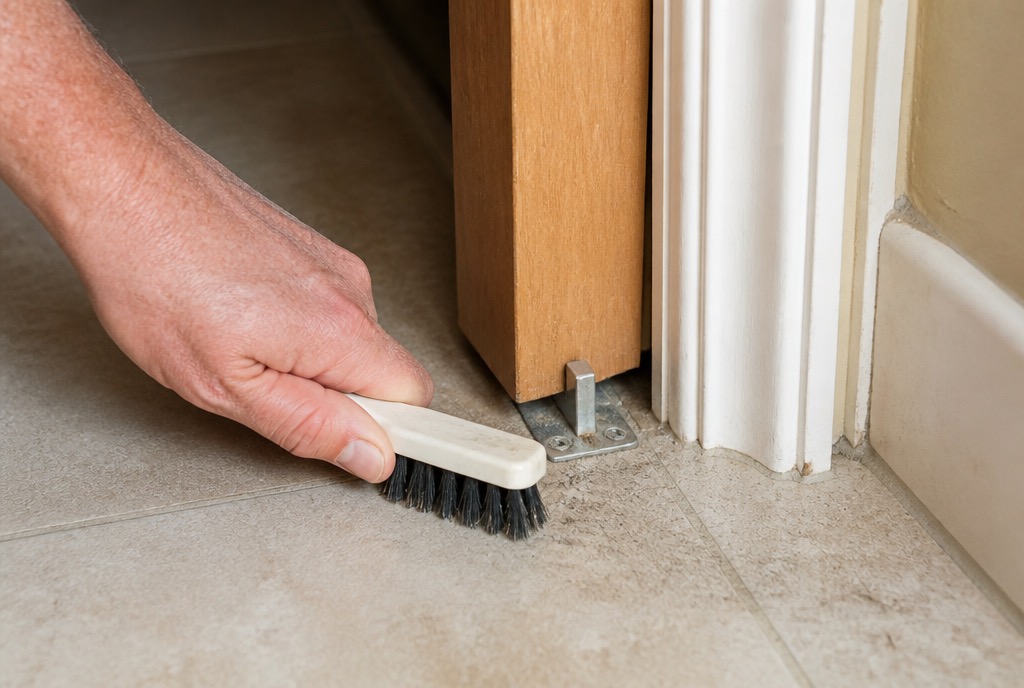
- Clear the floor guide. Vacuum or wipe out dust, grit, and hair at the floor guide and the bottom of the pocket. If it still drags after cleaning, stop and call a pro.
- Check for a slipped hanger. A door that suddenly tilts or rubs the top jamb often slipped a hanger. Looking is safe; forcing it is not. If it will not sit level with a gentle lift, stop and call a pro.
- Hand-tighten one loose screw. If the floor guide screw or the pull is obviously loose, snug it by hand. If the screw spins free or the part is cracked, stop and call a pro.
- Test how it travels. Slide it full open to full close and feel for the catch. If it binds anywhere cleaning did not fix, stop and call a pro.
Where do-it-yourself removal goes wrong, and what it costs
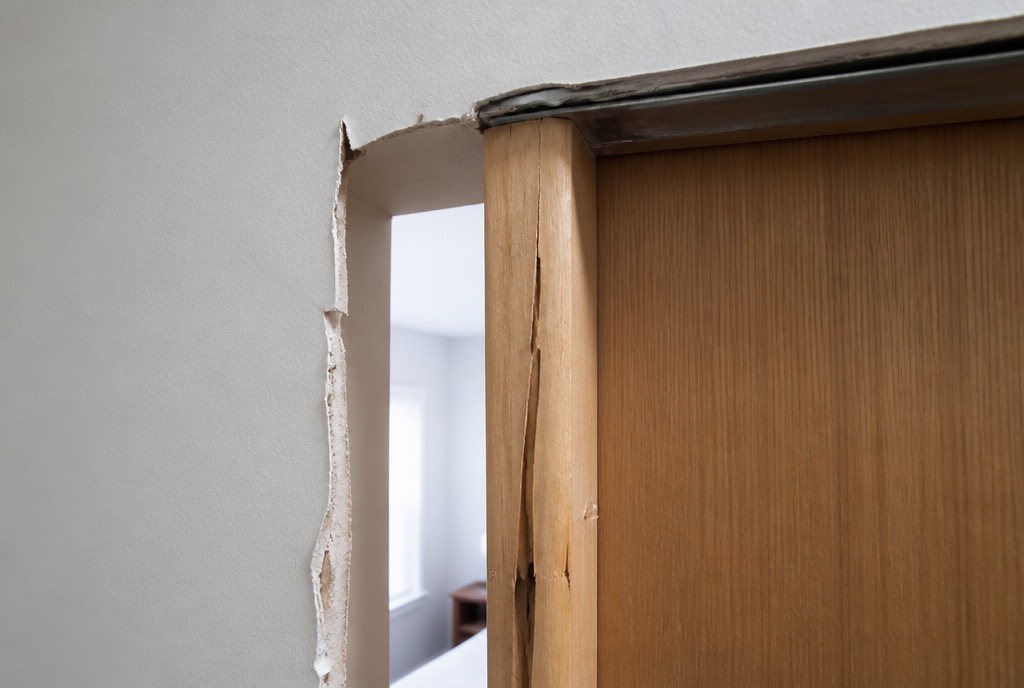
The removal itself is where a cheap problem turns expensive. The four we get called to fix are a cracked split jamb from prying trim, torn drywall at the pocket mouth, a bent header track from forcing a still-hooked door, and a dropped slab that dents the floor or the person holding it. A worn roller might have been a modest repair; once the jamb is split and the wall is torn, you are paying for trim carpentry and drywall patching on top.
Our own troubleshooting guide puts a professional roller or track repair in the rough range of $100 to $400 depending on the door and hardware. Treat that as a general estimate, not a quote, since it varies by door, brand, and market, and always get a written, itemized quote before any work.
How we fix most pocket doors without opening the wall
Most pocket door repairs never touch the drywall. Nearly every modern pocket door has an access opening at the top of the doorway, and we use a special long, slim pocket door repair tool that reaches up through that opening and into the pocket to grab the roller hangers, re-seat a jumped door, or swap a worn roller, all without cutting into the wall. That reach is the whole trick: it lets us service the hardware buried inside the pocket that you cannot get to with a normal screwdriver. When the whole slab does need to come out, it comes out through the doorway after we pry off just the door stop trim, then goes back on the same way, so the wall stays intact. We only open drywall in the rare case where the track itself is bent or broken inside the pocket. That is why “how to remove a pocket door” almost never has to mean tearing up a wall when a pro handles it.
When to call a professional, and what a pro does differently
Call a pro the moment a safe check does not fix the door, or the second any real removal is on the table. A technician diagnoses first instead of pulling the door: checks the hangers and track, tests the roller under load, and confirms the cause before anything comes apart. When the slab does have to come out, two people and the right pry and lift tools protect the jamb, the drywall, and the track, and the door goes back on square.
JDM Sliding Doors handles pocket door removal and repair across South Florida. Schedule a free repair estimate, see our pocket door repair service, or check the Broward County pocket door repair page for local service.
Key takeaways
Taking a pocket door off means prying the stop trim, lifting the slab off its roller hangers, and easing a heavy panel out, which makes it a professional job. Behind the wall sit the header track, the hangers or rollers, the split jamb, the door stop trim, the floor guide, and the wall studs. Most “get it out” calls are really a jumped hanger or a worn roller, and neither usually needs the door removed. Safe homeowner steps stop at looking, cleaning the floor guide, checking for a slipped hanger, hand-tightening a loose screw, and testing the slide; if none fix it, call a licensed pro.
Frequently asked questions
How do you take out a pocket door without removing the trim?
You generally cannot. The roller hangers that hold the door to the track sit behind the door stop trim, so on most pocket doors the trim has to come off before the slab can lift off the hangers and out of the pocket.
How do you fix a pocket door that is off track?
If it slipped off a hanger, a gentle lift sometimes reseats it, but a truly off-track door usually needs a pro to lift the slab, check the rollers, and set it back on the track without bending anything. Clean the floor guide first to rule out debris that only looks like an off-track door.
Can I take pocket doors off myself?
You can safely do the look-and-clean checks, but taking the slab out means prying finish trim off a finished wall and controlling a heavy panel, which is where jambs crack and drywall tears. Leave that part to a licensed professional.
Do you have to cut the wall to remove a pocket door?
No, not for a standard removal. The door comes out through the opening after the trim is off and the slab lifts off the hangers. Cutting drywall only comes up when the track or internal frame is damaged, which is a job for a pro.
How much does pocket door repair cost in South Florida?
A professional roller or track repair commonly runs a rough $100 to $400 depending on the door and hardware, per our own service experience, and that is a general estimate rather than a quote. Damage from a bad DIY removal adds to it, so always get a written, itemized quote.
Get your pocket door sliding again
If your pocket door is stuck, off the hanger, or you are staring at the trim wondering how to remove it, let a pro handle the risky part. JDM Sliding Doors diagnoses and repairs pocket doors across Miami-Dade, Broward, and Palm Beach counties. Schedule a free repair estimate and we will get your door sliding right without cracking the wall to do it.