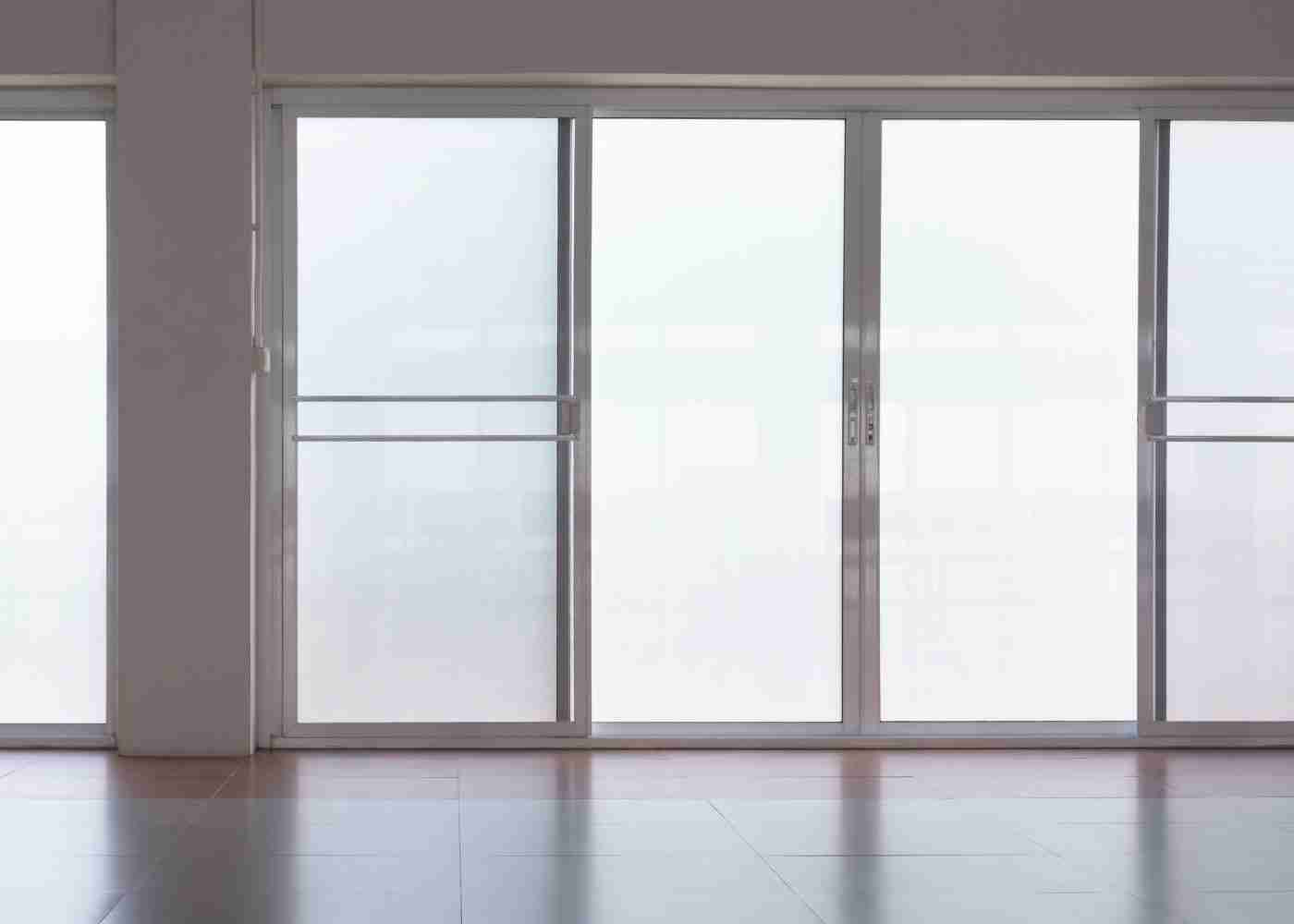

Buying a new sliding glass door in Florida used to be a one-question decision: how much do you want to spend? In 2026, the question is fundamentally different. With the Florida Building Code’s wind-borne debris and HVHZ requirements covering most of the state, plus tightening insurance underwriting on non-impact openings, the choice between impact-rated and non-impact sliding doors now hinges on three things: where you live, what your insurance carrier requires, and how long you plan to stay.
This guide compares impact vs non-impact sliding doors across the factors that actually drive the decision for Florida homeowners — not as a pure spec-sheet comparison, but as the operator-side breakdown we run with every customer who asks “do I really need impact?”
What “Impact” Actually Means on a Sliding Door
An impact-rated sliding door has been tested in a lab to meet Florida’s TAS 201, 202, and 203 standards. In practical terms:
- The glass is laminated — two panes bonded with a polymer interlayer that holds the glass together when struck
- The frame is reinforced to resist cyclic positive and negative pressure (typically 9,000 cycles in testing)
- The full assembly carries a Florida Product Approval (FL number) certifying it meets specific wind zone requirements
A non-impact sliding door uses standard tempered or annealed glass, lighter framing, and is not tested against the same impact and pressure standards.
The difference during a hurricane: an impact door’s glass may crack but stays sealed. A non-impact door’s glass typically breaches, allowing wind, water, and debris into the home — which then pressurizes the interior and frequently leads to roof failure.
The Side-by-Side Comparison
| Factor | Impact Sliding Door | Non-Impact Sliding Door |
|---|---|---|
| Hurricane glass-breach resistance | Yes (laminated) | No (tempered/annealed) |
| Florida Building Code compliance (HVHZ) | Yes | Only with shutters |
| Florida Building Code compliance (WBDR) | Yes | Only with shutters |
| Year-round UV blocking | High (laminated) | Low |
| Sound dampening | Significantly better | Standard |
| Daily security against forced entry | Significantly better | Standard |
| Insurance discount (typical) | 15-30% on wind portion | None |
| Initial install cost (8’ single panel) | $4,000-$8,000 | $1,500-$3,500 |
| Initial install cost (8’ double panel) | $6,500-$12,000 | $2,800-$5,500 |
| Permit requirement in Florida | Yes | Yes |
| Lifespan (Florida coastal) | 20-25 years | 12-18 years |
| Resale value contribution | Significant | Minimal |
| Required inspections | Florida Product Approval install | Standard install |
| Storm-prep effort | Zero | Hours of shutter deployment |
The comparison shifts dramatically once you factor in the 10-year cost of ownership. Non-impact doors are cheaper upfront but require shutters or panels (initial cost + storage + annual deployment) and don’t deliver the daily benefits of laminated glass.
The Florida-Specific Cost Math
For a typical 8-foot double-panel sliding glass door, here’s how the 10-year economics actually work:
Non-impact + accordion shutters:
- Door install: ~$4,200
- Accordion shutters: ~$2,800
- 10 years of pre-storm deployment (8 hours/year × $50/hour): ~$4,000 in time cost (or $2,500 if hiring help)
- Insurance: no discount on wind portion
- 10-year total cost: ~$11,000–$13,000 (plus your time)
Impact-rated:
- Door install: ~$8,500
- No shutters needed
- No pre-storm deployment
- Insurance discount (15-25% on wind portion): ~$300-$700/year saved
- 10-year total cost: ~$2,000–$5,500 net (after insurance offset)
The non-impact path looks cheaper at install time but ends up costing 2-3x more over a decade once you factor in shutters, deployment effort, and forgone insurance savings.
Where Impact Becomes Mandatory
The “should I get impact” question has different answers depending on Florida geography:
HVHZ Counties (Miami-Dade, Broward) — Mandatory or Shuttered
Every exterior opening in Miami-Dade and Broward counties must either be impact-rated to HVHZ standards or protected by HVHZ-approved shutters. Non-impact, non-shuttered openings are code violations.
Most new construction in HVHZ goes impact-only because the cost difference (impact alone vs. non-impact + shutters) usually favors impact, and shutters add visual clutter that hurts resale.
Wind-Borne Debris Region (most of coastal Florida) — Mandatory or Shuttered
Counties like Palm Beach, Martin, St. Lucie, Lee, Collier, Pinellas, Hillsborough, Sarasota, Manatee, and most of the Gulf and Atlantic coasts fall under WBDR requirements. The same impact-or-shuttered rule applies, with slightly lower wind pressure thresholds than HVHZ.
Inland Florida — Strongly Recommended
Counties more than 1 mile from the coast in central and northern Florida have lighter code requirements. Impact products aren’t always required — but two factors are pushing inland homeowners toward impact anyway:
- Insurance underwriting. Carriers are increasingly applying impact discounts statewide, not just in HVHZ/WBDR zones.
- Resale value. Florida buyers in any region now look for impact products as a buying criterion.
When Non-Impact Still Makes Sense
Despite all the above, there are still scenarios where non-impact is the right choice:
- You’re flipping the home within 2 years. Impact upgrades won’t fully recover at sale on a short hold.
- You’re an inland snowbird who isn’t here for hurricane season. Non-impact + shutters covers code; you handle deployment via a property manager.
- You’re remodeling room-by-room and impact doors are 18+ months out. Don’t let perfect block good — replace functional non-impact doors when they fail; defer impact upgrades to the bigger remodel.
- The opening is small and protected. A non-impact 4-foot rear sliding door behind a screened-in lanai with an existing impact-rated screen enclosure has different risk math than a 16-foot front-facing pocket door system.
The Decision Tree
Run through these questions in order. Stop at the first “yes.”
-
Are you in Miami-Dade or Broward (HVHZ)? → Impact (or impact-shutters) is required. Default to impact-only unless you have strong reasons otherwise.
-
Are you in a WBDR county (most of Florida) and the door is on the windward side of the home? → Impact strongly recommended. Cost-of-ownership math favors impact in 9 out of 10 cases.
-
Is your insurance carrier asking about impact upgrades at renewal? → Get the impact quote before they non-renew or hike rates.
-
Are you planning to sell within 5 years and the home doesn’t have impact? → Get the impact quote. Resale value typically recovers 60-80% of the upgrade cost.
-
Is your existing non-impact door already failing (rollers, tracks, locks, leaks)? → Run the repair-vs-replace math from our repair vs replacement guide. If you’re replacing, default to impact.
-
None of the above? → Non-impact may be fine, but get a quote on both and compare 10-year totals.
What Changes Between Brands
Once you’ve decided impact, the brand decision matters less than most people think. The major impact-rated sliding door manufacturers (PGT, Eastern Architectural, CGI, ES Windows, Anlin, and others) all meet the same Florida code standards. Where they differ:
- Frame thermal performance — affects energy efficiency
- Track design — affects long-term smoothness and roller serviceability
- Hardware quality — handles, locks, latches
- Glass coatings — Low-E, tinting, privacy options
- Warranty terms — typically 10-20 years on the frame, less on glass and hardware
For a deeper brand-level comparison on non-impact products, see our Andersen vs Pella sliding doors comparison.
What Changes Between Configurations
Within “impact sliding door,” configuration drives more cost variation than brand:
- Single panel — lowest cost, simplest install
- Double panel (most common) — standard configuration, moderate cost
- Triple/quad panel — significant cost step, often telescoping
- Pocket sliding doors — frame slides into wall cavity, premium pricing
- Multi-slide / disappearing walls — high-end, $15,000-$40,000+ for whole openings
The cost calculation is non-linear once you go beyond standard double-panel. For unusual configurations, get multiple quotes.
Frequently Asked Questions
Are impact sliding doors worth the extra cost in Florida?
For most Florida homeowners staying 5+ years, yes. The 10-year total cost of ownership typically favors impact once you factor in avoided shutter costs, pre-storm deployment effort, insurance discounts, and resale value. The exceptions are short-term holds, inland properties outside WBDR, and homes where shutters or panels are already in place and well-maintained.
Can I install impact sliding doors myself in Florida?
No. Florida code requires every impact opening to be permitted, installed per the manufacturer’s published Florida Product Approval instructions, and inspected. Self-installed impact doors will fail final inspection and won’t qualify for insurance discounts. The installation is what makes the product code-compliant, not the product itself.
How much do impact sliding doors cost in Florida?
For a standard 8-foot double-panel impact sliding door, expect $6,500-$12,000 installed including permit, depending on brand, glass options, and configuration. Larger openings, telescoping configurations, and HVHZ jurisdictions push the high end up. Premium brands and Low-E or tinted glass add to the cost.
Will impact sliding doors lower my insurance premium?
Most Florida carriers offer wind-mitigation discounts of 15-30% on the wind portion of homeowner’s premiums for impact-rated openings, with the largest discounts applying when the entire envelope (windows, doors, garage) is impact-rated. Run the actual numbers with your specific carrier — discounts vary substantially.
What’s the lifespan of an impact sliding door in Florida?
20-25 years for the frame and glass on properly installed coastal homes; non-impact sliding doors typically last 12-18 years in the same conditions. Hardware (rollers, locks, handles) is the most frequently replaced component on either type — 5-10 year service intervals are normal for high-traffic doors.
Can I retrofit shutters onto an impact sliding door?
Yes — and some homeowners do for added redundancy in HVHZ jurisdictions. It’s not required by code (impact is a complete code-compliant solution), but doesn’t hurt protection. The cost typically isn’t worth it for most homeowners.
Do impact sliding doors come with screens?
Yes — virtually all impact sliding doors include a sliding screen panel option. Screens are not impact-rated themselves; they’re for daily use only. We covered screen door maintenance and replacement in detail in the JDM screen door content cluster.
What’s the most common reason impact doors fail Florida inspection?
Improper installation. The product itself almost always passes — the install often doesn’t meet the manufacturer’s published Florida Product Approval requirements. Common installation failures: wrong fastener type, insufficient fastener spacing, missing flashing, wrong sealant, anchor depth issues. This is exactly why DIY isn’t an option.
The Bottom Line
For most Florida homeowners in HVHZ or WBDR jurisdictions, the question isn’t really “impact vs non-impact” — it’s “impact, or non-impact-plus-shutters?” Impact products win on 10-year total cost of ownership, daily benefits, insurance treatment, and resale value. The upfront price is the only place non-impact has a clear advantage, and that advantage erodes within 5 years.
Need a Florida-specific quote that compares impact vs non-impact for your exact home? JDM Sliding Doors offers free on-site estimates across Miami-Dade, Broward, Palm Beach, Treasure Coast, Tampa Bay, Orlando, and the rest of Florida — including Florida Product Approval documentation, code-compliant installation, and post-install inspection coordination.
Related Resources:
- Florida Hurricane Door & Window Prep: The Complete 2026 Guide — Full hurricane prep cycle for Florida homeowners
- Sliding Door Hurricane Protection — Specific upgrade options for sliding glass doors
- Impact Windows vs. Shutters: A Long-Term Investment — The 10-year cost comparison
- Andersen vs Pella Sliding Doors — Brand-level comparison
- How Much Does It Cost to Replace a Sliding Glass Door? — Replacement budgeting
- Sliding Door Repair vs. Replacement: What Saves You More? — When repair stops making sense