You are standing in a showroom, or three tabs deep on a manufacturer site, looking at a patio door with the blinds sealed inside the glass. It looks clean. No cords, no dust, nothing to tangle.
Then you see the price next to a normal slider, and the question arrives: is this actually worth it, or am I paying extra for something that will annoy me later?
I install these and I also get called out when they go wrong, so I see both halves of that story. Here is the honest version. If the door you already have is the problem, start with sliding door repair, or compare the ten sliding door types.
By the end you will know what they cost, what they genuinely fix, the one failure that matters, and who should skip them.
Are sliding doors with built-in blinds worth it?
For most people, yes, with one condition: check the warranty on the blind mechanism before you buy. The blinds themselves are excellent. The problem is that they sit sealed inside the glass, so when the mechanism fails you replace the whole glass unit, not the blinds.
- Expect $1,500 to $4,500 installed, roughly 20% to 40% above a standard patio door.
- Nothing to dust, nothing to tangle, and no cords near children or pets.
- The sealed layer improves the door’s insulation against a single-pane slider with outside blinds.
- Check the blind warranty separately: Pella covers sealed-in blinds for five years, not the lifetime term its other parts get.
How I know: we install these across South Florida. When we get called back, it is almost always the tilt mechanism, not the glass or the slide.
Key takeaways
- The blinds are sealed in, so they stay clean on their own. That part lives up to the promise.
- A failed blind mechanism means a new sealed glass unit, which is why the warranty matters more than the brand.
- Ask whether the glass panel can be swapped on its own, or whether the whole door has to come out.
- You give up choice: you cannot change the blind color later without changing the door.
- If you like rearranging window treatments, these are the wrong door for you.
What are sliding doors with built-in blinds?
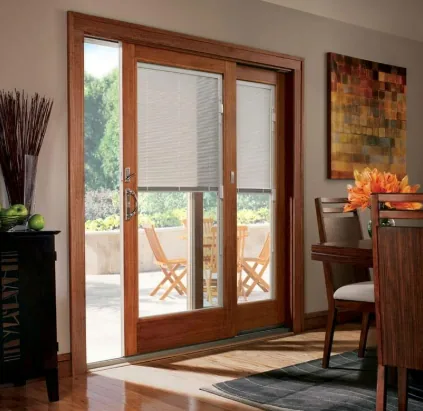
The blind sits between two panes of glass, inside the sealed unit that makes up the door panel. You never touch it directly.
You raise and tilt it from outside the glass, either with a slider on the frame, a magnetic control, or a motor with a remote. Because the blind is sealed in, no dust, pet hair or kitchen grease ever reaches it.
Pros of Sliding Doors with Built-In Blinds
1. No More Tangled or Broken Blinds
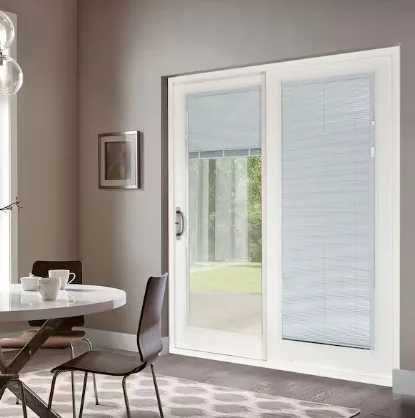
Let’s be honest: traditional blinds can be frustrating. They collect dust, tangle easily, and are prone to breaking, especially in high-traffic areas like sliding doors. Built-in blinds solve this issue by keeping them completely enclosed, safe from wear and tear.
2. Effortless Maintenance & Cleaning
Regular blinds are dust magnets. Cleaning them can be tedious and time-consuming. Since built-in blinds are sealed inside the glass, they don’t accumulate dust, dirt, or pet hair. That means less cleaning for you!
Pro Tip: Simply clean the glass surface as you normally would, with no need to dust or untangle blinds!
3. Enhanced Safety for Kids & Pets
If you have young children or pets, you know that dangling cords from traditional blinds can be a serious safety hazard. Built-in blinds eliminate this risk, making them a safer option for family homes.
4. Modern & Stylish Look
Sliding doors with built-in blinds offer a sleek, clutter-free aesthetic. Without external blinds or curtains, your space looks cleaner, more modern, and visually appealing.
5. Improved Energy Efficiency
The sealed blind adds a layer between you and the weather. That does three things:
- It keeps some heat out in summer.
- It holds some warmth in during winter.
- It takes a little off the energy bill all year.
6. Increased Privacy & Light Control
You control light and privacy with one hand, straight away. Slide the operator and you can:
- Block harsh afternoon sun.
- Cut the glare on a screen.
- Shut out the view from next door.
- Set the room however you want it for the time of day.
7. Long-Lasting Durability
Since built-in blinds are protected between glass panels, they don’t suffer from the wear and tear of regular blinds. No more broken slats, tangled cords, or stuck mechanisms!
Cons of Sliding Doors with Built-In Blinds
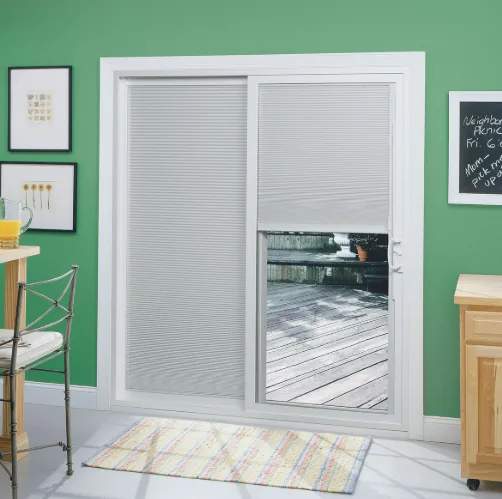
They are good doors. Here is what people tell me they wish they had known first.
1. Higher Upfront Cost
Sliding doors with built-in blinds cost more than standard sliding doors due to the specialized glass design and integrated blinds. However, many homeowners find the long-term convenience and durability make up for the higher price.
Think of it as an investment: fewer replacements, repairs, and cleaning efforts in the future!
2. Limited Blind Replacement Options
If the blinds inside the glass stop working, repairs can be more complex than replacing regular blinds. However, high-quality doors are designed to last for years with minimal issues.
3. Less Variety in Styles & Colors
Built-in blinds come in fewer color and style options compared to traditional blinds. If you love to change up your home’s decor frequently, this might be a limitation.
The one failure worth knowing about before you buy
This is the part a showroom will not lead with, and it is the whole reason the warranty matters.
The blind hangs inside a sealed glass unit. That seal is what keeps it clean and keeps moisture out. It also means there is no way in.
So when the tilt mechanism or the lift cord inside gives up, nobody opens the glass to fix it. The sealed unit gets replaced as one piece. That is a far bigger job than restringing a normal blind, and on an out-of-warranty door it is the moment people wish they had asked.
Two things follow from that, and both are worth doing before you sign anything. Ask how long the blind mechanism is covered, separately from the glass warranty. Then ask whether the panel can be replaced on its own, or whether the whole door has to come out.
The numbers surprise people. Pella’s own warranty gives blinds sealed between insulating glass a transferable five-year term, while other non-glass parts of the same door carry a much longer one. It also excludes damage to those blinds from “wear and tear through product use, sun exposure, abuse or age.” So weigh five years of cover on the part you cannot reach. We compare two of the best known makers in Andersen vs Pella sliding doors.
Who should buy them, and who should not
Worth it if you are tired of dusting blinds, you have small children or pets and want nothing with cords, or you want a clean look with no window treatment competing with the view.
Skip them if you like changing your window treatments, or you want a specific blind color. Skip them too if paying the premium would mean buying a weaker door to afford it. A better door with ordinary blinds beats a cheaper door with built-in ones.
One more question worth asking in the showroom, whatever you decide: can the glass unit be ordered on its own in ten years, and from whom? Doors outlive product lines. If the sealed unit for your door is discontinued by the time the blind inside it fails, the replacement stops being a panel and starts being a whole door, and that is a different number entirely.
Frequently Asked Questions
Are sliding glass doors with blinds worth it?
In my experience they’re worth it for homeowners who value low maintenance, kid and pet safety, and a clean modern look. They cost 20% to 40% more than a standard patio door with outside blinds. What you get back is no more blind replacements and no cords to fight. If those two things annoy you today, the extra cost is worth paying.
How much do sliding patio doors with built-in blinds cost?
From what we see on real installs, sliding patio doors with built-in blinds run $1,500 to $4,500 installed, depending on size and brand. I work with three makers most: Pella, Andersen and ODL. The first two sit at the premium end. ODL costs less. We compare the first two head to head in Andersen vs Pella sliding doors. Installation adds $400 to $900 on top of the door. Budget for the full installed number, not the door price.
Can you repair sliding glass doors with built-in blinds?
Not in the way you would repair a normal blind, and the section above explains why. What matters practically is who pays. Check your warranty paperwork first, then ask the installer whether the panel alone can be swapped, because that changes the bill more than the part does.
Do sliding glass doors with blinds reduce energy bills?
They help, though I would not buy them for that reason alone. The sealed layer adds some insulation against a single-pane slider. If energy is the goal, compare the door’s rated numbers, not the blinds. ENERGY STAR rates doors on how much glass they have, using tested ratings. Compare that number between doors.
Are blinds between glass hard to clean?
This is the part that lives up to the promise. The blind is sealed in, so it never collects dust, pet hair or kitchen grease. ODL calls its sliding patio door units “no dusting, maintenance-free” with “no exposed cords.” That matches what I see years after install. You wipe the glass and that is it.
Thinking about one for your patio
The blinds are the easy part of this decision. The door underneath them is the part that has to slide well in ten years, and that is the half people skip past.
If you are weighing an upgrade, talk to us about sliding door installation and we will tell you straight whether built-in blinds suit the opening you have. We also handle sliding door repair on the doors already fitted with them.