★★★★★ Top rated on Google

Automatic Door Repair

When the front door stops opening, you are still open but nobody can tell. We work on every major automatic door brand and carry the parts that fail most, so most entrances are running again before we leave. We also handle storefront door repair and ADA door repair across Miami-Dade and Broward, with service in 6 states.

JDM Automatic Door Repair
Same-Day ServiceToday or tomorrow
Licensed & Insured#CGC1536404
Flat-Rate PricingQuoted before we start
Serving Since 2012Thousands of happy clients

Trusted by brands you know and love

  • JW Marriott
  • Whole Foods Market
  • Hilton Hotels & Resorts
  • Total Wine & More
  • Marriott
  • Old Navy
  • St. Regis Hotels & Resorts
  • Michaels
  • Hilton Garden Inn
  • ALDI
  • Wild Fork

Automatic Door Repair Near You

Automatic Doors

Some of the Main Fixes We Do

Pick the one that sounds like your problem and we will take you straight to it.

Straight From Our Technician

Automatic Door Repair: What Our Expert Sees in the Field

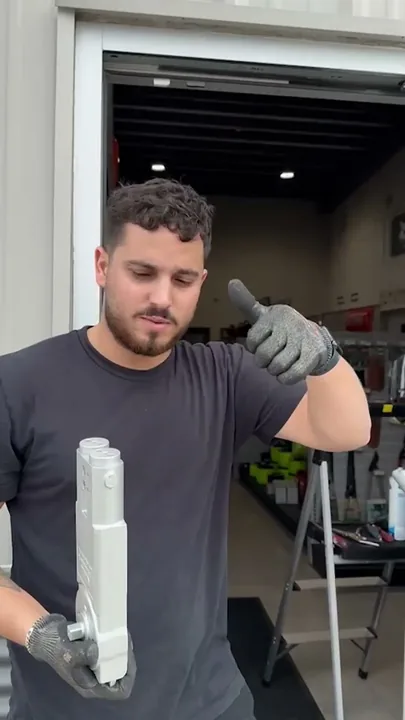
The questions we get most about automatic doors, answered from the field by Yuval, one of JDM's elite technicians.

Motor, controller, or sensor

Almost every automatic door failure is one of three parts

  • On an automatic sliding door it is either the motor, the controller, or the sensor.
  • Those are the most popular problems by a wide margin.
  • That is why we diagnose all three before quoting anything, because the symptom at the door often points at the wrong one of the three.

The industry calls it ghosting

A door that opens on its own has a bad sensor, not a haunted one

  • When a door starts opening randomly with nobody there, that is called ghosting, and it means the sensor has gone bad.
  • It is not a setting and it is not something you can adjust your way out of.
  • The sensor gets changed for a new one and the ghosting stops.
2×

maintenance visits a year prevent most callouts

Two maintenance visits a year prevent most of the calls we run

  • The customers who have us out twice a year for maintenance are not the ones calling us with an emergency.
  • Most of what we get called out for on automatic doors would have been caught on a scheduled visit while it was still an adjustment instead of a failure.

Answered by Yuval

Why does our automatic door open by itself?

That is called ghosting, and it means the sensor has failed. When a door starts opening randomly with nobody in front of it, the sensor is bad and it needs to be replaced with a new one. It is not something you adjust or reprogram your way out of.

What usually fails on an automatic sliding door?

The motor, the controller, or the sensor. Those three are the most popular problems we see. We check all three before quoting, because what you notice at the door does not always point at the part that actually failed.

Do you repair automatic doors or just replace them?

We repair. If a part has failed, that part gets replaced, but the door itself we repair, and most of the time a door does not need changing at all. We are not going to sell you a new entrance because a controller went bad.

Automatic Door Repair - Professional service by JDM Sliding Doors

Expert Automatic Door Repair You Can Count On

From Gal Cohen, Field Area Manager: "I have been on automatic door repair jobs since 2012, and our crews now run them across Florida, New York, Georgia, Colorado, Texas and Nevada. Most repairs we handle wrap up in roughly 2 hours, same-day, and you can see the real before-and-afters in the photos and videos on this page."

An automatic door that stops working does not just inconvenience people, it becomes a safety problem and, in a lot of buildings, an accessibility one. JDM repairs automatic sliding and swing entries for retail stores, medical offices, hotels, restaurants, and multifamily lobbies, on every major brand.

Most calls come down to a handful of things. Activation and presence sensors drift out of alignment or fail outright, so the door opens on nothing or does not open at all. Drive belts stretch and slip. Carrier wheels and tracks wear until the panel binds. Operators and control boards fail. Breakout hardware stops latching. We diagnose the header, the drive train, the sensors, and the safety circuit as one system rather than swapping the first part that looks worn.

We service Stanley, Horton, Besam, Record, Nabco, and Dorma equipment, carry common operator and sensor parts on the truck, and test activation and reopen timing against the ANSI A156.10 requirements before we leave. You get a flat-rate quote before any work starts, and we tell you whether the operator is worth repairing or worth replacing only after we have seen it run.

What We Offer

  • Automatic sliding door repair on Stanley, Horton, Besam and Record
  • Automatic swing door and operator repair
  • Activation and presence sensor repair
  • Sensor alignment and calibration
  • Drive belt, carrier, and track service
  • Operator and control board replacement
  • Emergency breakout hardware repair
  • ANSI A156.10 activation and reopen testing
  • dormakaba, ASSA ABLOY and GEZE operator replacement
  • Scheduled preventive maintenance
  • Emergency automatic door repair
  • After-hours and weekend service availability

Trusted by Local Homeowners

Google ★★★★★ Verified Google Reviews
Travis Armitt Local Guide · 16 reviews
Google ★★★★★ · a month ago

"After I made an appointment I decided I was going to try and do it myself. Michael FaceTimed me, walked me through what to do, then call back if I still needed him. An hour later I called him and he was at my house in 35 minutes. Some of the best service I've ever received from a contractor. He finished in two hours and went above and beyond. The same-day service was incredible. Absolute professionals."

Manoucheka Laventure Local Guide · 8 reviews
Google ★★★★★ · a year ago

"After a couple of hiccups with getting our repair done by someone else, our technician Richard showed up on time (actually half an hour earlier than the appointment time). He was very polite and got the job done in the time he told us it would take. Our glass door now glides smoothly and is able to lock again. I highly recommend Richard, he represented his company very well. I will definitely consider using them in the future!"

Shereka Robinson Local Guide · 47 reviews
Google ★★★★★ · 9 months ago

"David, thank you so much for taking the time to explain everything to us. He was so patient, and I appreciate him doing a clean and awesome job. He was respectful of my home and cleaned up after the work was complete. Now my door slides like new, quiet, and smooth. Again, thank you David."

Watch a Real Customer Testimonial

JDM Sliding Doors Customer Testimonial - Automatic Door Repair

Automatic Door Repair in Our Busiest Cities

Each link opens that city's own automatic door repair page, with the local crew, the work we handle there, and a free estimate.

Automatic Door Repair in Florida

Find JDM Sliding Door & Window Repair

Visit our Google Business Profile for reviews, hours, and directions.

View on Google Maps
Automatic Doors

Automatic Door Parts and Repairs We Cover

Everything below is work our technicians handle on a standard automatic door repair call, with the common parts stocked on the truck. If the piece giving you trouble is on this list, one visit usually covers it.

Issues + Process

What We Fix & How We Repair It

Common Issues We Fix

  • Automatic sliding door repair on Stanley, Horton, Besam and Record
  • Automatic swing door and operator repair
  • Activation and presence sensor repair
  • Sensor alignment and calibration
  • Drive belt, carrier, and track service
  • Operator and control board replacement
  • Emergency breakout hardware repair
  • ANSI A156.10 activation and reopen testing
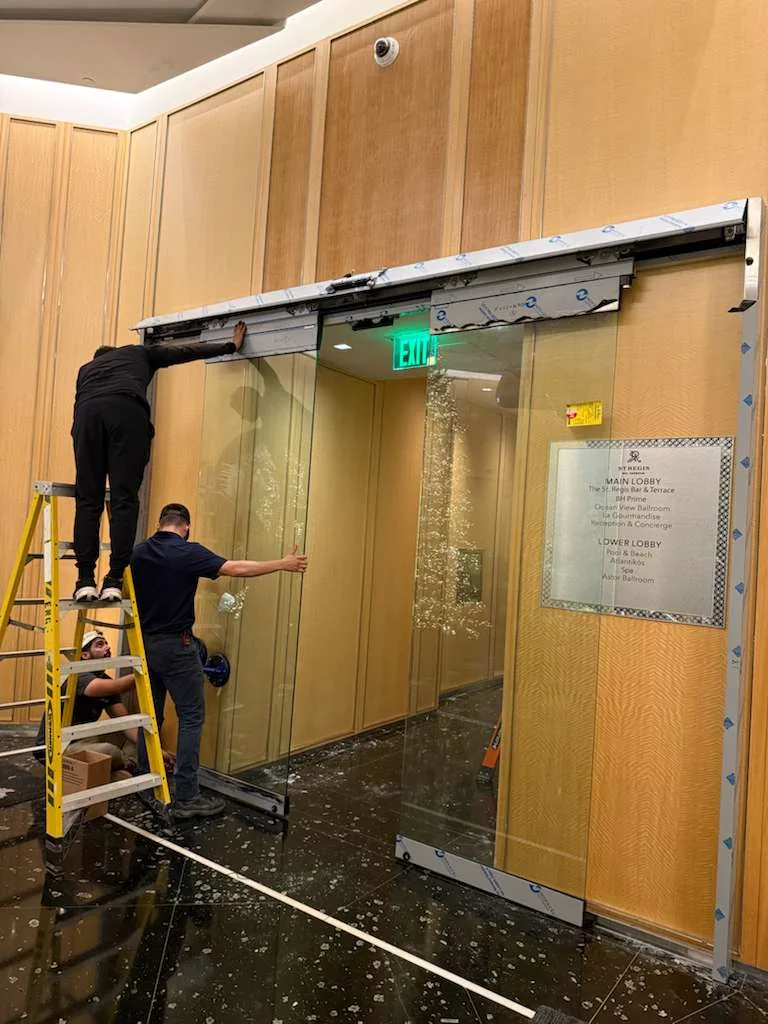
JDM technician performing automatic door repair
Hands-On Since 2012

Our Automatic Doors Process

  1. 1
    Run the Door and Watch It Fail

    We operate the door the way your customers do and watch where it actually goes wrong, then read any fault codes off the controller before opening anything up.

  2. 2
    Diagnose the System

    Header, drive train, sensors, and safety circuit get checked as one system, so we find the cause rather than the symptom that happens to be visible.

  3. 3
    Quote, Then Repair

    You get a flat-rate price before work starts. We tell you honestly whether the operator is worth repairing or has reached the end, and we never make that call before seeing the door run.

  4. 4
    Test and Hand Back

    We set activation and reopen timing to ANSI A156.10, confirm the presence sensors hold the door, run the breakout, and walk you through what changed.

Automatic Doors

Automatic Door Faults We Work On

An automatic door has four things that can stop it: what senses you, what moves the door, what controls both, and the door itself. These are the calls we get on each.

Automatic Door Sensor Repair

The door opens when nobody is there, or it opens so late that people walk into it. In both cases the machinery that moves the door is usually fine and the part that detects people is not.

There are two kinds of sensor on an automatic entrance and they do different jobs. An activation sensor, mounted above the door looking outward, decides when to open. A safety sensor, usually a beam across the opening or a presence sensor in the header, decides when it is not safe to close. A door that closes on people has a safety fault. A door that opens for a passing car has an activation fault.

What goes wrong is mostly environmental. Lenses fog or pick up a film of dust and the detection pattern shortens. A unit knocked out of aim by a cleaning crew widens its field into the parking lot. Low sun across the opening blinds an infrared sensor at the same time every afternoon. Water gets into a header unit and corrodes a connector.

We clean and re-aim first, then walk the pattern from the directions people actually approach from, and change the unit where the fault follows the sensor rather than the aim. Safety sensors get tested last and deliberately: we put an obstruction in the opening on cycle after cycle until the door stops for it every time.

What you will notice

  • A door opening with nobody in front of it
  • A door starting to close on people walking through
  • A door that opens late or only on a second approach
  • A fault that shows up at the same time of day

Automatic Door Operator Repair

The door has stopped moving itself. The sensors still light up, something clicks in the header, and the door stands still or creeps shut under its own weight.

The operator is the motor and gearbox in the header that moves the door. On a slider it drives a belt or a chain connected to the hanging panel. The failures repeat in a few places. A worn belt. A drive pulley spinning on its shaft. Dry or flat-spotted hanger wheels loading the motor until it gives up. On a swing door, a gear train worn enough to slip under load.

A slow or noisy operator is a different call from a dead one. Slow usually means the door has become hard to move and the motor is working against it, which is a hanger, track, or alignment problem rather than an operator problem. So we check how much force the door takes by hand before condemning the motor.

Where the unit is past repair, we match the replacement to the panel weight and the opening width, and check that the header will take the mount the new operator uses. Many of these doors are twenty years old, and the operator that fits is not the operator that came out, so that gets worked out before anything is ordered. Until the part arrives we set the door to work safely in manual mode so the entrance stays usable.

What you will notice

  • A door that no longer opens on its own
  • A motor that runs while the door stays put
  • An entrance that has become slow or noisy
  • A door that creeps shut on its own

Automatic Sliding Door Repair

An automatic sliding entrance is the one door in a building that cannot be left broken. It is the way in, it is on the public side, and when it stops working the business notices inside an hour.

The usual fault is wear in the hanging gear. The panel hangs from wheels running on a track inside the header, and those wheels take every cycle of every day. Flat spots make the door shudder, a dry bearing makes it squeal, and a worn wheel drops the panel far enough that the bottom guide starts to bind.

Breakout is the part people forget. The panels on most automatic sliders are built to swing out of the way under hand pressure, so the opening can still be used as an exit if the power fails. That mechanism has its own catches and pivots, and once it is out of adjustment the door either breaks out when it should not or refuses to break out at all. We test it on every visit.

We check the hanging gear, the bottom guide, the belt, the breakout, and the sensors as one system, because a slider that keeps failing in one place is usually being loaded by a fault somewhere else. Where parts are proprietary to the manufacturer, we identify the system on the visit and secure the opening in manual mode while they come.

What you will notice

  • Panels that shudder or squeal as they travel
  • A door that binds at the bottom guide
  • Panels that will not break out, or swing out on their own
  • An entrance that has stopped cycling altogether

Automatic Swing Door Repair

An automatic swing door opens on a push plate or a sensor and closes itself, and the complaint is almost always one of two things. It has become too heavy to use, or it is catching somebody on the way.

A low energy swing operator does two jobs in one housing. It powers the door open, then lets it close under spring pressure, so the same unit holds a motor and a closer. When the spring weakens the door stops latching. When the motor clutch slips the door opens part way. When the backcheck inside the unit fails the door throws itself into the wall.

Timing is the adjustment people ask for most. Hold-open time is how long the door waits before closing, and a door that shuts too fast on a corridor people cross slowly is a setting rather than a repair. Opening and closing speed are set on the unit as well, and on an accessible opening both have limits we work to.

We test the door under power and by hand. By hand shows whether the door is hard to move on its own, which is a hinge, pivot, or frame problem that no amount of motor will fix. Under power shows what the operator is doing with it. Then the push plates, the safety sensors on the swing path, and the latch all get checked, because a swing door that closes on nothing still has to end up shut and latched.

What you will notice

  • A door that has become heavy to push
  • An opening that closes faster than people can cross it
  • A door that opens part way and stops
  • A door that bangs the wall or the frame

Automatic Door Control Board and Wiring Faults

The door behaves differently every day. It works in the morning and not after lunch, or it cycles with nobody near it, or it shows an error code and resets itself. A fault that comes and goes is usually electrical rather than mechanical.

The control board is the small circuit board in the header that reads the sensors and the switches and tells the operator what to do. Everything on the door passes through it: activation, safety inputs, hold-open timing, lock outputs, and the error codes the unit reports.

Boards themselves fail less often than the wiring to them. The cable that runs through the hinge side of a swing door flexes thousands of times a week and eventually breaks inside its insulation, which reads as a dead sensor that tests fine on the bench. Water running into a header corrodes connectors. A ground that has worked loose produces faults that move around the door for no clear reason.

So we read the unit's own error code, then test the inputs at the board rather than guessing from the symptom. That separates a board fault from a sensor fault from a broken wire, and only one of the three needs a board. When a board does need replacing, we set the timing and the safety inputs again from scratch, because a new board arrives on factory settings and your opening is not a factory opening.

What you will notice

  • Faults that come and go with no pattern
  • A door cycling on its own
  • An error code or a flashing light on the header unit
  • A sensor that tests good but does not work in place

Automatic Door Installation

Most automatic door installs we do are replacements. An operator and a set of panels have reached the end of their life, in an opening that is staying where it is. The opening is the constraint, so it is what we measure first.

Traffic and space decide the system. A slider suits a busy entrance with room beside the opening for the panels to park. A swing operator suits an interior or secondary door with no room to the side, and a low energy unit is the usual choice where people rather than carts are coming through. Panel weight, opening width, and the header depth available then narrow it to the units that will physically fit.

Accessible openings carry requirements we build to rather than add later: opening force, how long the door holds open, how fast it closes, and the sensors that keep it off somebody moving slowly. Those get set at commissioning and written down, so there is a record of what the door was set to.

On the day, we keep the entrance usable. The old unit comes out, and the header is checked and reinforced where the new operator mounts differently. Panels are hung and set, sensors are aimed and walked, and the door is cycled with the safety devices tested in place. Then we show whoever manages the building where the manual release and the hold-open are, because that is what somebody needs at seven on a Saturday morning.

What you will notice

  • An operator the manufacturer no longer supports
  • An entrance that cannot keep up with its traffic
  • A manual door on an opening that needs to be accessible
  • Repeat repairs on a twenty year old system

How It Works: Fixed in 3 Steps

1

Call or Submit

Call (888) 283-8076 or request an estimate online. We confirm flat-rate pricing upfront, with no hidden fees.

2

Same-Day Technician

Our licensed tech arrives with common parts on the truck. Most automatic doors jobs are completed in a single visit.

3

Fixed Right the First Time

We test the repair, walk you through the work, and make sure everything is running smoothly before we leave.

Yuval, Elite Technician at JDM Sliding Doors
Yuval Elite Technician
Straight from our technician

Two maintenance visits a year, and most of these calls never happen.

The customers we see twice a year for scheduled maintenance are not the ones calling with an emergency. Ask us what a maintenance schedule looks like for your doors.

2x Visits a year
  1. 1

    Door Opens On Its Own (Ghosting)

    The trade name for this is ghosting, and it means the sensor has gone bad. It is not a setting you can adjust your way out of. The sensor gets replaced, we confirm the door holds still with nobody in front of it, and the ghosting stops.

  2. 2

    Door Will Not Open

    We trace it back through activation sensor, controller, and drive train to find where the signal or the motion actually stops, instead of swapping parts until something changes.

  3. 3

    Door Will Not Close or Stalls Partway

    Stretched belts, worn carrier wheels, debris in the track, and failing operators all show up this way. We check the whole drive train before quoting.

  4. 4

    Sensor and Safety Circuit Faults

    Presence sensors that no longer hold the door for someone in the threshold are a real strike risk. We repair or replace them and test the reopen behavior before we leave.

  5. 5

    Operator and Control Board Failure

    Motors, gearboxes, and control boards do reach the end. We replace them with equipment matched to the door and the traffic it actually takes.

  6. 6

    Breakout Hardware That Will Not Latch

    Emergency breakout has to swing out under force and latch again afterward. We rebuild the hardware so it does both, which matters for egress.

  7. 7

    Door Binding, Grinding, or Dragging

    Carrier wheels, tracks, and guides wear. We service the running gear so the panel moves freely instead of forcing the operator to work against it.

  8. 8

    Automatic Door Preventive Maintenance

    Quarterly, semi-annual, or annual visits with documented inspection, adjustment, lubrication, and safety testing, to catch the drift before it becomes a service call.

⏱ Same-day service available based on capacity. Call to confirm dispatch.

Done Fighting Your Automatic Doors? Call Now.

(888) 283-8076
Why JDM

Why Choose JDM for Automatic Door Repair

Request a Free Automatic Doors Estimate

Tell us what's going on and we'll follow up with a flat-rate quote. Prefer to talk? Call (888) 283-8076.

Get a Free Estimate

Ready to fix or upgrade your sliding doors? Contact us today for a free, no-obligation estimate. Our team is available for same-day service.

Call Us(888) 283-8076 Emailoffice@slidingdoorrepairft.com
Locations: Florida, New York, Georgia, Colorado, Texas & Nevada

Book Your Automatic Door Repair Today

Free estimate. Same-day service available. Flat-rate pricing. No hidden fees.

Automatic Door Repair: Key Takeaways

  • Automatic Door Repair from JDM is performed by licensed, insured, and bonded technicians across 6 states and 43+ counties, with same-day service when route capacity allows.
  • Pricing is flat-rate and confirmed in writing before work begins; most automatic doors jobs finish in a single visit with common parts stocked on the truck.
  • Most-requested markets: Miami-Dade County, Broward County, Palm Beach County. See all service areas for local availability and pricing.

Automatic Door Repair: Common Questions, Answered

Here are straight answers to the questions we hear most about automatic door repair.

What brands of automatic doors do you repair?

Stanley, Horton, Besam, Record, Nabco, dormakaba, ASSA ABLOY, and GEZE, plus most of the older equipment those companies absorbed over the years. Stanley operators are the ones we see most in US retail and grocery. You do not need to know who installed yours. Send a photo of the header and we can usually identify the system before the truck rolls.

My automatic door opens by itself. What causes that?

That is called ghosting, and it means the sensor has failed. When a door starts opening at random with nobody in front of it, the sensor is bad and needs replacing. Adjusting or reprogramming will not hold, because the part itself has gone.

Our automatic door is an old brand nobody seems to make anymore. Can it still be fixed?

Usually yes. Sourcing uncommon parts and discontinued hardware is a large part of what we do, and many older operators were absorbed by the manufacturers still trading today, so the parts have a current equivalent. Where a part genuinely no longer exists, the operator can normally be replaced without touching the panels or the framing, which costs a fraction of a new entrance.

The door opens but will not close, or closes too hard. Is that dangerous?

It can be, and it is worth treating as urgent. A door that will not close leaves the building open and unconditioned. A door that closes too fast or too hard is a strike risk, especially for older people and children. Both usually trace to the operator, the closing force setting, or a presence sensor that is no longer holding the door.

Do you repair the sensors, or only replace them?

Both, and which one depends on what the sensor is doing. A dirty lens or a sensitivity setting we correct on site. A sensor that has started ghosting, opening the door at random, has failed and gets replaced. We do not adjust a dead part and call it fixed.

Can you replace an automatic operator that is past its life?

Yes. When the operator has reached the end, we replace it and match the new unit to the door, the traffic it takes, and the activation setup already in place. We will not tell you it needs replacing before we have seen it run, because plenty of doors that look finished only need a carrier and a belt.

Do you offer maintenance for automatic doors?

Yes. Scheduled maintenance is where automatic doors pay you back, because sensors drift and belts stretch gradually rather than failing all at once. We run quarterly, semi-annual, or annual visits with a written record of what was checked, adjusted, and replaced.

Will the technician know the brand of operator we have?

Yes. Our technicians are trained directly on the operators they service, and between Stanley, Horton, Besam, Record, Nabco, and Dorma that covers most of what is installed out there. If you can send a photo of the header before the visit, we will have the right parts on the truck instead of making it a two-trip job.

How fast can you get someone out for a broken automatic door?

Commercial automatic door calls get priority scheduling, and we run same day or next day in most of our markets depending on capacity in your area. If the door is stuck open and the building is exposed, say so when you call and we will treat it as an emergency.

How much does automatic door repair cost?

An automatic sliding door service call is $250, and free on the Door Care membership. What the repair costs depends on which of the three usual culprits failed: the motor, the controller or the sensor. Programming and brand matter as much as the part, so we price it after seeing the door. Where the operator is past saving rather than repairable, a full ADA single door operator kit including two waterproof push-to-open buttons averages about $7,390, and a double door kit about $13,140. Members take 15 percent off. All of that includes installation, and we quote flat-rate before anything is ordered.