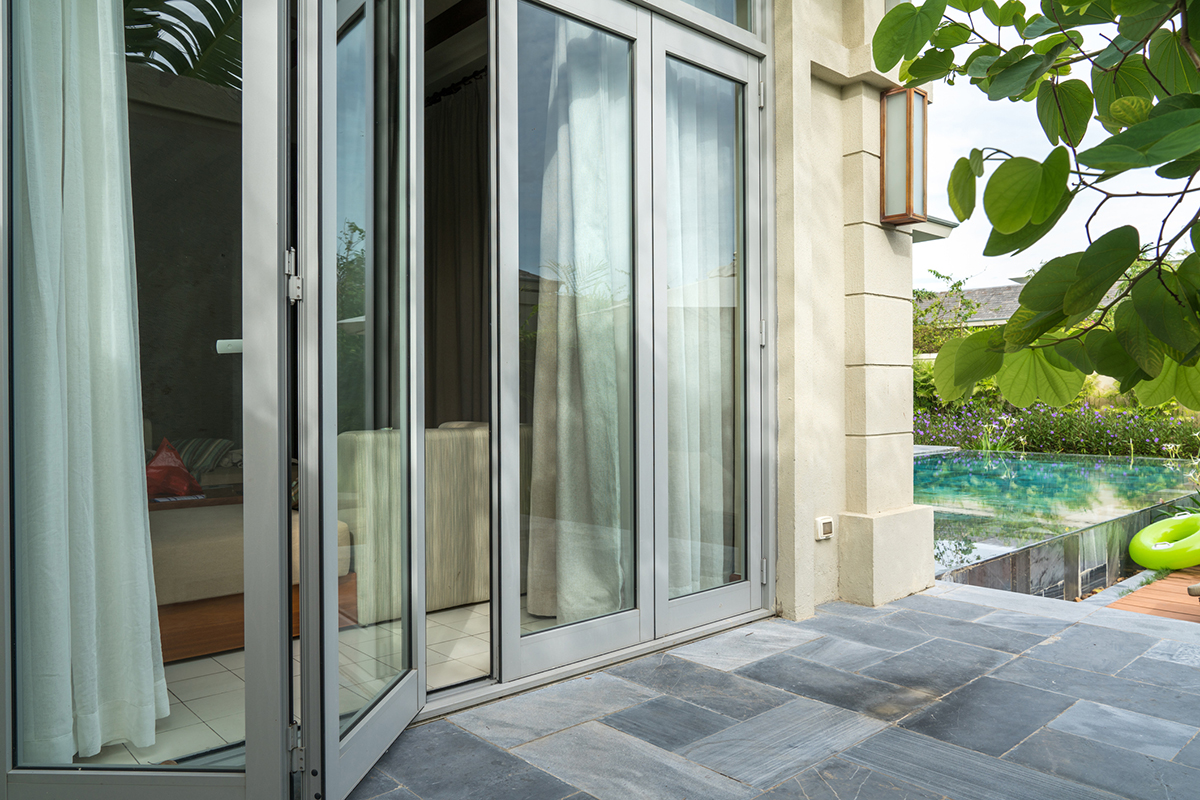
Sliding doors are one of the most popular features in Florida homes, providing easy access to patios and pools while flooding rooms with natural light. But daily use, weather exposure, and normal wear take a toll. Over time, you may notice your door sticking, grinding, leaking, or refusing to lock properly.
The good news: most sliding door problems have straightforward fixes when caught early. This guide covers the seven most common issues, what causes them, and how to address each one before it turns into a costly replacement.
1. Door Sticks or Won’t Slide Smoothly

A sliding door that resists movement is the single most common complaint we hear. It usually comes down to one of three causes: a dirty track, worn rollers, or misalignment.
What to check first:
- Run your finger along the bottom track. If you feel grit, sand, or hardened debris, that’s likely your problem.
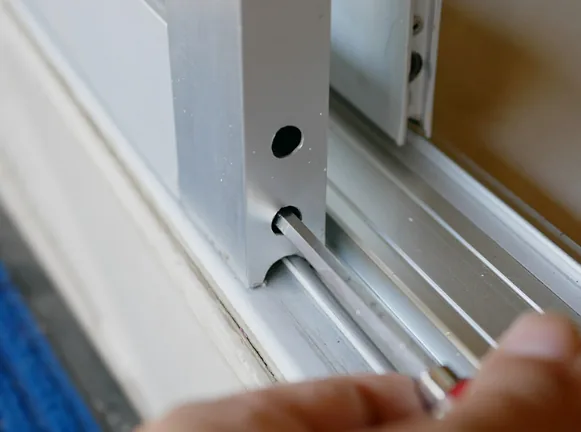
- Look at the rollers through the adjustment holes at the bottom of the door. Cracked, flat-spotted, or corroded rollers need replacement.
- Check if the door drags on one side more than the other, which points to alignment issues.
How to fix it:
- Vacuum the track, then scrub with a stiff brush and soapy water. Dry thoroughly and apply a silicone-based lubricant (never WD-40, which attracts more dirt). For detailed instructions, see our guide on cleaning and lubricating sliding door tracks.
- If the track is clean but the door still sticks, the rollers likely need replacement. Most sliding doors have adjustment screws at the bottom that raise or lower the door, so try adjusting these first. If that doesn’t help, the rollers themselves may be worn out. See our roller replacement guide for step-by-step instructions.
2. Door Jumps Off the Track
A door that pops off its track is more than an inconvenience; it’s a safety hazard, especially with children or pets nearby. This usually happens when rollers are damaged, the track is bent, or the door has been forced while stuck.
Warning signs:
- The door wobbles or tilts when you slide it
- You hear a loud pop or snap during operation
- The door lifts easily from the bottom
How to fix it:
- Carefully lift the door back onto the track (you’ll need a helper, since sliding doors are heavy).
- Inspect the track for dents or bends. Minor dents can be tapped flat with a rubber mallet; severe damage means the track section needs replacement.
- Check that the anti-lift device (a small screw or bracket at the top of the frame) is in place and properly adjusted.
For a complete walkthrough, read How to Fix Sliding Doors That Jump Off the Track. If the problem keeps recurring, it’s time for professional sliding door repair.
3. Broken or Worn-Out Rollers
Rollers are the most failure-prone component in any sliding door. They carry the full weight of the panel and endure thousands of cycles. In coastal Florida, salt air and humidity accelerate corrosion, shortening roller life significantly.
Signs your rollers need attention:
- Grinding, scraping, or squeaking sounds when sliding
- The door feels heavy or requires excessive force
- Uneven gaps between the door and frame
- Visible rust or flat spots on the rollers
How to fix it:
- For minor issues, cleaning the rollers and applying silicone lubricant may restore smooth operation.
- For worn or damaged rollers, replacement is the only lasting fix. Quality stainless steel rollers typically last 5 to 10 years in coastal environments. See our top 5 sliding door rollers for recommendations.
Roller replacement involves removing the door from the track, which requires at least two people due to the weight. If you’re not comfortable with the process, our technicians can handle it with same-day service.
4. Lock Won’t Engage or Feels Loose
A sliding door lock that won’t latch, feels wobbly, or requires excessive force is a direct security risk. Lock problems are often caused by misalignment between the lock mechanism and the strike plate, but worn internal components are also common in older doors.
Common causes:
- The door has shifted, so the lock and strike plate no longer line up
- The lock’s internal spring or latch mechanism is worn
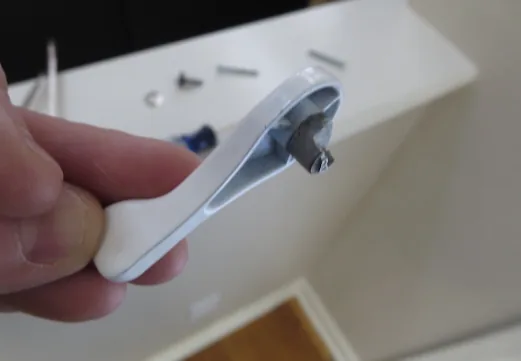
- The handle is loose due to stripped screws or a cracked mounting plate
How to fix it:
- First, check alignment. Close the door and see if the lock bolt lines up with the strike plate hole. If it’s off, adjusting the roller height (raising or lowering the door) often brings things back into alignment.
- For worn lock mechanisms, replacement is usually necessary. We cover this in detail in Why Your Sliding Door Lock Doesn’t Work, and How to Fix It.
- For the best replacement options, see our guide to the best locks for sliding glass doors.
If security is compromised, don’t wait. Call for professional lock repair service immediately.
5. Drafts, Air Leaks, and Poor Insulation
If you feel a breeze near your closed sliding door or notice your energy bills climbing, the weatherstripping is likely degraded. In Florida’s climate, weatherstripping deteriorates faster due to UV exposure, heat, and humidity.
How to diagnose:
- Hold a lit candle or incense stick near the edges of the closed door. If the flame flickers or smoke drifts, air is leaking.
- Check the weatherstripping visually, looking for cracks, gaps, flattening, or sections that have pulled away from the frame.
- Inspect the bottom sweep (the brush or fin seal along the bottom of the door).
How to fix it:
- Replacement weatherstripping is available at most hardware stores. Match the profile and material to your door model.
- For significant air leaks, the issue may be door alignment rather than just the seals. A door that hangs unevenly creates gaps that no amount of weatherstripping can fix; the root cause needs to be addressed first.
Learn more about the role of seals in our coastal sliding door maintenance checklist.
6. Water Leaks During Rain
Water intrusion around a sliding door can damage flooring, walls, and the subfloor structure. In Florida, where heavy rain and hurricanes are a regular occurrence, a leaking slider needs immediate attention.
Common causes:
- Clogged or damaged weep holes (the small drainage holes in the bottom track)
- Worn or missing weatherstripping
- Improper door installation or settling of the home’s foundation
- Cracked or deteriorated caulking around the frame
How to fix it:
- Clean the weep holes with a thin wire or compressed air. These are designed to drain water that enters the track, and blockages cause pooling and overflow.
- Replace deteriorated caulking around the exterior frame with a high-quality silicone sealant.
- If water is entering from below the track, the flashing or threshold may need professional repair.
For a deep dive, read The Ultimate Guide to Fixing Sliding Door and Window Leaks.
7. Foggy or Cloudy Glass
If you see condensation or a milky haze trapped between the glass panes of a double-pane sliding door, the insulated glass unit (IGU) seal has failed. This allows moisture to enter the space between the panes, where it condenses and creates a permanent foggy appearance.
What to know:
- A failed seal cannot be repaired; the entire glass panel needs replacement.
- Foggy glass also means the insulating gas (argon or krypton) has escaped, reducing the door’s energy efficiency.
- This is a common issue in older double-pane doors and doors exposed to extreme temperature swings.
We cover this topic in detail in Can You Repair Foggy or Cloudy Glass in a Sliding Door?. For glass replacement, our glass repair and cutting service can match your existing panel.
When to DIY vs. Call a Professional
Handle it yourself if:
- The track just needs cleaning and lubrication
- Weatherstripping needs replacement
- Roller adjustment screws need a simple turn
- The weep holes are clogged
Call a professional if:
- The door is off-track or too heavy to safely remove
- Rollers are damaged and need full replacement
- The lock is broken and security is compromised
- Water is leaking through the frame or threshold
- The glass panel is cracked, foggy, or broken
- Alignment issues persist after basic adjustments
For a deeper comparison, see DIY Sliding Door Repair vs. Hiring a Pro.
Keep Your Sliding Door Running Smoothly
Most sliding door problems start small and get worse over time. A few minutes of regular maintenance (cleaning the track, lubricating the rollers, checking the weatherstripping) can prevent the majority of issues covered in this guide.
For a complete maintenance schedule, check out The Ultimate Sliding Door Maintenance Checklist for Coastal Homes.
If your sliding door needs professional attention, JDM Sliding Doors offers same-day sliding door repair across South Florida. Contact us today for a free estimate or book an appointment online.