The handle on your patio door has gone soft. It wobbles when you pull it, or it turns and nothing happens at the other end, and you are already wondering whether this means a new door.
It almost never does. Most of what people call a broken handle is two screws, a worn base plate, or a rounded off spindle, which is the small square bar the handle turns inside the door. All three are cheap parts.
If the handle turns freely because the mortise lock behind it has failed, that is a sliding glass door lock repair rather than a handle job, and telling those apart is the first thing below. If the door itself is also dragging, start with worn rollers instead.
By the end of this you will know which part has actually failed, how to tighten a loose handle without wrecking it, how to fix a sticking or broken one, and when the job stops being yours.
Is it the handle or the lock?
Open the door first. If the handle feels normal with the door open and only fails when the door is shut, the handle is fine and the door has moved. If the handle is loose or spongy either way, it is the handle, and it is nearly always the screws or the base plate behind it.
- A wobbling handle is screws or a cracked base plate.
- A handle that turns with no resistance and does nothing is a broken spindle.
- A handle that will not move at all is usually dirt in the mechanism, not a break.
- A handle that works open and fails closed is an alignment problem in the door.
Key takeaways
- Two screws hold most sliding door handles on, and stopping the moment they are snug is the whole trick.
- The base plate behind the handle is the part that actually wears, and it is sold on its own.
- Use a silicone spray, never an oil, because oil collects grit and the handle gets worse.
- A patio door handle and its latch are separate parts, so one failing does not mean replacing both.
- Handle work is one of the fastest repairs there is; most of ours are done in a single visit.
What is behind a sliding door handle
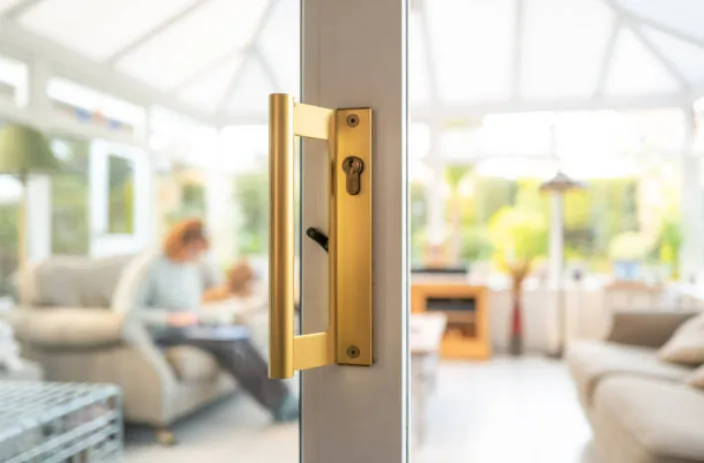
There are three pieces, and knowing which is which saves you buying the wrong one.
The two handle halves sit either side of the door and bolt to each other through it. The outside one usually has the keyway.
The base plate is the flat plate the interior handle screws into. It takes every pull the door has ever had, and on an older door it is usually the part that has given up.
The spindle and latch run inside the edge of the door. The spindle is the square bar that carries your turn through to the latch. When that bar rounds off, the handle spins freely and nothing moves.
Makers like Milgard, Andersen and Pella all use this same layout with their own dimensions, which is why a Milgard sliding door handle repair usually needs a Milgard part rather than a universal one off a shelf.
The four problems we actually get called for
- A loose handle. Screws that have stripped their plate, or a base plate cracked from years of pulling.
- A sticking handle. Dirt, salt residue or corrosion inside the mechanism, which is common near the coast.
- A handle that spins. A rounded spindle, or a spindle that has worked its way out of the latch.
- A handle that will not return. The spring inside the assembly has gone, and the lever now droops.
Sliding door handle repair for a loose handle
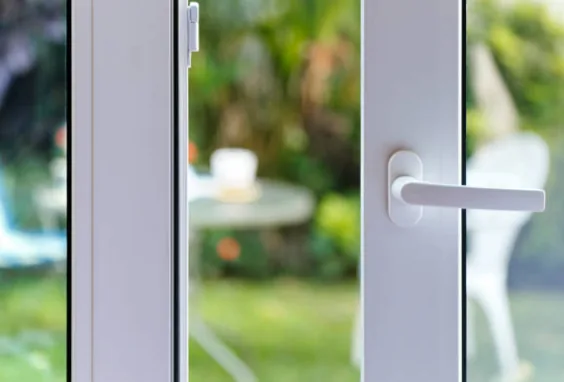
1. Tighten the two interior screws. Use a Phillips screwdriver and stop the moment they are snug. Over-tightening is what strips the housing and turns a five minute fix into a replacement.
2. If it still wobbles, take the handle off. Both halves come away once those screws are out. Look at the base plate.
3. Check the plate for cracks. A hairline crack across a screw hole is enough to let the handle rock. The plate is sold on its own and costs a fraction of a full handle set.
4. Refit and test with the door open. Then test again with it closed, because a handle that only fails when the door is shut is telling you about the door, not the handle.
How to fix a sticking sliding door handle
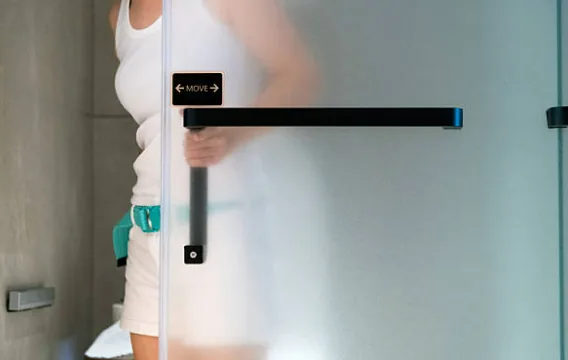
1. Brush the mechanism out. A small stiff brush along the edge of the door gets most of what is packed in there. Near the water, what comes out is usually salt.
2. Put a silicone spray on it, not an oil. Oil holds grit against the moving parts and the handle gets stiffer over the following months. Work the handle back and forth to spread it.
3. If it is still stiff, look at the latch. A latch that is being forced against a misaligned keeper feels exactly like a stiff handle from the inside.
How to fix a broken sliding door handle lock
When the lock behind the handle has failed, the handle comes off first.
1. Take out the interior screws and lift both halves of the handle away from the door.
2. Unscrew the latch from the edge of the door. It is held by two screws in the face plate.
3. Match the new part before you buy. Measure the screw spacing and the spindle size. This is the step people skip, and it is why the wrong part arrives.
4. Fit the latch, then the handle, then test before you finish. Throw the lock with the door open and check the bolt clears, then close the door and check it meets the keeper. A rushed sliding door handle lock repair is nearly always one that was never tested closed.
How to fix a patio door handle that has come loose from the frame
This is the one that is not a handle problem at all. If the screws keep backing out no matter how often you tighten them, the door panel has dropped on worn rollers and the handle is taking the weight of the door every time somebody pulls it. Replacing the handle will buy you a few months and no more. Get the rollers done and the handle stops working itself loose.
Keeping a handle working
- Wipe the handle and the edge of the door down a few times a year, and pay attention to the latch pocket where grit collects.
- Put silicone on the mechanism twice a year, more often within a mile of salt water.
- Snug the two interior screws every six months. A loose sliding door latch and a loose handle usually start from the same two screws.
- Throw the lock now and then even if you never use it, because a lock that sits idle for years seizes.
When to call somebody
Call when the handle ties into a mortise lock that will not turn, when the latch keeper is bent, when the frame itself is damaged, or when you have replaced the handle twice and it keeps failing. That last one is the giveaway for an alignment problem the handle is being blamed for.
Frequently asked questions
How do you tighten a sliding door handle?
Start with the two screws on the interior side and snug them with a Phillips screwdriver, then stop. Over-tightening strips the plastic housing and turns a five-minute fix into a replacement. If the handle still wobbles after that, the base plate behind it is worn, and the plate gets swapped rather than the screws cranked into a hole with nothing left to bite.
What causes a loose handle on a sliding glass door?
Three things, in this order of likelihood: screws that have stripped their plate, a base plate cracked from years of use, or a broken spindle inside the mechanism. Daily use and the expansion and contraction from temperature swings work the fit loose over years, which is why a retighten every six months heads off the bigger repair.
How do you replace a sliding door handle with a lock?
Remove the two interior screws, pull both handle halves off, and unscrew the latch from the edge of the door. Fit the new latch, line up the interior and exterior halves, and tighten the screws evenly. Test the lock before you finish: throw it and confirm the keeper lines up with the strike plate, because that is where a rushed swap goes wrong.
My sliding door latch is loose and will not engage. What now?
A loose sliding door latch is a misaligned keeper, a worn spring, or dirt packed into the mechanism. Blow the latch out with compressed air and use a silicone lubricant, never WD-40, which gums up and grabs more grit. If the lever still drops on its own, the internal latch assembly needs replacing, and that is a cheap part fitted in under fifteen minutes.
How do you fix a patio door handle that turns but does nothing?
The spindle has rounded off or slipped out of the latch. Take the handle off and look at the square bar running through the door. If its corners are worn round, it no longer grips the latch and a new spindle fixes it. If the bar is fine, it has worked its way out of position and needs seating again.
How much does sliding door handle repair cost?
A handle and base plate are inexpensive parts, so most of the cost is the visit. Expect the low hundreds fitted for a handle set, less if only the plate or the spindle is being changed. It rises when the mortise lock is going in at the same time.
Get the handle looked at before it takes the lock with it
A handle that has been loose for a year is a handle that has been prying on its base plate for a year, and eventually that load reaches the latch. If yours wobbles, spins, or sticks, sliding door handle repair is a small job now and a bigger one later. We cover South Florida and most handle work is finished in a single visit.