You want the doors open in the evening without the mosquitoes coming in with the air. So you start shopping, and within ten minutes the choice has turned into four types, six brands, and a lot of pictures of people on decks.
Here is the part that sorts it out fast: the screen door you can buy is decided by the opening you already have, not by which one you like the look of. Before you shop, measure the opening properly, and if the screen you have is only dragging, getting it back on its track may be the whole job. Not sure whether yours is worth keeping? Our guide to sliding screen door repair or replacement settles that in one look.
By the end of this you will know which type your opening will take, which are the best retractable screen doors and which are worth the money, what a sliding screen costs, and what fails first on each.
What are the best screen doors for your opening?
Retractable screens win where you do not want to see a screen, sliding screens win on a patio slider, and hinged screens win on a single entry door. The best retractable screen doors are Phantom and Andersen LuminAire; on a patio slider a Milgard or Pella panel costs a fraction of either and does the same job.
- A patio slider already has a screen channel, so a sliding screen panel drops in and is the cheapest fix.
- A single hinged entry door has no channel, so it takes a retractable or a hinged screen.
- Retractable screens cost more because the mesh has to roll into a housing and come back out straight.
- Mesh is the part that fails, and mesh is the cheapest part to replace on every type here.
Key takeaways
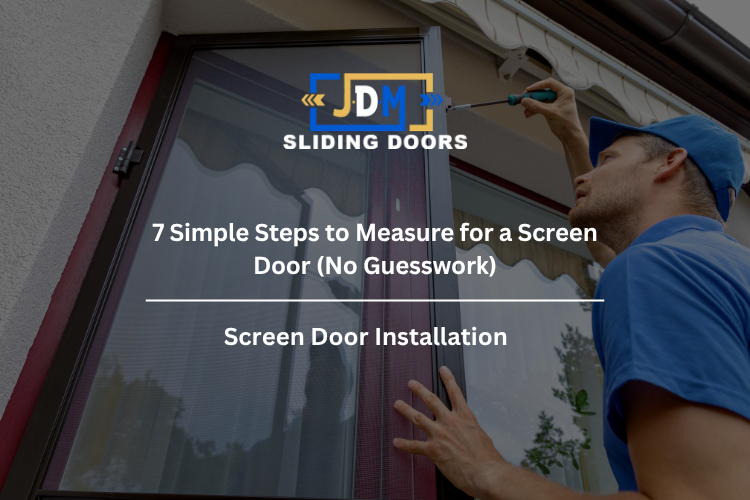
- Measure the opening width, the height, and the clear wall beside it before you shop.
- A torn screen is a mesh job, not a new door; re-screening costs a fraction of replacement.
- Pet mesh is roughly seven times the strength of standard insect mesh and worth it with a dog.
- Retractable screens have more to go wrong than any other type, because they have a spring and a housing.
- Every type on this list can be repaired, and most of the calls we get are wheels or mesh.
The four types, and which one your opening takes
Sliding screen doors
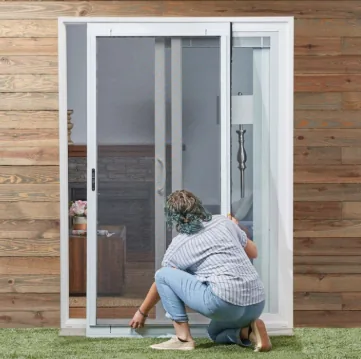
The panel runs in its own channel alongside a sliding patio door. If you have a patio slider, this is what you already have, and the best sliding screen door is usually the one built by whoever made the slider, because the channel and the roller spacing already match.
What goes wrong: the wheels. A screen panel weighs almost nothing, so its rollers are small, and small rollers pick up grit and stop turning. That is why a screen door drags long before the glass door beside it does.
Retractable screen doors
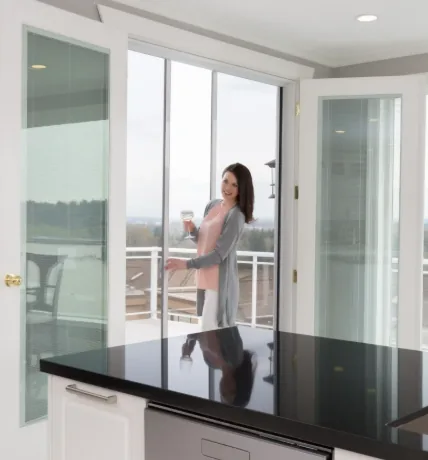
The mesh rolls into a housing at the side of the opening and disappears when you are not using it. That is the whole appeal: no screen in the view, no frame across the doorway. We have written separately on why people add a retractable screen to a slider.
What goes wrong: the spring and the mesh together. The mesh has to come out straight every time and go back in without folding, so anything that knocks it out of line, a pet leaning on it or a gust of wind, ends in a jam.
Hinged screen doors
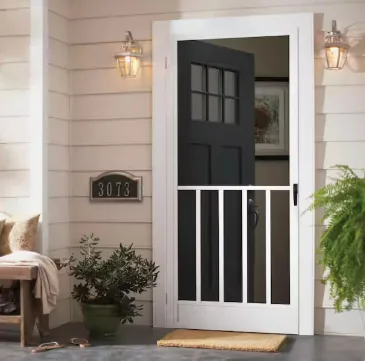
These swing on hinges like a regular door and suit a single front or back entry. They are the sturdiest type here and the easiest to re-screen, because the frame is rigid and comes off in one piece.
What goes wrong: the closer and the hinge screws. The door gets pushed open by hand a few thousand times a year and the screws work loose in the jamb.
Magnetic screen curtains
Two sheets of mesh held shut by magnets, tacked around the opening. They are cheap and they work for a season. Treat them as a temporary fix rather than a door, because nothing about them survives a summer of a dog going through it.
The best retractable screen doors
1. Phantom Screens

Phantom is the one to beat on a wide or awkward opening. It is made to measure, it fits sliding, hinged and oversized doorways, and the housing is slim enough to read as trim rather than as hardware.
- Motorized or manual.
- Pet mesh and insect mesh options.
- Built to the opening rather than to a standard size.
2. Andersen LuminAire
The LuminAire is the tidiest looking retractable screen on a standard entry door. The aluminum housing sits tight to the frame, and the retraction is damped, so the mesh does not snap back.
- Smooth, damped retraction rather than a hard spring.
- UV-resistant mesh.
- Several finishes, so it can match a frame instead of fighting it.
3. Larson Brisa
The Brisa is the budget retractable, and it is the one most people can fit themselves. It goes onto hinged and sliding doors without cutting the frame, which is what keeps the install simple.
- The lowest price of the three retractables here.
- Fits without cutting the existing frame.
- Full-view mesh with no cross bar.
The best sliding screen doors
4. Pella Rolscreen
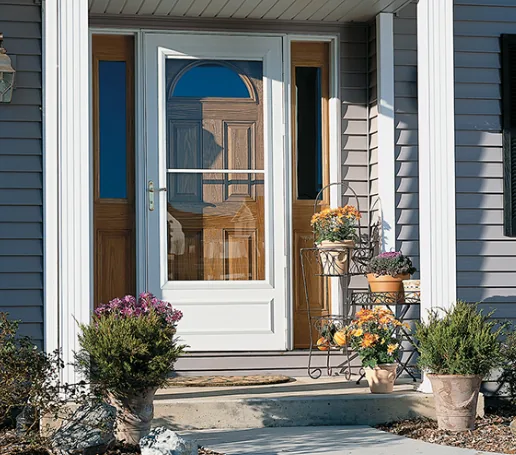
Rolscreen is Pella’s own screen for Pella sliding doors, and it retracts into the door frame rather than parking beside it. If you have a Pella slider, this is the screen the door was designed around.
- Rolls away when the door is closed.
- Matches the frame it was built for.
- Only worth it on a Pella door.
5. Milgard Sliding Screen
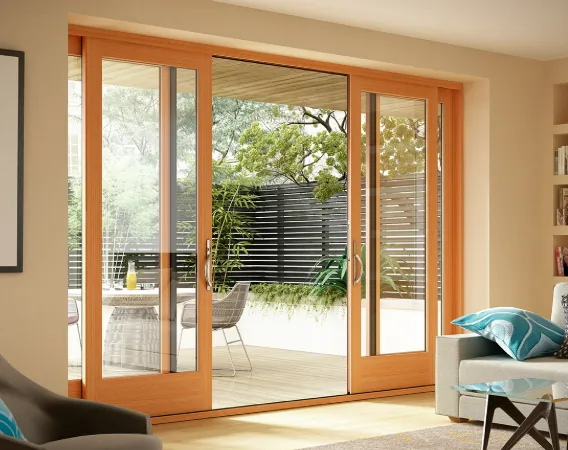
A plain, well-built sliding screen panel for a Milgard patio door. No spring, no housing, nothing to jam. On a patio slider this is the option that costs the least and lasts the longest, for the same reason a bicycle is more reliable than a motorbike.
- Aluminum frame that holds its shape.
- Wheels you can replace on their own.
- Made to size.
What to check before you buy
Mesh. Standard insect mesh stops mosquitoes and tears if a cat looks at it. Pet mesh is a heavier vinyl-coated polyester and takes claws. If you have a dog, this is the decision that matters most.
Frame material. Aluminum holds its shape and does not rust, which is why nearly every screen frame near salt air is aluminum. Vinyl frames flex on anything wide. The same logic runs through every type of sliding door we fit.
Sizing. A screen has to match the channel it runs in, not just the doorway. Take the height of the channel as well as the width of the opening.
Who fits it. A hinged screen and a Brisa are a Saturday. A made-to-measure retractable is not, because the housing has to be plumb or the mesh jams every time.
How long each type lasts
The frame outlives the mesh on every one of these, and by a long way.
Mesh is the short-lived part. Standard insect mesh in full Florida sun goes brittle and starts splitting at the edges somewhere around five to eight years. Pet mesh lasts longer because it is thicker, and it is the only mesh worth buying if a dog uses the door.
Wheels on a sliding screen are the next thing to go, usually before the mesh does, because they are small and they run in an outdoor track. Replacing a set is a twenty minute job and a cheap part.
A retractable’s spring and housing are the whole door. When the retraction goes, you are into a repair the maker has to supply parts for, and on an older discontinued model that can be the end of it. That is the trade for the clean look.
A hinged screen’s frame will outlast the house. What wears is the closer and the screws in the jamb, and both are stock hardware.
So the honest answer on lifespan is that the type with the fewest moving parts wins, and on a patio slider that is the plain sliding panel.
Keeping the one you buy working
- Wash the frame and mesh with a soft cloth and soapy water a couple of times a year.
- Vacuum the track and leave it dry, then put a non-oil silicone spray on the rollers. Never spray the track itself, because a wet track collects grit and the door gets heavier.
- Check the mesh for small tears and fix them early, since a small tear spreads across the whole panel.
Frequently asked questions
What are the best screen doors for french doors?
A retractable pair, one screen on each side, or a single retractable across the opening if you mostly use one leaf. French doors swing, so a sliding screen has nowhere to run, and a hinged screen would fight the door it sits in front of. Phantom builds double retractables to size for exactly this.
How much does a screen door cost?
A sliding screen panel for a patio door runs from around $100 to $300 fitted. A retractable runs from roughly $250 for a Brisa you install yourself to well over $1,000 for a made-to-measure Phantom on a wide opening. Re-screening a frame you already own is usually under $150.
Is a retractable screen door worth it?
On an entry door where you do not want to look at a screen, yes. On a patio slider that already has a screen channel, usually not, because a sliding panel does the same work for less money and has nothing in it to jam.
My screen door drags. Do I need a new one?
Almost never. A dragging screen is worn wheels nine times out of ten, and wheels are a cheap part. Lift the panel slightly as you slide it; if it moves easier, the wheels are flat.
Get the one you have working first
Most screen doors we are called to do not need replacing. The mesh is torn, or the wheels have flattened, and both are small jobs next to a new door. If yours is dragging, sagging, or letting insects past a gap at the edge, screen door repair and replacement is where to start, and we will tell you honestly if the panel is past saving. We work across South Florida and can usually get to it the same day or the next.