The types of closet doors come down to one thing: where the door goes when it opens. Some fold in half, some slide past each other on a track, some hang outside the opening on a wall rail, and some swing into the room on hinges.
That difference sets how much of the closet you reach at once, and how much floor you give up in front of it.
Width is where this costs money. Measure the old doors instead of the opening, miss by 2 inches, and both doors go back in the car for another trip to the store. The longer you leave a bad pair hanging, the more the old wheels wear the track they run in.
I will walk you through it step by step, so by the end you will know which types fit your opening, what to measure before you shop, which hardware carries the door you picked, and which closet doors come back broken.
In this article:
- What are the types of closet doors?
- Step one: measure the opening
- Step two: how much of the closet do you need open?
- Step three: match the hardware to the weight
- Step four: which ones come back broken
- What does the closet hold?
I am Gal Cohen, field area manager at JDM Sliding Doors, a sliding door repair company working in six states. If the doors you have now stick or lean, start with sliding closet door repair instead.
Key takeaways
- Closet door sizes are read off the finished opening. That is the hole you can see once the trim is on, not the framing behind it.
- Pick the type from the room first. The floor in front of the closet, the wall next to it and the weight of the door decide more than the finish does.
- Trim a hollow closet door more than about half an inch a side and you cut into the solid wood edge that holds its hinges.
- If the closet holds a gas water heater or a furnace, the door becomes a code item rather than a style choice.
What are the types of closet doors?
Short answer: most homes use six types of closet doors. Bypass doors slide past each other on a track. Bifold doors fold in half. Barn doors hang on a rail outside the opening.
Pocket doors slide into the wall. Hinged and French doors swing into the room. Louvered doors are any of those with slats cut into them for air.
Those six closet door styles cover almost every opening in a house.
Bypass doors are two doors that overlap and slide past each other on one track. Most people picture these when they say sliding closet doors. The mirrored pair in a bedroom is almost always this kind.
Bifold doors are panels, the flat halves of a door, hinged together in the middle. They fold against the side of the opening as you pull them. Those panels are thin and hollow, which is why bifolds are the cheapest set on the shelf.
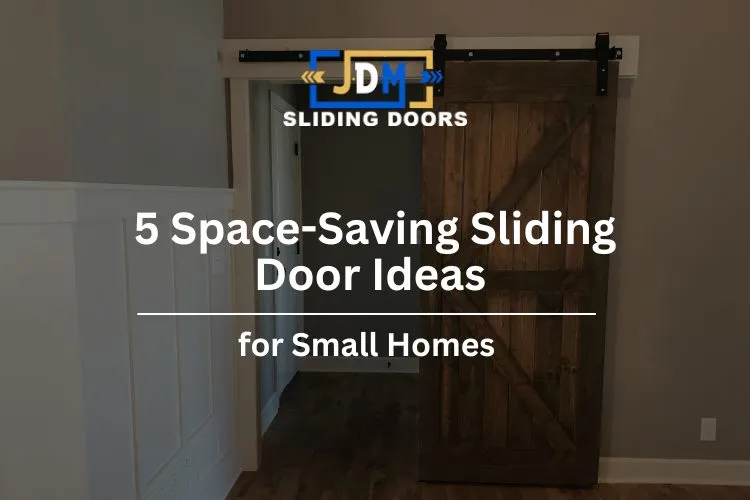
Barn doors hang from a rail screwed above the opening and slide along the face of the wall outside it. A barn door hangs about an inch off the wall, so it never closes as tightly as a door sitting inside the frame.
Pocket doors slide into a hollow pocket inside the wall and disappear. Putting one into a solid wall means opening that wall up, which is renovation work rather than a Saturday job.
Hinged doors swing out into the room, and French doors are two of them meeting in the middle. They block sound and light better than anything on a track.
Here are three of them in real rooms, with what each one is good for.

Step one: measure the finished opening before you shop
Measure the opening you can see, after the trim is on. Take the width, then the height, then how deep the wall is at the top. Those three numbers decide which types of closet doors are even for sale in your size.
Closet doors are sold against the opening, not against the door. A pair sold for a 60-inch opening is two doors of 30 inches each. Johnson Hardware makes the tracks a lot of these doors hang on. It sells bypass sets by door width, and the track runs twice the width of one door.
Standard closet door sizes are 24, 30, 32 and 36 inches wide for a single door, and almost every one of them stands 80 inches tall. Openings of 48, 60 and 72 inches take a pair.
Measure the height in three places, left, middle and right. Old houses settle, and a floor that drops half an inch across a 60-inch opening leaves a new pair looking crooked after a perfect install. If you skip that check, you find out once the doors are up.
Step two: decide how much of the closet you need open at once
Your closet door options narrow fast once you answer two questions. Answer the access one first: do you need the whole opening clear at once, or will half of it do? Then look at the floor in front of the closet.
Bypass doors show you half the opening, always. For a rail of hanging clothes, half at a time costs you nothing. For deep shelves or a laundry stack, it means moving a door every time you reach the other end.
Bifold and hinged doors open the whole thing and charge you floor for it. Bifold panels swing out 8 to 12 inches while they fold. A hinged door needs its full width as clear floor, which is why it loses to a bed pushed against the closet wall.
Barn doors and pocket doors are the two closet door alternatives people reach for when the room is full. Both of them spend wall instead of floor, and a barn door needs that wall bare, with no light switch or picture in the way.
A real room shows it best. Both doors below are open, parked flat on the wall either side of the opening.
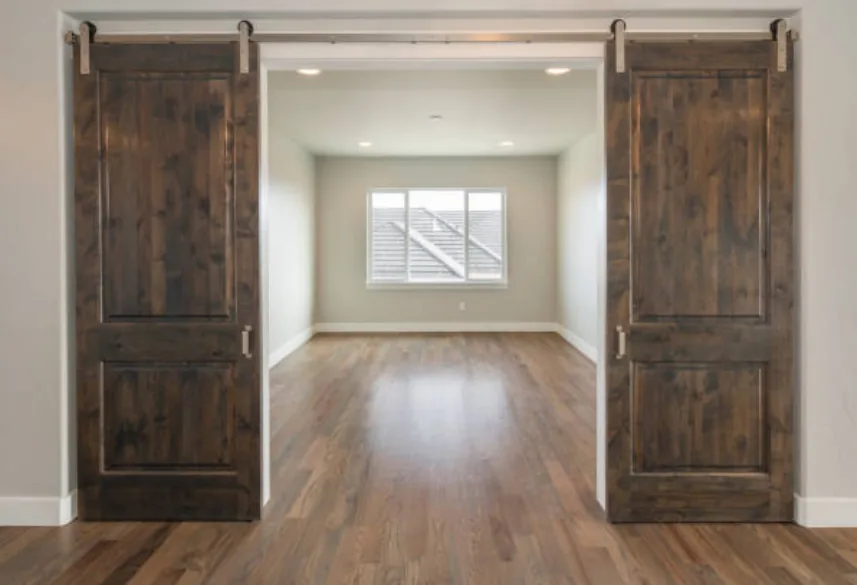
Photo: JDM Sliding Doors.
Step three: match the hardware to what the door weighs
Every closet door hardware set carries a weight rating on the box, and most buyers never read it. A mirrored door weighs two to three times what a hollow wood door weighs, and the mirror is exactly what people want on a bedroom closet.
The maker of these sets publishes the numbers. A residential bifold set is rated for 40 pounds a door, and the bypass set beside it carries 150 pounds. A wall-mounted barn door set carries 125 pounds on plastic wheels and 200 on steel ball-bearing wheels. A standard pocket door frame takes 125 pounds.
The three ratings are drawn as bars below. The shortest bar is not the same as the longest one with a smaller number on it, which is the mistake a mirrored door punishes.

Those numbers rule choices in and out before taste does. Hang a 60-pound mirrored door on hardware rated for 40 and the pivot at the bottom fails within 12 months. Two mirrored doors in a 72-inch opening need bypass hardware, or barn hardware with the better wheels.
Weight is also why installers screw a barn door rail through the wall into solid wood rather than into hollow drywall. That rail holds the whole door in the air for the life of the door.
Step four: which closet doors come back broken
Every closet door type comes back broken at one predictable place: bifold doors at the pivot, bypass doors at the floor guide, barn doors where the rail meets the wall, and pocket doors on the wheels inside the wall.
Bifold doors fail at the pivot, the small metal pin at the bottom corner that the door spins on. A door pulled from its far edge levers that pin out of its bracket. Pushing it back in without fixing the bracket means doing it again next month.
Bypass doors fail at the little plastic guide screwed to the floor in the middle of the opening, which keeps the two doors from swinging into each other. Once it breaks, the doors clap together and ride out of the track. The guide costs a few dollars.
Barn doors fail where the rail meets the wall. A rail screwed into drywall alone pulls loose slowly, and the first sign is a door that drags at one end.
Pocket doors fail on the wheels hidden in the wall, which is the whole problem with them. Troubleshooting a pocket door starts with the checks you can make before any trim comes off.
One rule covers all four: never put oil on a closet door track. Oil makes the wheels slide instead of roll, and a sliding wheel wears a flat spot into itself.
If you leave a broken guide or a loose rail in place, the door works itself further out of line every week, and the part you meant to replace takes the door edge with it. Call a door technician at that point, before you buy anything: a new pair hung in the same opening fails the same way.
What does the closet hold?
Look at what the closet holds before you pick a finish. A gas water heater, a furnace or a washer and dryer needs air moving through the door, and that outranks the look of it.
Louvered closet doors are the standard answer: angled slats cut through the door, so air passes while the clothes stay hidden. They come as bifold, bypass or hinged doors, so slats are a finish rather than a type of their own.
The sizing rule is stricter than it looks. Building code, in the section on louvers and grilles, counts a wood louvered door as only 25 percent open and a metal one as 75 percent. So the slatted area has to be four times the air opening the appliance needs, and an inspector checks that on a gas appliance.
A clothes closet has no such rule, and a solid door is the quieter choice there. Slats pass sound and dust both ways, so the look is only half of what you are choosing.
What a closet door should do once it is right
A closet door that fits its opening moves with two fingers and stays where you leave it. You open it one-handed with a laundry basket on your hip, and nothing clatters, drags on the carpet or swings back at you.
Once that is sorted, the door stops being something you think about. It slides easily with one hand. It hangs level, with an even gap of about 1/4 inch down the middle. The only job left is a vacuum along the track every few months.
What we check on a closet door call
We check 4 things on a closet door call: the guide between the doors, the wheels or pivots at the corners, the track, and the opening around all of it. Three of the four are parts, and parts get replaced in the same visit, in about 2 hours.
The opening decides whether you are buying new doors at all. A sagging beam above it, or a floor that has dropped at one end, holds a brand-new pair just as crooked as the old one. We measure it in 3 places before anyone talks about buying doors.
We carry guides, wheels and pivots on the van, so most closet doors are sliding again by the time we leave. If we think the doors themselves are finished, we say so and tell you the sizes to order.
Frequently asked questions
What are the cheapest closet doors?
Bifold doors, in most openings. They use the least hardware of any type, and the common 24, 30 and 36-inch sizes sit on the shelf at any home improvement store.
Bifold vs sliding closet doors: which lasts longer?
Sliding closet doors, the bypass kind, last longer in a busy house, and the reason is the number of parts. A bypass pair runs on four wheels and one guide. A bifold pair runs on four hinges, two top wheels, two pivots and two brackets, so there are five times as many parts to wear.
Get your closet doors moving again
Are your closet doors leaning, sticking or off the track? The doors are usually fine, and the part that failed costs a few dollars.
JDM Sliding Doors repairs closet, pocket, barn and patio doors across South Florida and our other markets. We fix the guides, wheels, pivots and tracks these doors run on.
Send a photo of the opening with the doors closed. Schedule a free repair estimate and we will name the part that failed.