You need the panel out of the way. New floors are going in, or the rollers are shot and nobody can reach them with the door still hanging there. Then the questions start. Is the glass going to crack if I tilt it wrong? How heavy is this thing? And the one people ask last, with the panel already leaning against a wall: how do I get it back in?
Short answer: a sliding glass door panel comes out in four moves, and none of them involve force.
- Drop the rollers. Turn the screws at the bottom corners counterclockwise until the wheels pull up and the panel sits low.
- Free the top. Take out the bumper, head stop, or screws in the head track, which is the channel the top edge of the panel runs in, depending on the door.
- Tilt the top toward you once the panel is low enough to clear the upper track.
- Lift it out and lay it flat on blankets, second person on the other end.
Before you start: this guide explains the job, it does not tell you to do it yourself. A patio door panel is heavy glass in a metal frame, and the safe answer for most people is to have a licensed pro take it out. If you do go ahead, follow the instructions for your own door and know that you are doing it at your own risk.
Where that comes from: that is the order the manufacturers use. Silver Line’s patio door panel service guide retracts the rollers before the panel moves at all, and JELD-WEN’s panel removal sheet (SVC008, August 2025) is blunt about the rest: “Handling patio door panels can be heavy and awkward. To avoid injury, use at least 2-people.”
I am Gal Cohen, field area manager at JDM Sliding Doors, and sliding door repair has been our main work since 2012. Taking a panel out is the first ten minutes of half our jobs, including every roller replacement. By the end you will know what to do before you touch the door, the five steps to lift the panel out, why a door refuses to come out, which doors to leave to a pro, and how to set it back so the lock still catches.
Key takeaways
- Lower the rollers first. Almost every stuck panel is one somebody tried to lift with the wheels still up.
- Two people, every time. That is the manufacturer’s own minimum, and glass is unforgiving of a slip.
- The screen comes off before the door does.
- Cracked glass gets taped before anything moves, or it lets go in your hands.
Before you touch the door
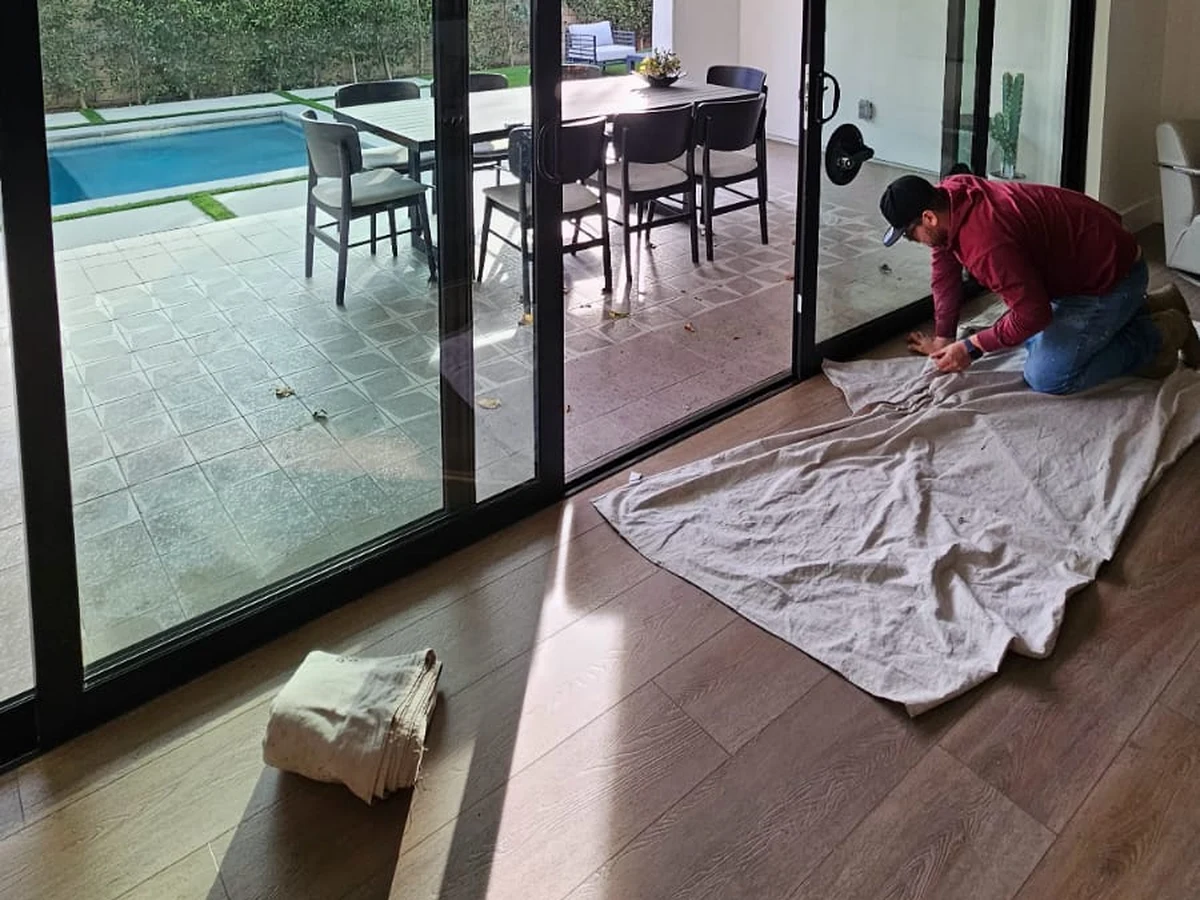
Clear a path to wherever the panel will land and put moving blankets there, because a corner of glass chips against bare tile before you feel it. Take the screen out first. Any crack in the glass gets filament tape across both faces before anything moves: Silver Line’s guide warns that skipping this “may result in severe injury, product and/or property damage.” Last, photograph the top and bottom of the frame, so you know which screw came from where.
How to take the panel out, step by step

- Open the lock and slide the panel to the middle of the opening. Clear space on both sides keeps the panel off the jamb as it comes free.
- Drop the rollers all the way. Pop the plastic plugs out of the bottom corners on the inside face. Behind each one is a screw. Turn both counterclockwise until they stop and the panel settles about an eighth of an inch. People skip this, and it is why their door will not come out.
- Free the top of the panel. Older aluminum doors have a bumper or small stop in the interior head track. Wood and vinyl doors have a head stop held on by screws, and some hide screws in the upper track that only show once the panel is open.
- Tilt the top of the panel toward you. One person on each end, hands under the bottom rail. Six inches of tilt clears the upper channel.
- Lift the bottom off the track and walk it out. Slow and upright, then down onto the blankets, flat and interior face up.
Why your door will not come out
Here is the part that saves your afternoon. A panel that fights you is not stuck, and one of these four is holding it.
- The rollers are not all the way down. A screw that feels tight can still have three turns left. Confirm both sides bottomed out.
- The head stop is still in. Look along the top of the interior side for a thin strip with screw heads in it. Score any paint along its edge, then work it free from one end.
- There are anti-lift screws in the head track. Many doors carry screws up there whose only job is to stop somebody lifting the panel out from the patio side. Take them out, and put them back when you finish.
- The fixed panel has to go first. JELD-WEN’s vinyl patio door product guide says a door with a raised sill needs the fixed panel out before the moving one will clear.
Ruled out all four and it still will not move? Stop pulling. A panel that needs force means the frame has shifted, which is a different repair.
The doors I tell people to leave alone

Even on a standard two panel door, we would rather you called someone. These four are the ones where doing it yourself gets people hurt or cracks glass.
Impact rated doors. In South Florida a lot of sliders are laminated hurricane glass, and our techs carry those in pairs with suction cups. Silver Line sends High-Velocity Hurricane Zone doors to a separate procedure, because the head locator takes six screws and a metal clip instead of two.
Second floor and balcony doors. Nowhere good to set a panel down, and no way to catch one that slips.
Doors painted in place, and cracked glass. Paint has to come off the stop without gouging the frame, and cracked glass can let go when it moves.
Getting it back in without a fight
Reinstalling is the same five steps in reverse, and the last one matters most.
Set the top of the panel into the upper channel, swing the bottom in, and let the rollers drop into the track. Put the head stop and anti-lift screws back where they came from.
Now raise the panel. Turn both roller screws clockwise in small, even amounts, and watch the latch side: the space between panel and jamb should match top and bottom. You are done when the door glides with two fingers and the lock catches without anyone lifting the handle. If it still misses, the panel is not level yet, and our post on a sliding door lock that will not catch covers the rest.
Vacuum the track while the panel is out. Grit is what chews up rollers, and our track cleaning guide says what to use and what to keep off it.
Frequently asked questions
How long should this take?
Twenty to forty minutes once you know where the screws are, plus an hour for roller work.
Where should I put the panel while it is out?
Flat on blankets, out of any walkway, never balanced on a corner. A leaned panel sliding on tile is how glass gets broken.
Need a hand with the heavy part?
If your panel is impact glass, on a second floor, or simply not budging, call before something cracks. JDM Sliding Doors handles sliding door repair across South Florida, and most panel jobs are done in one visit.
This post is general information, not instructions for your particular door. Doors, glass and hardware differ, and taking a panel out carries a real risk of injury and damage, so we recommend having the work done by a licensed professional.